


Topology and regulation of the human eIF4A/4G/4H helicase complex in translation initiation
- PMID: 19203580
- PMCID: PMC2656774
- DOI: 10.1016/j.cell.2009.01.014
Topology and regulation of the human eIF4A/4G/4H helicase complex in translation initiation
Abstract
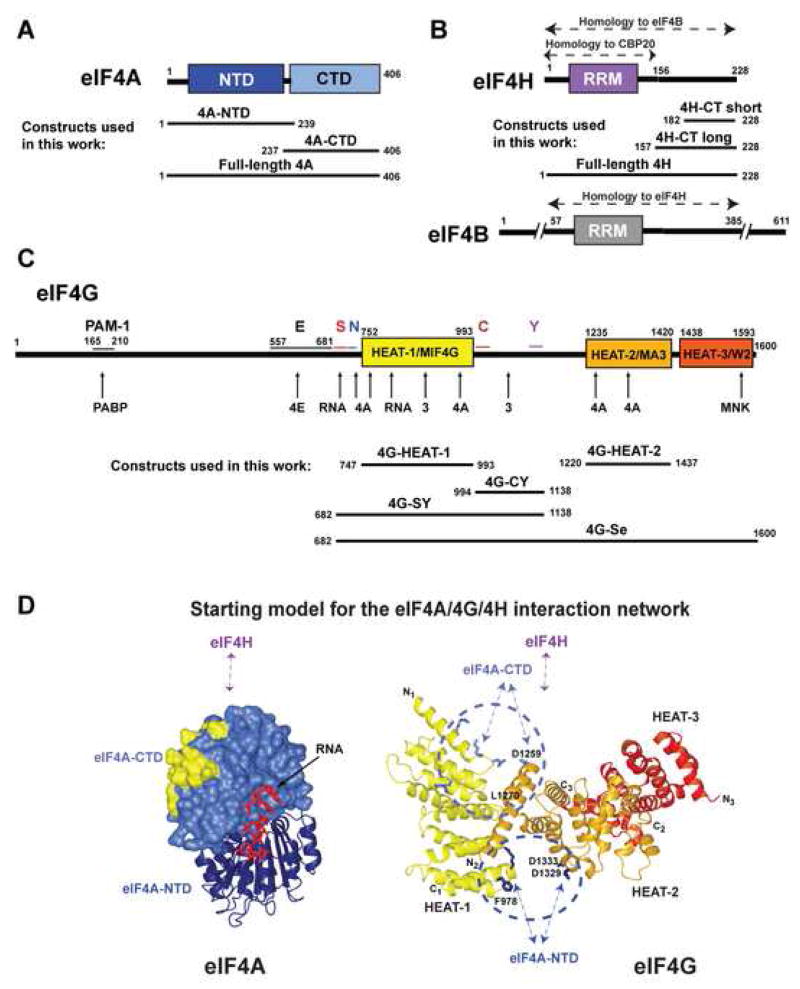
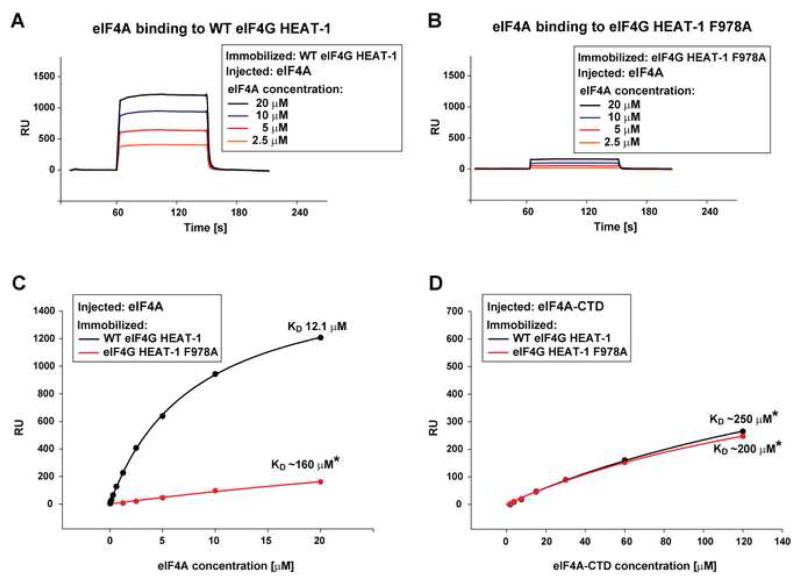
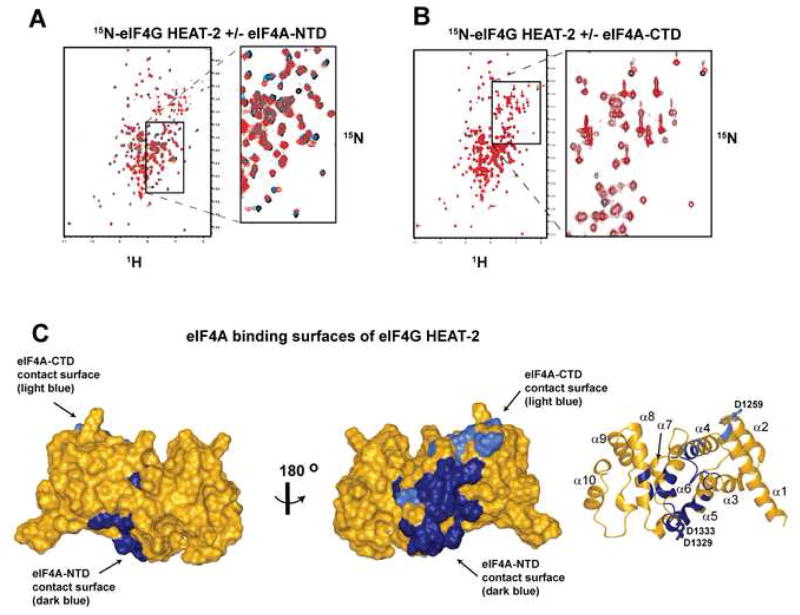
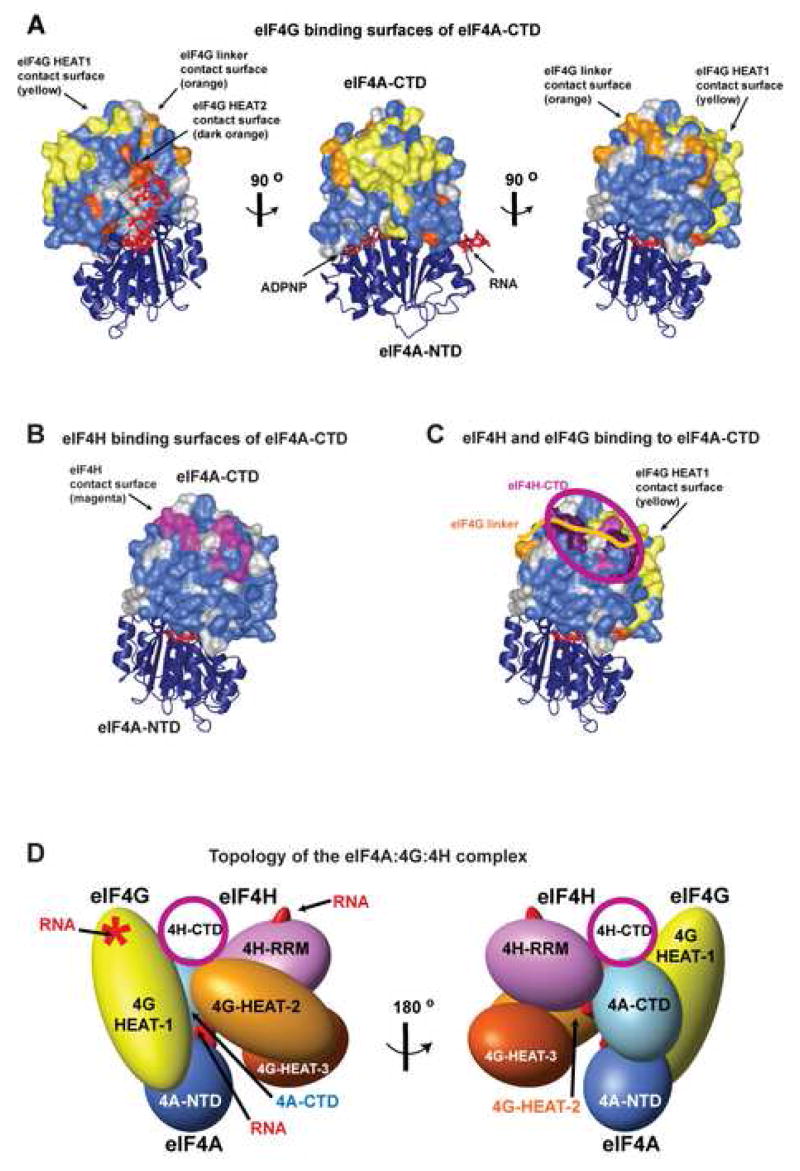
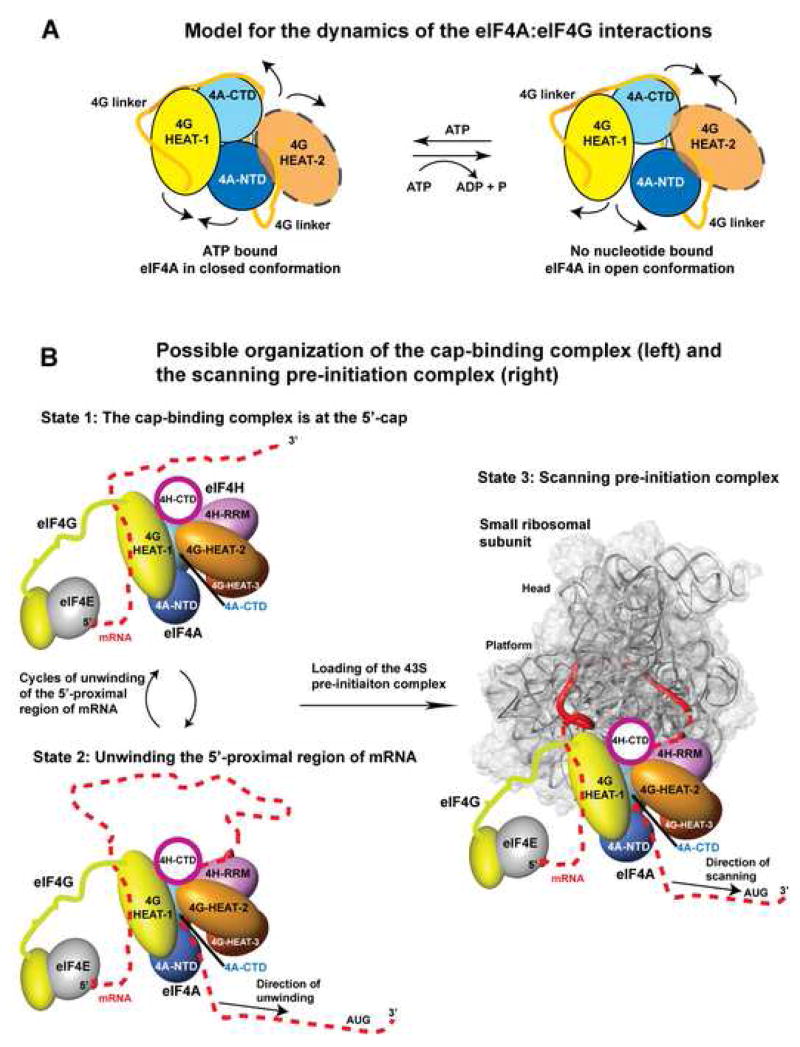
The RNA helicase eIF4A plays a key role in unwinding of mRNA and scanning during translation initiation. Free eIF4A is a poor helicase and requires the accessory proteins eIF4G and eIF4H. However, the structure of the helicase complex and the mechanisms of stimulation of eIF4A activity have remained elusive. Here we report the topology of the eIF4A/4G/4H helicase complex, which is built from multiple experimentally observed domain-domain contacts. Remarkably, some of the interactions are continuously rearranged during the ATP binding/hydrolysis cycle of the helicase. We show that the accessory proteins modulate the affinity of eIF4A for ATP by interacting simultaneously with both helicase domains and promoting either the closed, ATP-bound conformation or the open, nucleotide-free conformation. The topology of the complex and the spatial arrangement of the RNA-binding surfaces offer insights into their roles in stimulation of helicase activity and the mechanisms of mRNA unwinding and scanning.
Figures
References
-
- Andersen CB, Ballut L, Johansen JS, Chamieh H, Nielsen KH, Oliveira CL, Pedersen JS, Seraphin B, Le Hir H, Andersen GR. Structure of the exon junction core complex with a trapped DEAD-box ATPase bound to RNA. Science. 2006;313:1968–1972. - PubMed
-
- Bellsolell L, Cho-Park PF, Poulin F, Sonenberg N, Burley SK. Two structurally atypical HEAT domains in the C-terminal portion of human eIF4G support binding to eIF4A and Mnk1. Structure. 2006;14:913–923. - PubMed
-
- Fersht A. Structure and Mechanism in Protein Science. W. H. Freeman and Company; 1999. pp. 125–131.
Publication types
MeSH terms
Substances
Grants and funding
LinkOut - more resources
Full Text Sources
Other Literature Sources
Molecular Biology Databases
Miscellaneous
