


Exosomal secretion of cytoplasmic prostate cancer xenograft-derived proteins
- PMID: 19204029
- PMCID: PMC2690478
- DOI: 10.1074/mcp.M800443-MCP200
Exosomal secretion of cytoplasmic prostate cancer xenograft-derived proteins
Abstract
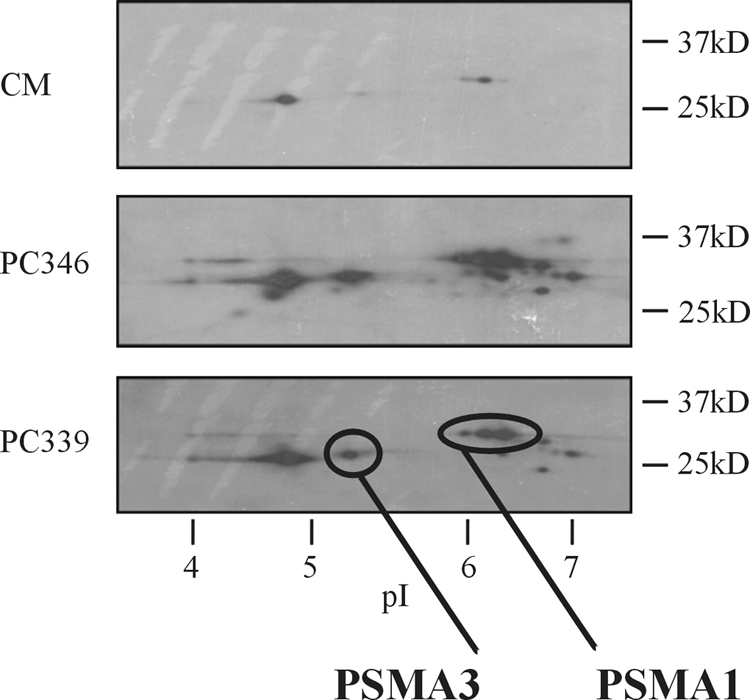
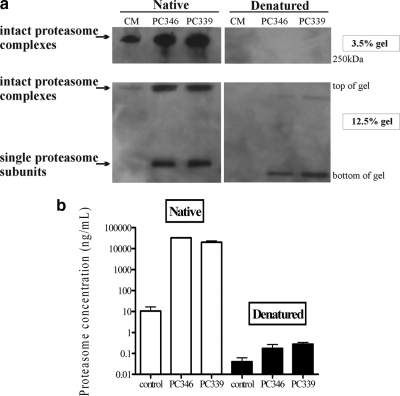
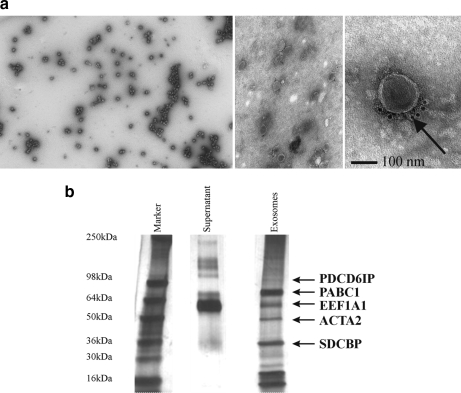
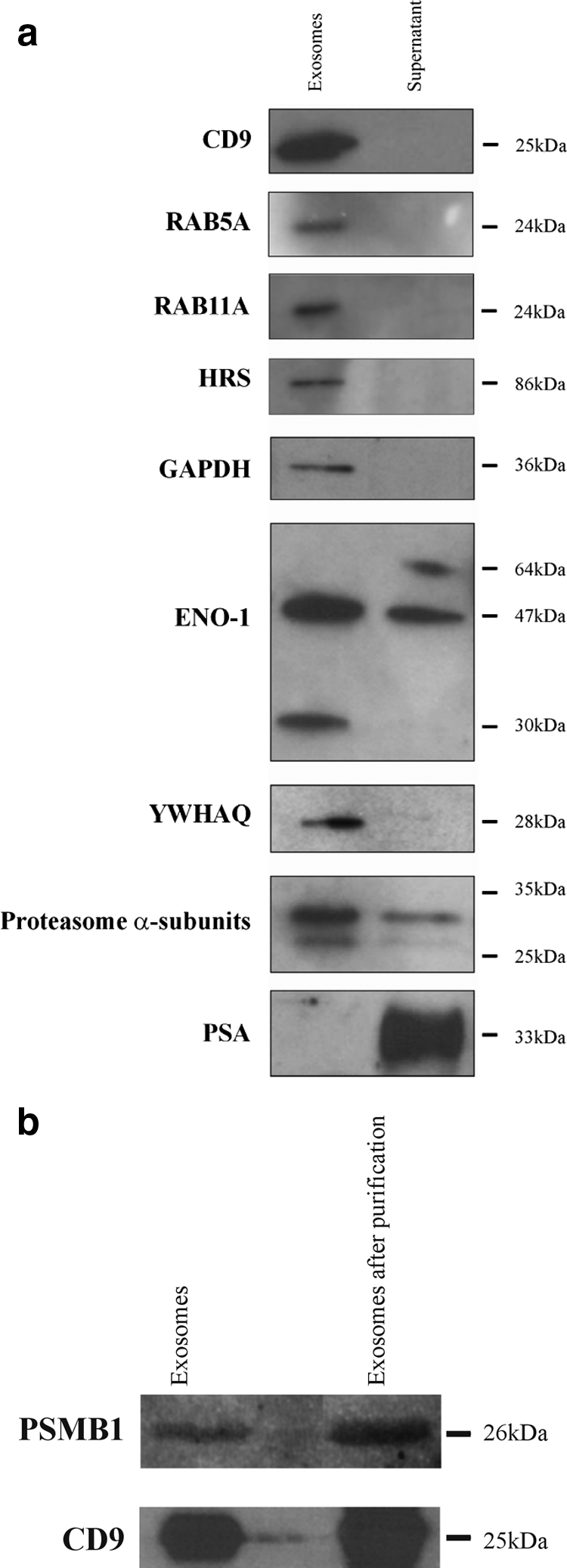
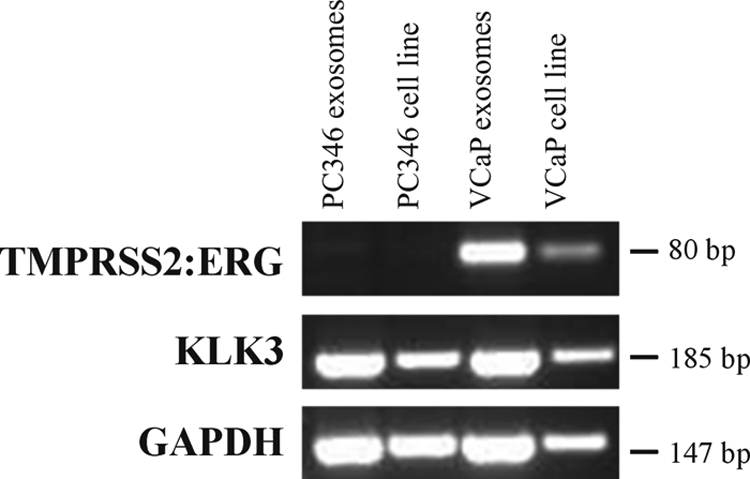
Novel markers for prostate cancer (PCa) are needed because current established markers such as prostate-specific antigen lack diagnostic specificity and prognostic value. Proteomics analysis of serum from mice grafted with human PCa xenografts resulted in the identification of 44 tumor-derived proteins. Besides secreted proteins we identified several cytoplasmic proteins, among which were most subunits of the proteasome. Native gel electrophoresis and sandwich ELISA showed that these subunits are present as proteasome complexes in the serum from xenograft-bearing mice. We hypothesized that the presence of proteasome subunits and other cytoplasmic proteins in serum of xenografted mice could be explained by the secretion of small vesicles by cancer cells, so-called exosomes. Therefore, mass spectrometry and Western blotting analyses of the protein content of exosomes isolated from PCa cell lines was performed. This resulted in the identification of mainly cytoplasmic proteins of which several had previously been identified in the serum of xenografted mice, including proteasome subunits. The isolated exosomes also contained RNA, including the gene fusion TMPRSS2-ERG product. These observations suggest that although their function is not clearly defined cancer-derived exosomes offer possibilities for the identification of novel biomarkers for PCa.
Figures

References
-
- Stamey, T. A., Yang, N., Hay, A. R., McNeal, J. E., Freiha, F. S., and Redwine, E. ( 1987) Prostate-specific antigen as a serum marker for adenocarcinoma of the prostate. N. Engl. J. Med. 317, 909–916 - PubMed
-
- Thompson, I. M., Pauler, D. K., Goodman, P. J., Tangen, C. M., Lucia, M. S., Parnes, H. L., Minasian, L. M., Ford, L. G., Lippman, S. M., Crawford, E. D., Crowley, J. J., and Coltman, C. A., Jr. ( 2004) Prevalence of prostate cancer among men with a prostate-specific antigen level < or =4.0 ng per milliliter. N. Engl. J. Med. 350, 2239–2246 - PubMed
-
- Mikolajczyk, S. D., and Rittenhouse, H. G. ( 2004) Tumor-associated forms of prostate specific antigen improve the discrimination of prostate cancer from benign disease. Rinsho Byori 52, 223–230 - PubMed
-
- Paul, B., Dhir, R., Landsittel, D., Hitchens, M. R., and Getzenberg, R. H. ( 2005) Detection of prostate cancer with a blood-based assay for early prostate cancer antigen. Cancer Res. 65, 4097–4100 - PubMed
Publication types
MeSH terms
Substances
LinkOut - more resources
Full Text Sources
Other Literature Sources
