SEPT9 mutations and a conserved 17q25 sequence in sporadic and hereditary brachial plexus neuropathy
- PMID: 19204161
- PMCID: PMC2770426
- DOI: 10.1001/archneurol.2008.585
SEPT9 mutations and a conserved 17q25 sequence in sporadic and hereditary brachial plexus neuropathy
Abstract
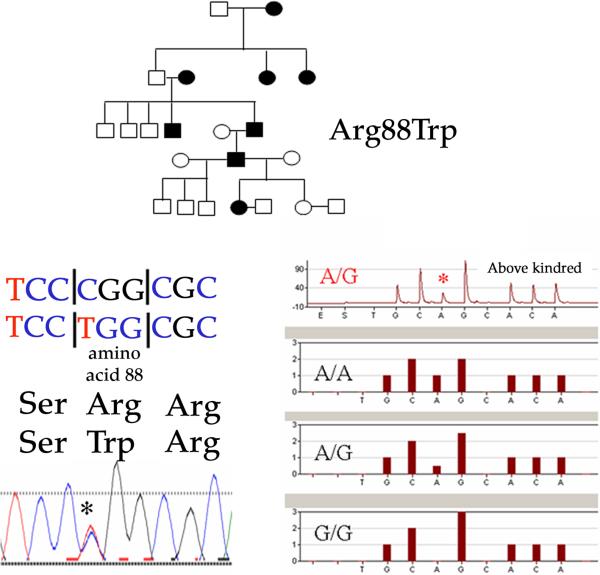
Background: The clinical characteristics of sporadic brachial plexus neuropathy (S-BPN) and hereditary brachial plexus neuropathy (H-BPN) are similar. During attacks, inflammation of the brachial plexus nerves has been identified in both conditions. SEPT9 mutations (Arg88Trp, Ser93Phe, 5'UTR c.-131G>C) occur in some families with H-BPN. These mutations were not found in North American kindreds with H-BPN with a conserved 500-kilobase sequence of DNA at the 17q25 chromosomal region (where SEPT9 localizes) where a founder mutation has been suggested.
Objective: To study the 17q25 sequence and SEPT9 in S-BPN (56 individuals) and H-BPN (13 kindreds).
Methods: Allele analysis at 17q25, SEPT9 DNA sequencing, and messenger RNA analysis from lymphoblast cultures were performed.
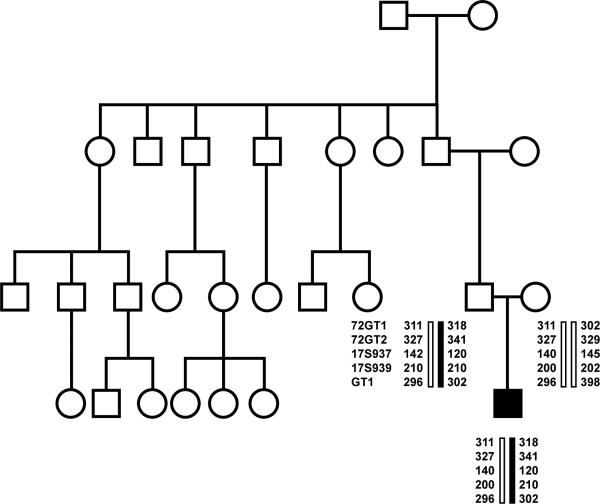
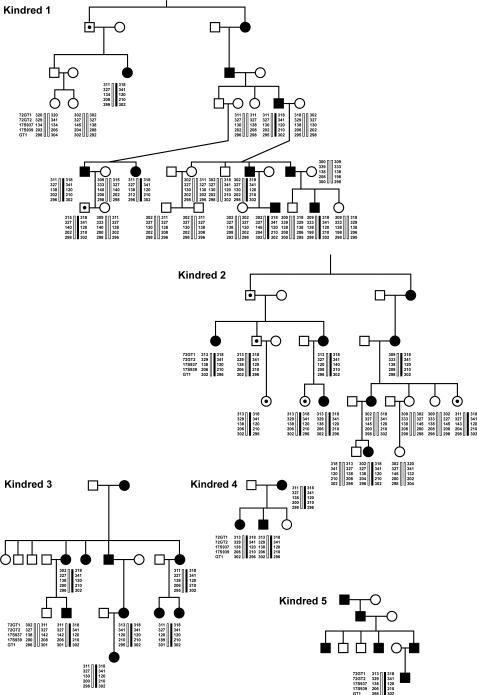
Results: A conserved 17q25 sequence was found in 5 of 13 kindreds with H-BPN and 1 individual with S-BPN. This conserved sequence was not found in the family with a SEPT9 mutation (Arg88Trp) or in 182 control subjects. SEPT9 messenger RNA expression levels did not differ between forms of H-BPN and control subjects. No known mutations of SEPT9 were found in S-BPN.
Conclusions: Rarely, individuals with S-BPN may have the same conserved 17q25 sequence found in many North American kindreds with H-BPN. Individuals with BPN with this conserved sequence do not seem to have SEPT9 mutations or alterations of messenger RNA expression levels in lymphoblast cultures and are predicted to have the most common genetic cause in North America by a founder-effect mutation.
Figures
References
-
- Klein CJ, Windebank AJ. Hereditary Brachial Plexus Neuropathy. In: Dyck PJ, Thomas PK, editors. Peripheral Neuropathy. Fourth Edition Elsevier; Philadelphia: 2005. pp. 1753–67.
-
- van Alfen N, van Engelen BG. The clinical spectrum of neuralgic amyotrophy in 246 cases. Brain. 2006;129(Pt 2):438–50. - PubMed
-
- Windebank AJ, Schenone A, Dewald GW. Hereditary neuropathy with liability to pressure palsies and inherited brachial plexus neuropathy--two genetically distinct disorders. Mayo Clin. Proc. 1995;70(8):743–6. - PubMed
-
- Suarez GA, Giannini C, Bosch EP, Barohn RJ, Wodak J, Ebeling P, et al. Immune brachial plexus neuropathy: Suggestive evidence for an inflammatory immune pathogenesis. Neurology. 1996;46(2):559–61. - PubMed
Publication types
MeSH terms
Substances
Grants and funding
LinkOut - more resources
Full Text Sources
Medical