


Facilitating involvement in Alcoholics Anonymous during out-patient treatment: a randomized clinical trial
- PMID: 19207347
- PMCID: PMC2802221
- DOI: 10.1111/j.1360-0443.2008.02467.x
Facilitating involvement in Alcoholics Anonymous during out-patient treatment: a randomized clinical trial
Abstract
Aim: This study evaluated two strategies to facilitate involvement in Alcoholics Anonymous (AA)--a 12-Step-based directive approach and a motivational enhancement approach--during skills-focused individual treatment.
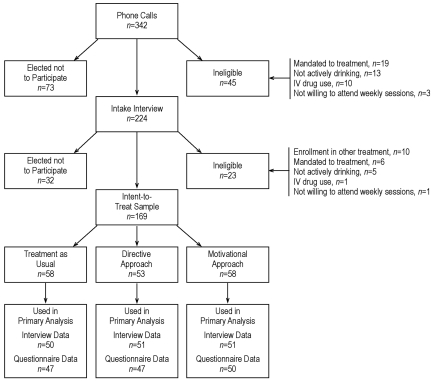
Design: Randomized controlled trial with assessments at baseline, end of treatment and 3, 6, 9 and 12 months after treatment. PARTICIPANTS, SETTING AND INTERVENTION: A total of 169 alcoholic out-patients (57 women) assigned randomly to one of three conditions: a directive approach to facilitating AA, a motivational enhancement approach to facilitating AA or treatment as usual, with no special emphasis on AA.
Measurements: Self-report of AA meeting attendance and involvement, alcohol consumption (percentage of days abstinent, percentage of days heavy drinking) and negative alcohol consequences.
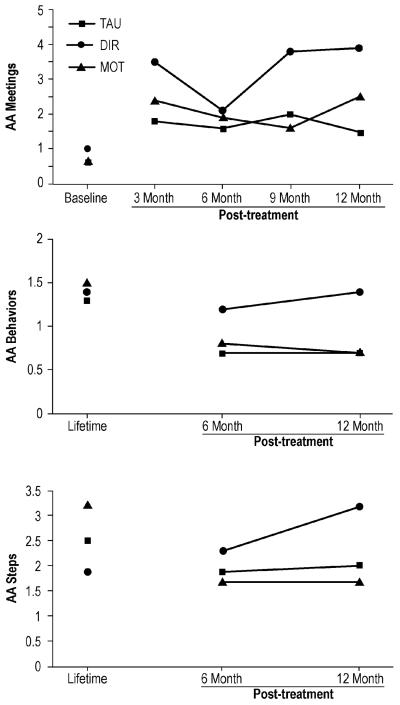
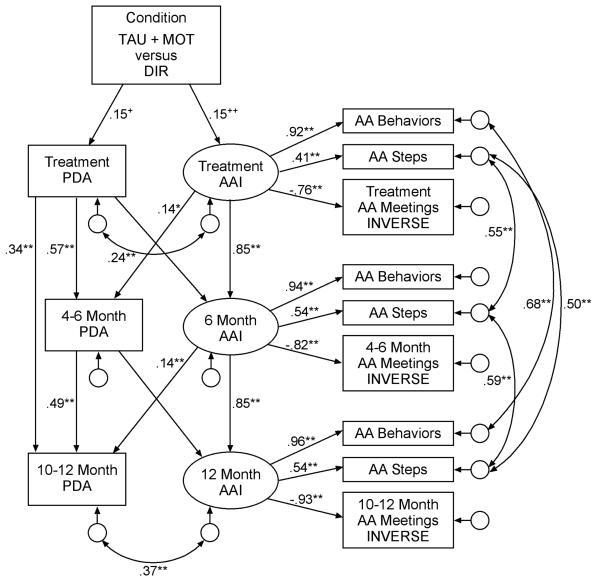
Findings: Participants exposed to the 12-Step directive condition for facilitating AA involvement reported more AA meeting attendance, more evidence of active involvement in AA and a higher percentage of days abstinent relative to participants in the treatment-as-usual comparison group. Evidence also suggested that the effect of the directive strategy on abstinent days was mediated partially through AA involvement. The motivational enhancement approach to facilitating AA had no effect on outcome measures.
Conclusions: These results suggest that treatment providers can use a 12-Step-based directive approach to effectively facilitate involvement in AA and thereby improve client outcome.
Figures

References
-
- Alcoholics Anonymous . Alcoholics Anonymous: 2007 Membership Survey. Alcoholics Anonymous World Services, Inc.; New York: 2008.
-
- Kownacki RJ, Shadish WR. Does Alcoholics Anonymous work: The results from a meta-analysis of controlled experiments. Subst Use Misuse. 1999;34:1897–1916. - PubMed
-
- Tonigan JS, Toscova R, Miller WR. Meta-analysis of the literature on Alcoholics Anonymous: Sample and study characteristics moderate findings. J Stud Alcohol. 1996;57:65–72. - PubMed
-
- Connors GJ, Tonigan JS, Miller WR. A longitudinal model of intake symptomatology, AA participation and outcome: Retrospective study of the Project MATCH outpatient and aftercare samples. J Stud Alcohol. 2001;62:817–825. - PubMed
-
- Gossop M, Stewart D, Marsden J. Attendance at Narcotics Anonymous and Alcoholics Anonymous meetings, frequency of attendance and substance use outcomes after residential treatment for drug dependence: A 5-year follow-up study. Addiction. 2007;103:119–125. - PubMed
Publication types
MeSH terms
Grants and funding
LinkOut - more resources
Full Text Sources
Medical
