


gamma-Herpesvirus-induced protection against bacterial infection is transient
- PMID: 19210230
- PMCID: PMC2952138
- DOI: 10.1089/vim.2008.0086
gamma-Herpesvirus-induced protection against bacterial infection is transient
Abstract
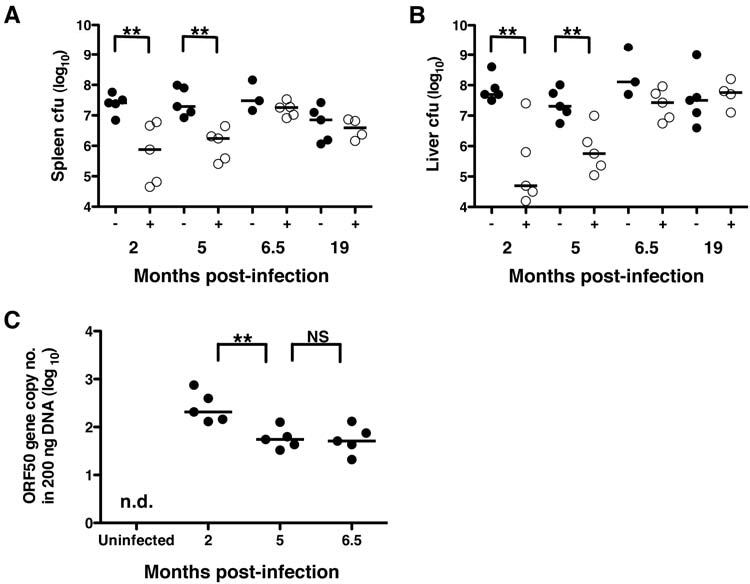
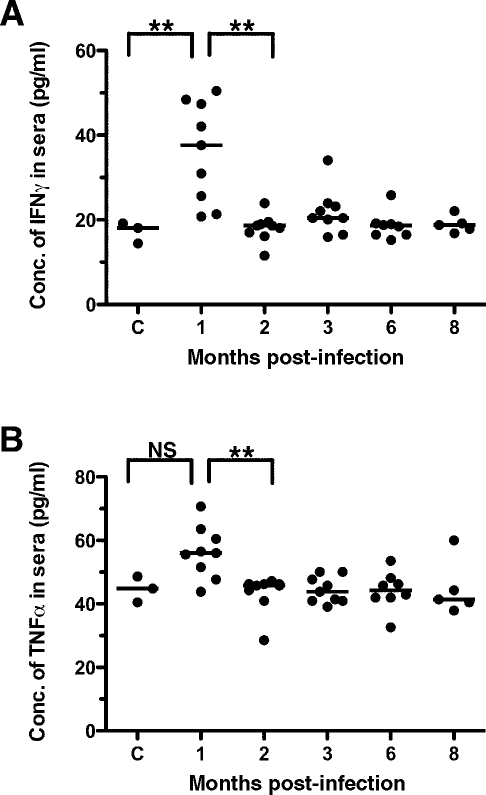
Herpesviruses are widely disseminated in the population and establish lifelong latency, which is associated with a variety of pathological consequences. A recent report showed that mice latently infected with either murine gamma-herpesvirus-68 (gammaHV68) or murine cytomegalovirus (mCMV), mouse pathogens genetically similar to the human herpesviruses, Epstein-Barr virus, Kaposi's sarcoma-associated herpesvirus, and cytomegalovirus, had enhanced resistance to subsequent bacterial infection, suggesting protective as well as deleterious effects of latency. Here we confirm that latent gammaHV68 infection confers protection against subsequent infection with Listeria monocytogenes. However, the effect is transient, lasting only a few months.
Figures
Comment in
-
Herpesvirus latency and symbiotic protection from bacterial infection.Viral Immunol. 2009 Feb;22(1):3-4; author reply 5-6. doi: 10.1089/vim.2008.0100. Viral Immunol. 2009. PMID: 19210221 Free PMC article. No abstract available.
References
-
- Balfour HH., Jr. Epstein-Barr virus vaccine for the prevention of infectious mononucleosis—and what else? J Infect Dis. 2007;196:1724–1726. - PubMed
-
- Barton ES. White DW. Cathelyn JS. Brett-McClellan KA. Engle M. Diamond MS. Miller VL. Virgin HW. Herpesvirus latency confers symbiotic protection from bacterial infection. Nature. 2007;447:326–329. - PubMed
Publication types
MeSH terms
Grants and funding
LinkOut - more resources
Full Text Sources
Medical
