Arabidopsis CaM binding protein CBP60g contributes to MAMP-induced SA accumulation and is involved in disease resistance against Pseudomonas syringae
- PMID: 19214217
- PMCID: PMC2633612
- DOI: 10.1371/journal.ppat.1000301
Arabidopsis CaM binding protein CBP60g contributes to MAMP-induced SA accumulation and is involved in disease resistance against Pseudomonas syringae
Abstract
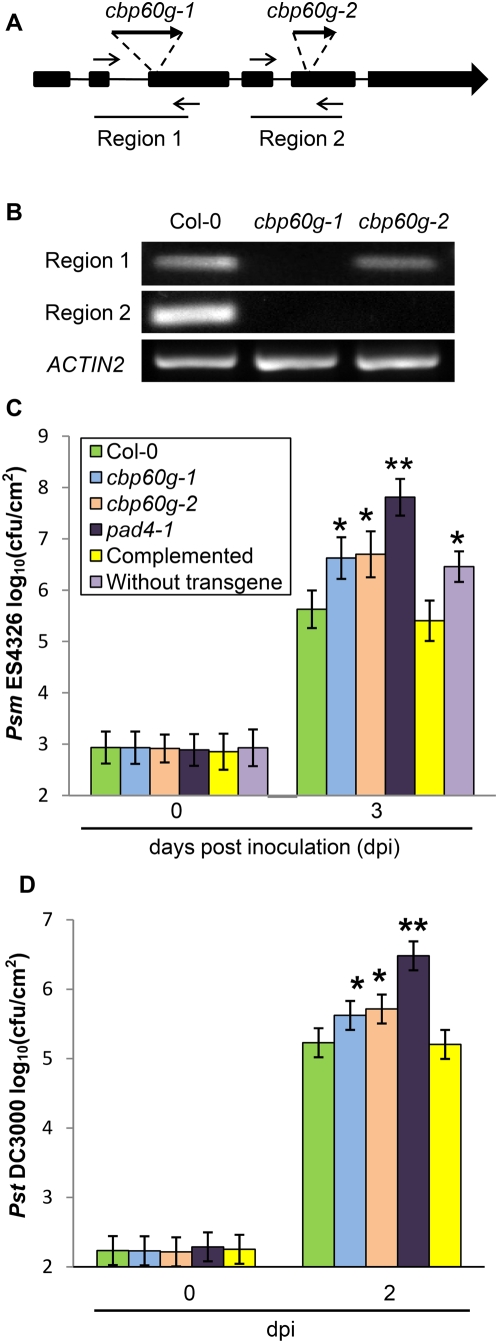
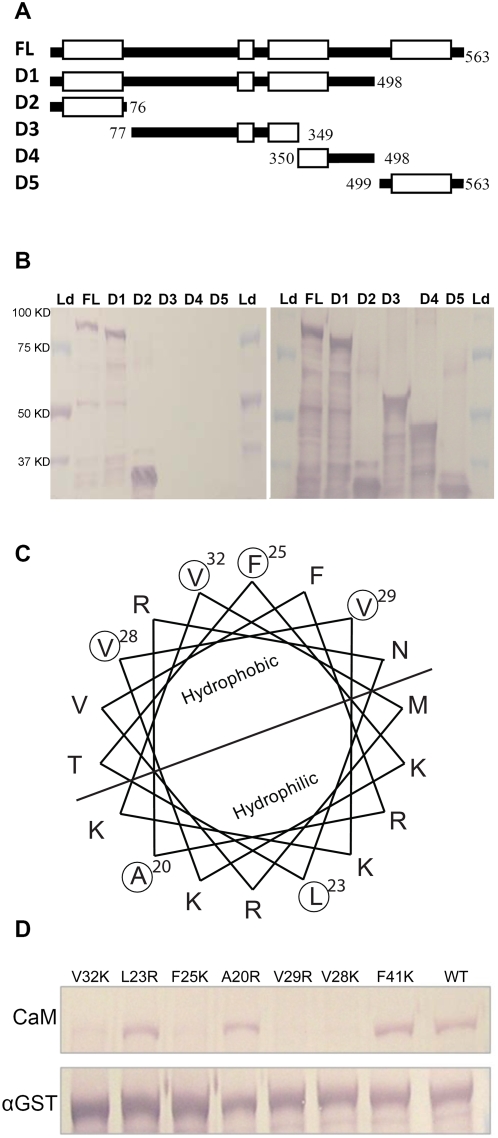
Salicylic acid (SA)-induced defense responses are important factors during effector triggered immunity and microbe-associated molecular pattern (MAMP)-induced immunity in plants. This article presents evidence that a member of the Arabidopsis CBP60 gene family, CBP60g, contributes to MAMP-triggered SA accumulation. CBP60g is inducible by both pathogen and MAMP treatments. Pseudomonas syringae growth is enhanced in cbp60g mutants. Expression profiles of a cbp60g mutant after MAMP treatment are similar to those of sid2 and pad4, suggesting a defect in SA signaling. Accordingly, cbp60g mutants accumulate less SA when treated with the MAMP flg22 or a P. syringae hrcC strain that activates MAMP signaling. MAMP-induced production of reactive oxygen species and callose deposition are unaffected in cbp60g mutants. CBP60g is a calmodulin-binding protein with a calmodulin-binding domain located near the N-terminus. Calmodulin binding is dependent on Ca(2+). Mutations in CBP60g that abolish calmodulin binding prevent complementation of the SA production and bacterial growth defects of cbp60g mutants, indicating that calmodulin binding is essential for the function of CBP60g in defense signaling. These studies show that CBP60g constitutes a Ca(2+) link between MAMP recognition and SA accumulation that is important for resistance to P. syringae.
Conflict of interest statement
The authors have declared that no competing interests exist.
Figures





References
-
- Osbourn A, He SY. Biotic interactions: towards a unifying and balanced view. Curr Opin Plant Biol. 2006;9:347–350. - PubMed
-
- He P, Shan L, Sheen J. Elicitation and suppression of microbe-associated molecular pattern-triggered immunity in plant-microbe interactions. Cell Microbiol. 2007;9:1385–1396. - PubMed
-
- Jones JD, Dangl JL. The plant immune system. Nature. 2006;444:323–329. - PubMed
-
- Zipfel C, Kunze G, Chinchilla D, Caniard A, Jones JD, et al. Perception of the bacterial PAMP EF-Tu by the receptor EFR restricts Agrobacterium-mediated transformation. Cell. 2006;125:749–760. - PubMed
Publication types
MeSH terms
Substances
LinkOut - more resources
Full Text Sources
Molecular Biology Databases
Miscellaneous