


Centrosome-associated regulators of the G(2)/M checkpoint as targets for cancer therapy
- PMID: 19216791
- PMCID: PMC2657106
- DOI: 10.1186/1476-4598-8-8
Centrosome-associated regulators of the G(2)/M checkpoint as targets for cancer therapy
Abstract
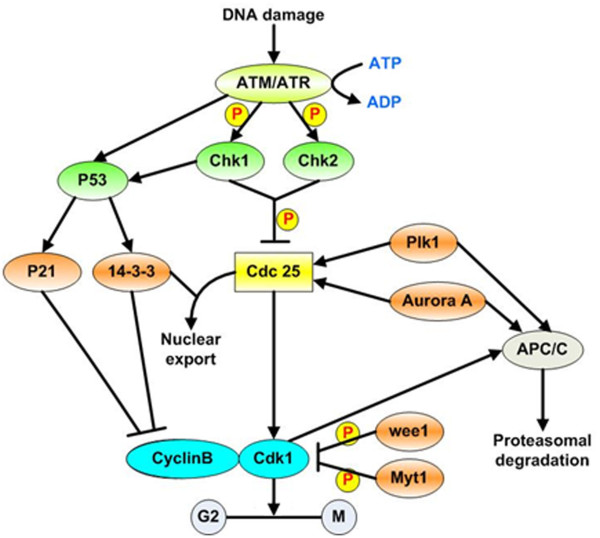
In eukaryotic cells, control mechanisms have developed that restrain cell-cycle transitions in response to stress. These regulatory pathways are termed cell-cycle checkpoints. The G(2)/M checkpoint prevents cells from entering mitosis when DNA is damaged in order to afford these cells an opportunity to repair the damaged DNA before propagating genetic defects to the daughter cells. If the damage is irreparable, checkpoint signaling might activate pathways that lead to apoptosis. Since alteration of cell-cycle control is a hallmark of tumorigenesis, cell-cycle regulators represent potential targets for therapy. The centrosome has recently come into focus as a critical cellular organelle that integrates G(2)/M checkpoint control and repairs signals in response to DNA damage. A growing number of G(2)/M checkpoint regulators have been found in the centrosome, suggesting that centrosome has an important role in G(2)/M checkpoint function. In this review, we discuss centrosome-associated regulators of the G(2)/M checkpoint, the dysregulation of this checkpoint in cancer, and potential candidate targets for cancer therapy.
Figures
References
-
- McCracken M, Olsen M, Chen MS, Jr, Jemal A, Thun M, Cokkinides V, Deapen D, Ward E. Cancer incidence, mortality, and associated risk factors among Asian Americans of Chinese, Filipino, Vietnamese, Korean, and Japanese ethnicities. CA Cancer J Clin. 2007;57:190–205. doi: 10.3322/canjclin.57.4.190. - DOI - PubMed
-
- Hengst L, Reed SI. Inhibitors of the Cip/Kip family. Curr Top Microbiol Immunol. 1998;227:25–41. - PubMed
Publication types
MeSH terms
LinkOut - more resources
Full Text Sources
