


Corticotropin-releasing factor-1 receptor activation mediates nicotine withdrawal-induced deficit in brain reward function and stress-induced relapse
- PMID: 19217073
- PMCID: PMC2822665
- DOI: 10.1016/j.biopsych.2009.01.010
Corticotropin-releasing factor-1 receptor activation mediates nicotine withdrawal-induced deficit in brain reward function and stress-induced relapse
Abstract
Background: Tobacco addiction is a chronic brain disorder that is characterized by a negative affective state upon smoking cessation and relapse after periods of abstinence. Previous research has shown that blockade of corticotropin-releasing factor (CRF) receptors with a nonspecific CRF1/CRF2 receptor antagonist prevents the deficit in brain reward function associated with nicotine withdrawal and stress-induced reinstatement of extinguished nicotine-seeking in rats. The aim of these studies was to investigate the role of CRF1 and CRF2 receptors in the deficit in brain reward function associated with precipitated nicotine withdrawal and stress-induced reinstatement of nicotine-seeking.
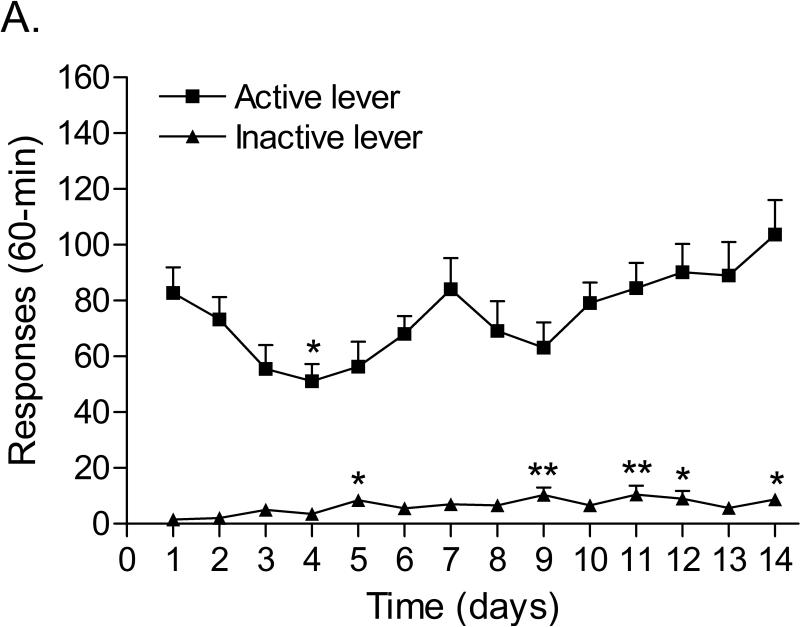
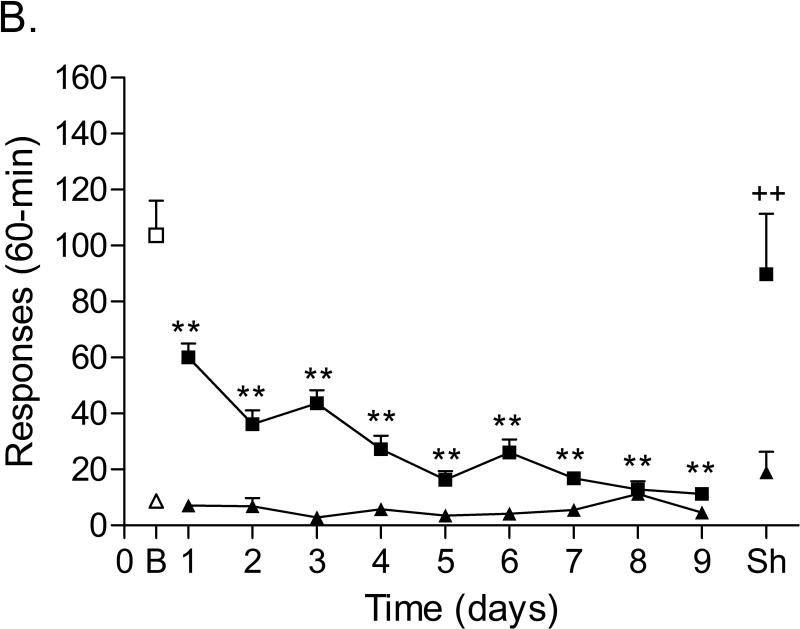
Methods: The intracranial self-stimulation (ICSS) procedure was used to assess the negative affective state of nicotine withdrawal. Elevations in brain reward thresholds are indicative of a deficit in brain reward function. Stress-induced reinstatement of nicotine-seeking was investigated in animals in which responding for intravenously infused nicotine was extinguished by substituting saline for nicotine.
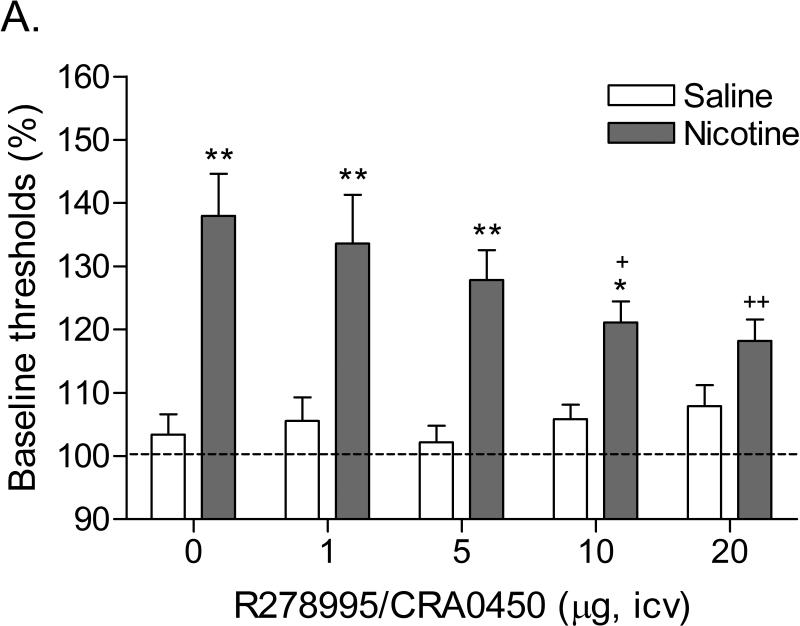
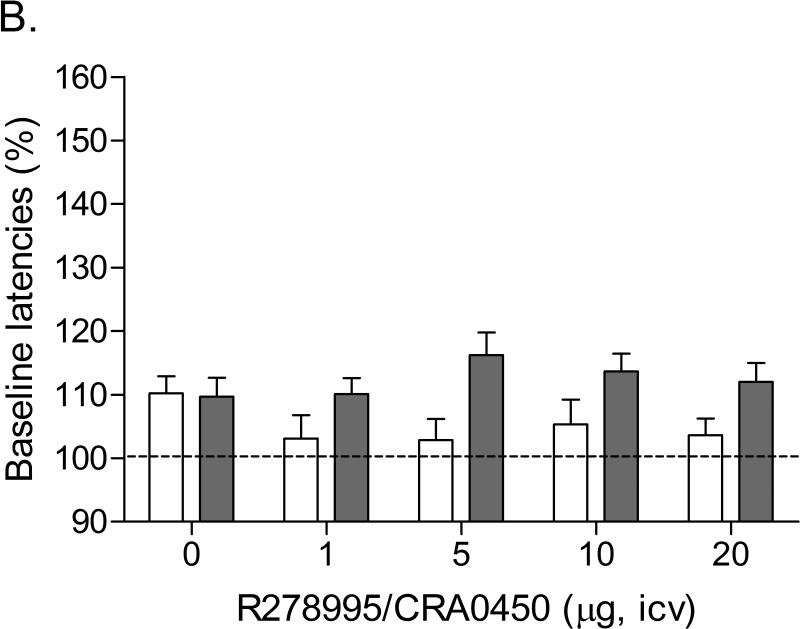
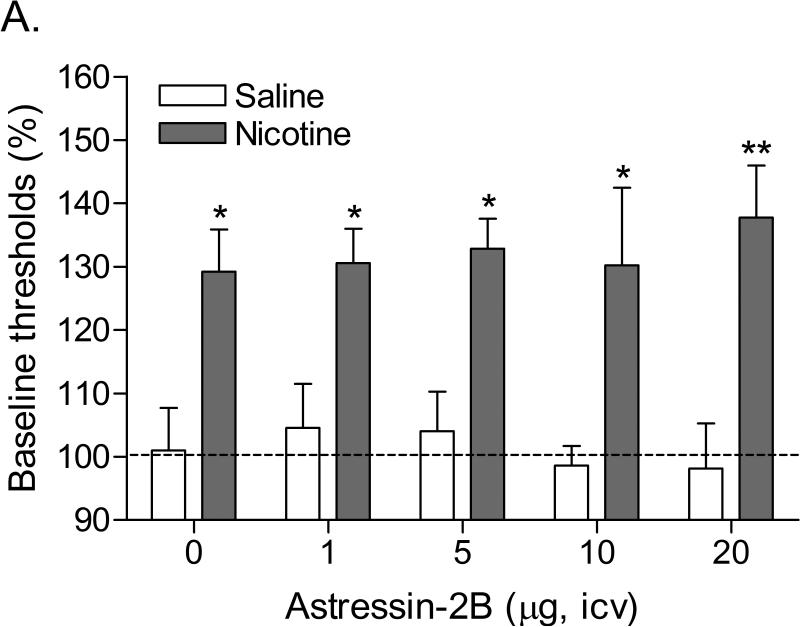
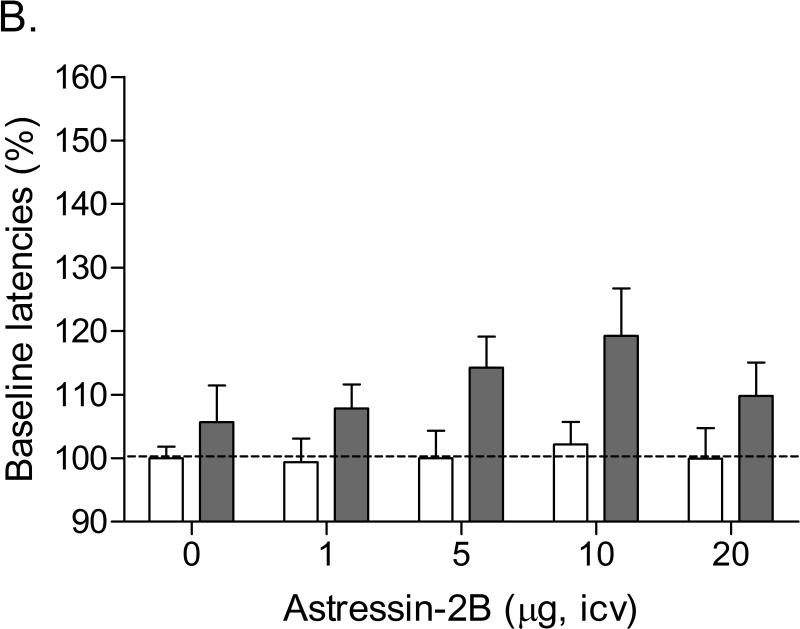
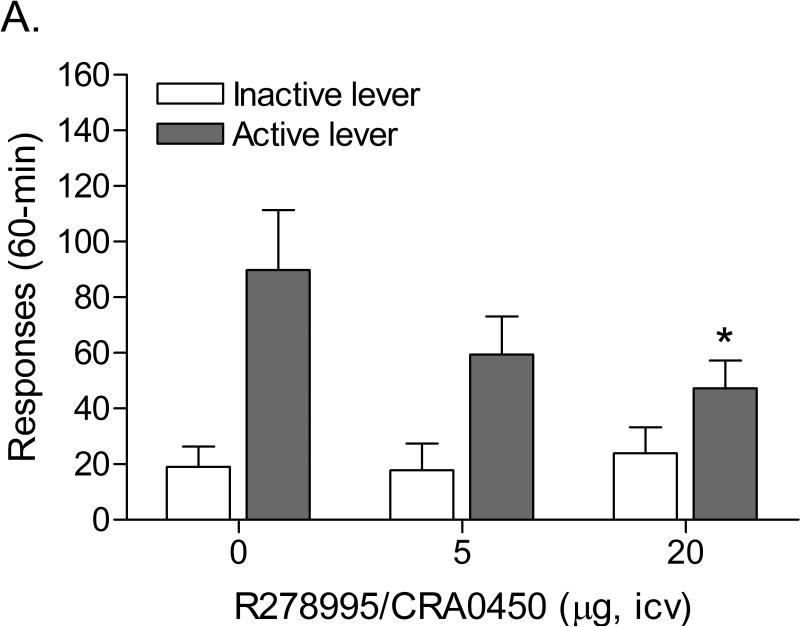
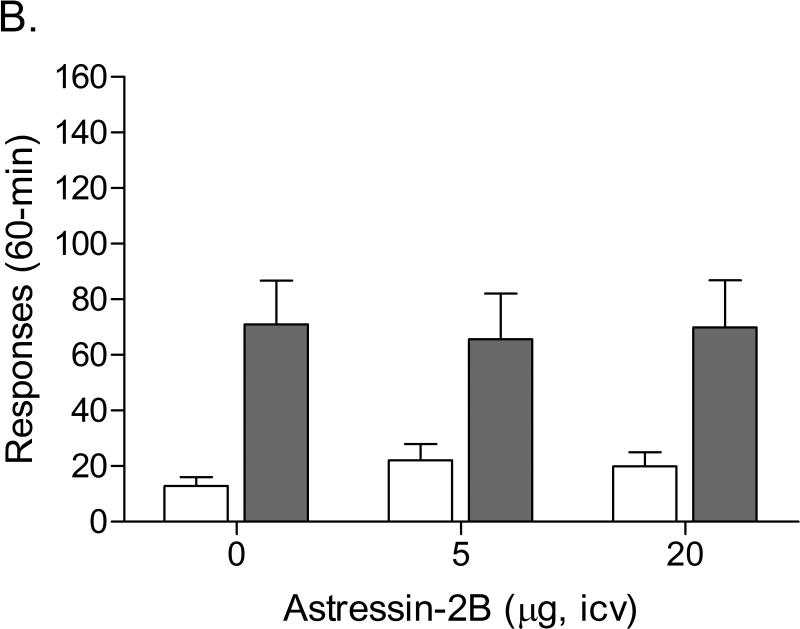
Results: In the ICSS experiments, the nicotinic receptor antagonist mecamylamine elevated the brain reward thresholds of the nicotine-dependent rats but not those of the control rats. The CRF1 receptor antagonist R278995/CRA0450 but not the CRF2 receptor antagonist astressin-2B prevented the elevations in brain reward thresholds associated with precipitated nicotine withdrawal. Furthermore, R278995/CRA0450 but not astressin-2B prevented stress-induced reinstatement of extinguished nicotine-seeking. Neither R278995/CRA0450 nor astressin-2B affected operant responding for chocolate-flavored food pellets.
Conclusions: These studies indicate that CRF(1) receptors but not CRF(2) receptors play an important role in the anhedonic-state associated with acute nicotine withdrawal and stress-induced reinstatement of nicotine-seeking.
Figures
References
-
- American Psychiatric Association . Diagnostic and Statistical Manual of Mental Disorders. 4th ed. American Psychiatric Press; Washington, DC: 2000. text revision ed.
-
- Markou A, Kosten TR, Koob GF. Neurobiological similarities in depression and drug dependence: a self-medication hypothesis. Neuropsychopharmacology. 1998;18:135–174. - PubMed
-
- Koob GF, Caine SB, Parsons L, Markou A, Weiss F. Opponent process model and psychostimulant addiction. Pharmacol Biochem Behav. 1997;57:513–521. - PubMed
-
- Swan GE, Denk CE, Parker SD, Carmelli D, Furze CT, Rosenman RH. Risk factors for late relapse in male and female ex-smokers. Addict Behav. 1988;13:253–266. - PubMed
-
- Cohen S, Lichtenstein E. Perceived stress, quitting smoking, and smoking relapse. Health Psychol. 1990;9:466–478. - PubMed
Publication types
MeSH terms
Substances
Grants and funding
LinkOut - more resources
Full Text Sources
Medical
