Cardiovascular and autonomic phenotype of db/db diabetic mice
- PMID: 19218356
- PMCID: PMC3112055
- DOI: 10.1113/expphysiol.2008.046474
Cardiovascular and autonomic phenotype of db/db diabetic mice
Abstract
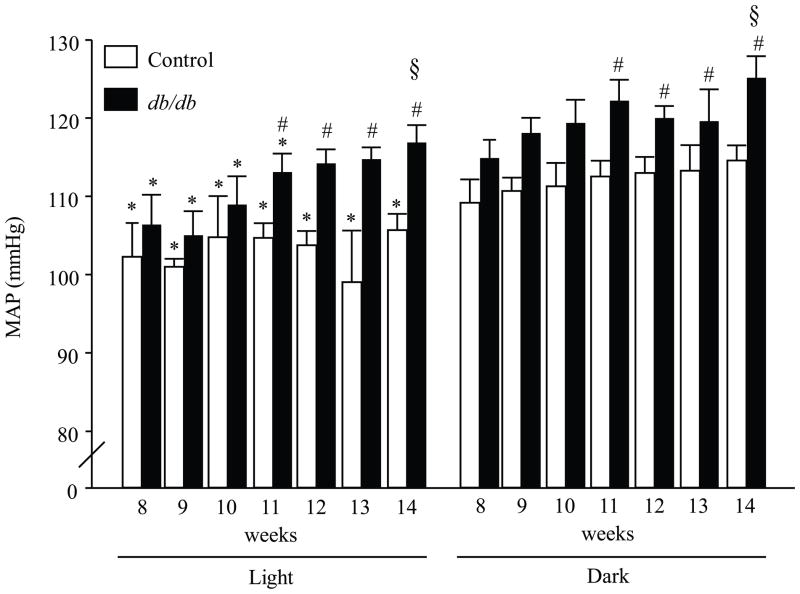
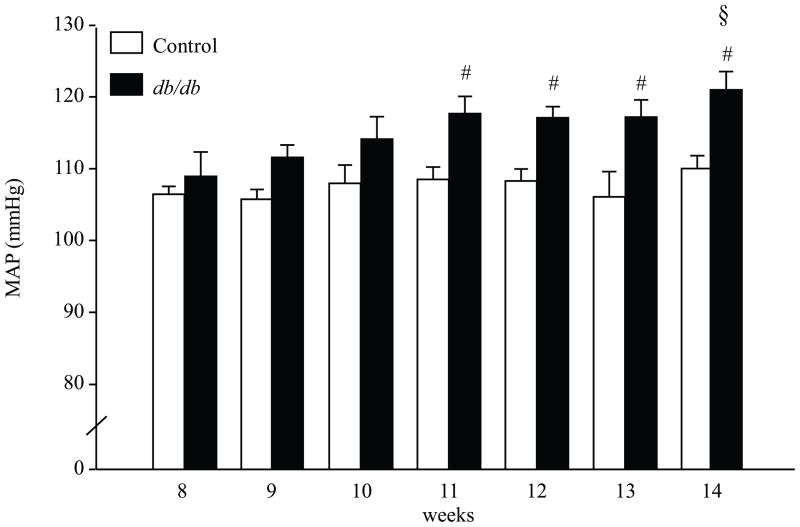
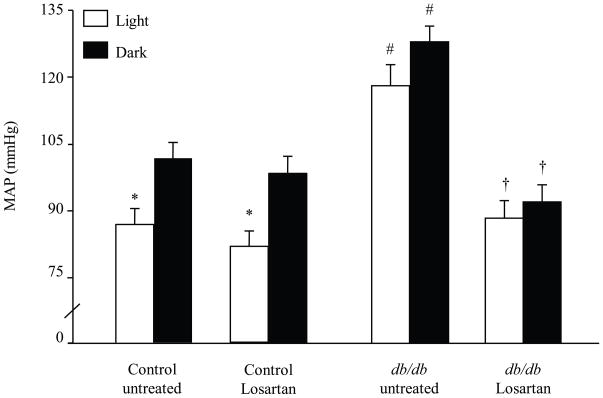
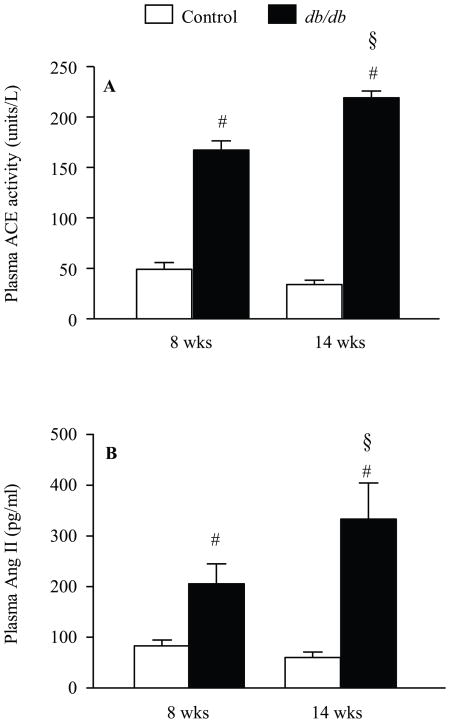
The db/db mice serve as a good model for type 2 diabetes characterized by hyperinsulinaemia and progressive hyperglycaemia. There are limited and conflicting data on the cardiovascular changes in this model. The aim of the present study was to characterize the cardiovascular and autonomic phenotype of male db/db mice and evaluate the role of angiotensin II AT(1) receptors. Radiotelemetry was used to monitor 24 h blood pressure (BP) in mice for 8 weeks. Parameters measured were mean arterial pressure (MAP), heart rate (HR) and their variabilities. In 8-week-old db/db mice, the MAP and BP circadian rhythms were not different from age-matched control mice, while HR and locomotor activity were decreased. With ageing, MAP gradually increased in db/db mice, and the 12 h light values did not dip significantly from the 12 h dark periods. In 14-week-old mice, MAP was increased during light (101 +/- 1 versus 117 +/- 2 mmHg, P < 0.01; control versus db/db mice) and dark phases (110 +/- 1.7 versus 121 +/- 3.1 mmHg, P < 0.01; control versus db/db mice). This increase in MAP was associated with a significant increase in plasma angiotensin-converting enzyme activity and angiotensin II levels. Chronic treatment with losartan (10 mg kg(-1) day(-1)) blocked the increase in MAP in db/db mice, with no effect in control animals. Spectral analysis was used to monitor autonomic cardiovascular function. The circadian rhythm observed in systolic arterial pressure variance and its low-frequency component in control mice was absent in db/db mice. There were no changes in HR variability and spontaneous baroreflex sensitivity between control and db/db mice. The results document an age-related increase in MAP in db/db mice, which can be reduced by antagonism of angiotensin II AT(1) receptors, and alterations in autonomic balance and components of the renin-angiotensin system.
Figures
References
-
- Intensive blood-glucose control with sulphonylureas or insulin compared with conventional treatment and risk of complications in patients with type 2 diabetes (UKPDS 33) UK Prospective Diabetes Study (UKPDS) Group. . Lancet. 352:837–853. - PubMed
-
- Aasum E, Hafstad AD, Severson DL, Larsen TS. Age-dependent changes in metabolism, contractile function, and ischemic sensitivity in hearts from db/db mice. Diabetes. 2003;52:434–441. - PubMed
-
- Amazonas RB, Lopes De Faria JB. Effects of tight blood pressure control on glomerular hypertrophy in a model of genetic hypertension and experimental diabetes mellitus. Life Sci. 2006;79:2135–2143. - PubMed
-
- Bagi Z, Erdei N, Toth A, Li W, Hintze TH, Koller A, Kaley G. Type 2 diabetic mice have increased arteriolar tone and blood pressure: enhanced release of COX-2-derived constrictor prostaglandins. Arterioscler Thromb Vasc Biol. 2005;25:1610–1616. - PubMed
-
- Balbinott AW, Irigoyen MC, Brasileiro-Santos MS, Zottis B, De Lima NG, Passaglia J, Schaan BD. Dose-dependent autonomic dysfunction in chronic L-NAME-hypertensive diabetic rats. J Cardiovasc Pharmacol. 2005;46:563–569. - PubMed
Publication types
MeSH terms
Substances
Grants and funding
LinkOut - more resources
Full Text Sources
Other Literature Sources
Medical
Research Materials
Miscellaneous