A model for DNA replication showing how dormant origins safeguard against replication fork failure
- PMID: 19218919
- PMCID: PMC2644062
- DOI: 10.1038/embor.2009.5
A model for DNA replication showing how dormant origins safeguard against replication fork failure
Abstract
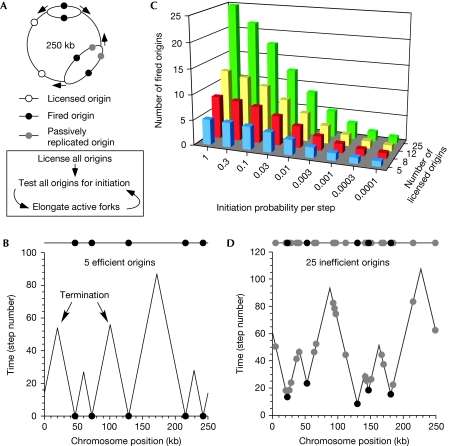
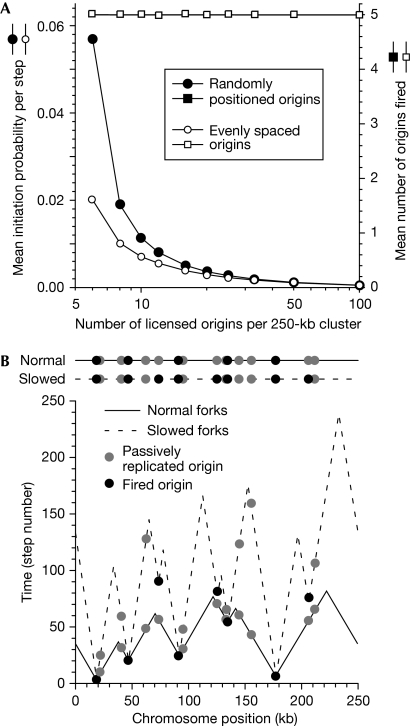
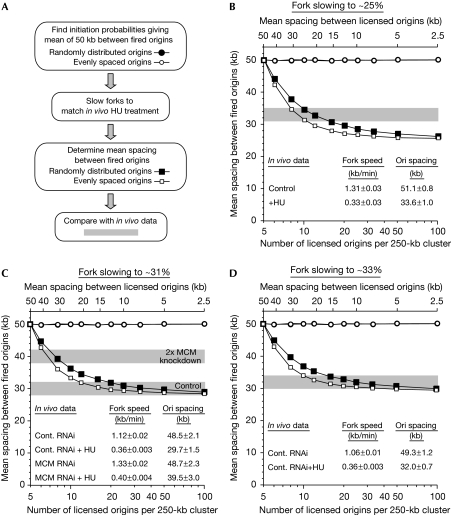
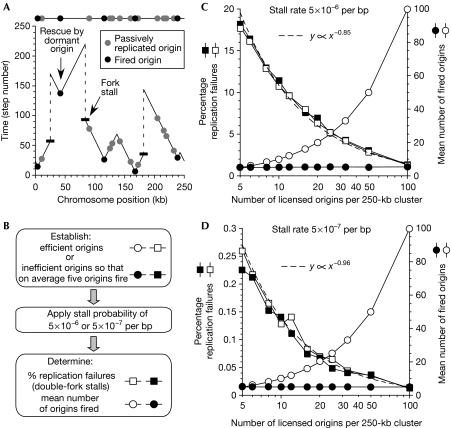
Replication origins are 'licensed' for a single initiation event before entry into S phase; however, many licensed replication origins are not used, but instead remain dormant. The use of these dormant origins helps cells to survive replication stresses that block replication fork movement. Here, we present a computer model of the replication of a typical metazoan origin cluster in which origins are assigned a certain initiation probability per unit time and are then activated stochastically during S phase. The output of this model is in good agreement with experimental data and shows how inefficient dormant origins can be activated when replication forks are inhibited. The model also shows how dormant origins can allow replication to complete even if some forks stall irreversibly. This provides a simple explanation for how replication origin firing is regulated, which simultaneously provides protection against replicative stress while minimizing the cost of using large numbers of replication forks.
Conflict of interest statement
The authors declare that they have no conflict of interest.
Figures
References
-
- Anglana M, Apiou F, Bensimon A, Debatisse M (2003) Dynamics of DNA replication in mammalian somatic cells: nucleotide pool modulates origin choice and interorigin spacing. Cell 114: 385–394 - PubMed
-
- Arias EE, Walter JC (2007) Strength in numbers: preventing rereplication via multiple mechanisms in eukaryotic cells. Genes Dev 21: 497–518 - PubMed
-
- Berezney R, Dubey DD, Huberman JA (2000) Heterogeneity of eukaryotic replicons, replicon clusters, and replication foci. Chromosoma 108: 471–484 - PubMed
Publication types
MeSH terms
Grants and funding
LinkOut - more resources
Full Text Sources