. 2009 Aug;467(8):2168-91.
doi: 10.1007/s11999-009-0738-5. Epub 2009 Feb 14.

Treatment of war wounds: a historical review

Affiliations

Treatment of war wounds: a historical review

M M Manring et al. Clin Orthop Relat Res. 2009 Aug.

Abstract

The treatment of war wounds is an ancient art, constantly refined to reflect improvements in weapons technology, transportation, antiseptic practices, and surgical techniques. Throughout most of the history of warfare, more soldiers died from disease than combat wounds, and misconceptions regarding the best timing and mode of treatment for injuries often resulted in more harm than good. Since the 19th century, mortality from war wounds steadily decreased as surgeons on all sides of conflicts developed systems for rapidly moving the wounded from the battlefield to frontline hospitals where surgical care is delivered. We review the most important trends in US and Western military trauma management over two centuries, including the shift from primary to delayed closure in wound management, refinement of amputation techniques, advances in evacuation philosophy and technology, the development of antiseptic practices, and the use of antibiotics. We also discuss how the lessons of history are reflected in contemporary US practices in Iraq and Afghanistan.


Figures
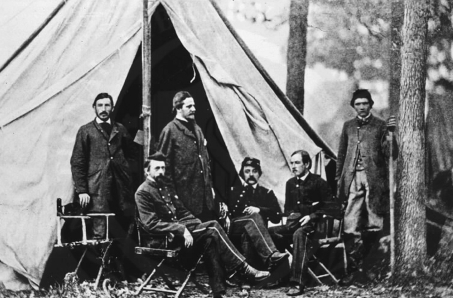
Fig. 1
Fig. 1
Jonathan Letterman, seated at left with members of the medical staff of the Army of the Potomac, organized an efficient medical corps after the disasters of the initial battles of the American Civil War. (Courtesy of the National Library of Medicine, Washington, DC.)
Fig. 2
Fig. 2
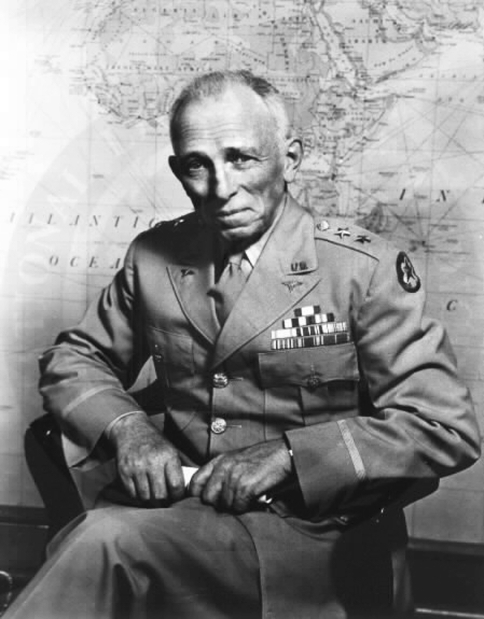
Norman T. Kirk, the first orthopaedic surgeon to be named US Surgeon General, was responsible for numerous improvements in military trauma care, including guidelines for amputation and an enhanced system of stateside rehabilitation. (Courtesy of the National Library of Medicine, Washington, DC.)
Fig. 3A–B
Fig. 3A–B
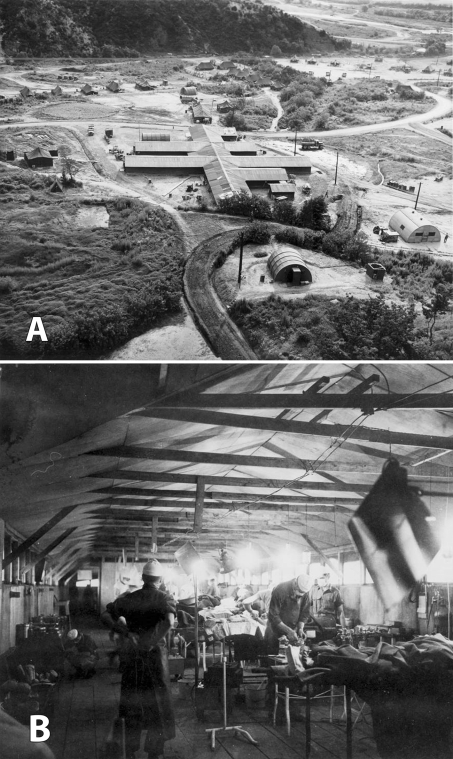
(A) The 8208th Mobile Army Surgical Hospital was one of the MASH units created to provide care within a few miles of the front line during the Korean War. (Courtesy of Otis Historical Archives, National Museum of Health and Medicine, Armed Forces Institute of Pathology, Washington, DC.) (B) Mortality from all wounds decreased in Korea owing to more rapid transport via helicopter to operating rooms such as the one staffed by physicians at the 8055th MASH. (Courtesy of Otis Historical Archives, National Museum of Health and Medicine, Armed Forces Institute of Pathology, Washington, DC.)
Fig. 4
Fig. 4
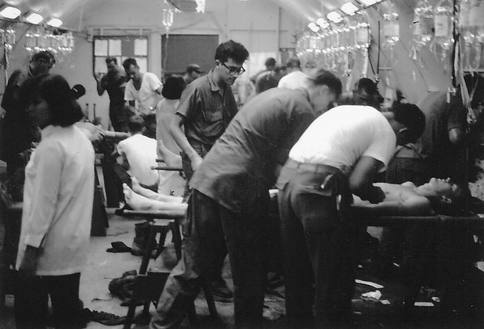
Casualties arrive at the Naval Support Activity Station Hospital in Da Nang, Vietnam, in 1968. The wounded were transferred from the helicopters to the triage area on canvas-covered stretchers. These were set on sawhorses, where they became examination tables and sometimes operating tables. (From Kelly PJ. Vietnam, 1968–69: a place and year like no other. Neurosurgery. 2003;52:927–943. Reproduced with permission of Wolters Kluwer Health.)
Fig. 5A–B
Fig. 5A–B
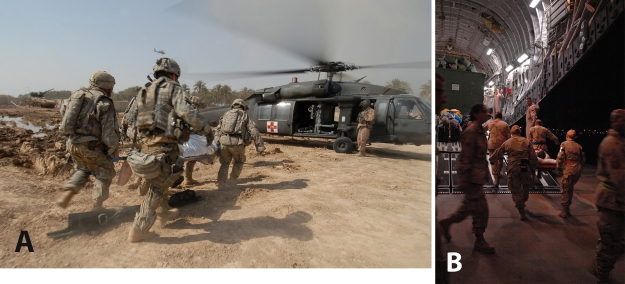
(A) US Army soldiers transport a trauma victim to a US Army medical helicopter in Tarmiyah, Iraq, September 30, 2007. (US Navy photograph by Mass Communication Specialist 2nd Class Summer M. Anderson. Courtesy of the US Department of Defense, Washington, DC.) (B) More seriously wounded patients are loaded onto a C-17 “flying ICU” in March 2007 for transport out of Iraq to Level IV facilities. (Photograph by Tech Sgt Mike R. Smith. Courtesy of the National Guard Bureau, Arlington, VA.)
Fig. 6
Fig. 6
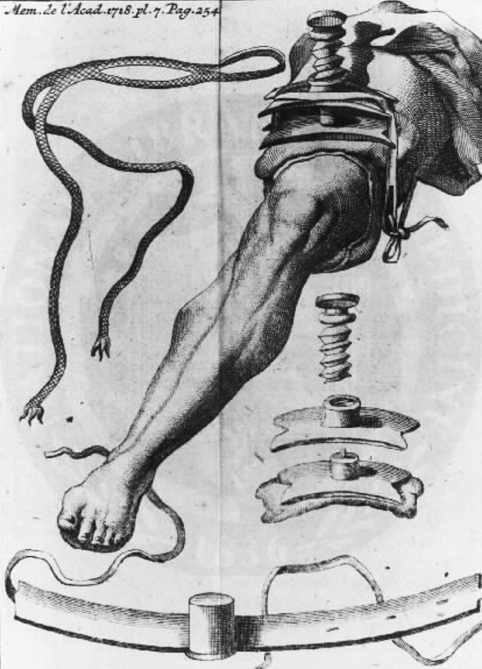
Jean Petit’s screw tourniquet offered a more practical means to control bleeding during amputation. This engraving from 1718 shows a leg with the tourniquet attached and vignettes of the tourniquet apparatus. (Courtesy of the National Library of Medicine, Washington, DC.)
Fig. 7A–B
Fig. 7A–B
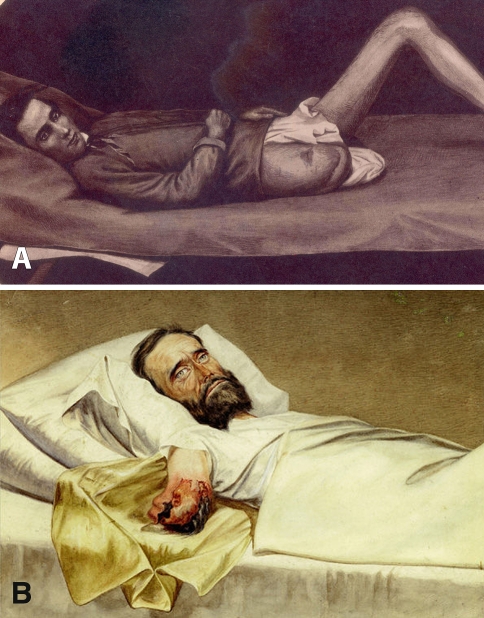
(A) A drawing depicts a successful secondary amputation at the right hip in a Union soldier, circa 1864. (Courtesy of Otis Historical Archives, National Museum of Health and Medicine. Armed Forces Institute of Pathology, Washington, DC.) (B) Another drawing shows hospital gangrene of an arm stump. The private, who was wounded by a Minié ball, was imprisoned in Richmond, VA, on July 4, 1863. (Courtesy of Otis Historical Archives, National Museum of Health and Medicine, Armed Forces Institute of Pathology, Washington, DC.)
Fig. 8
Fig. 8
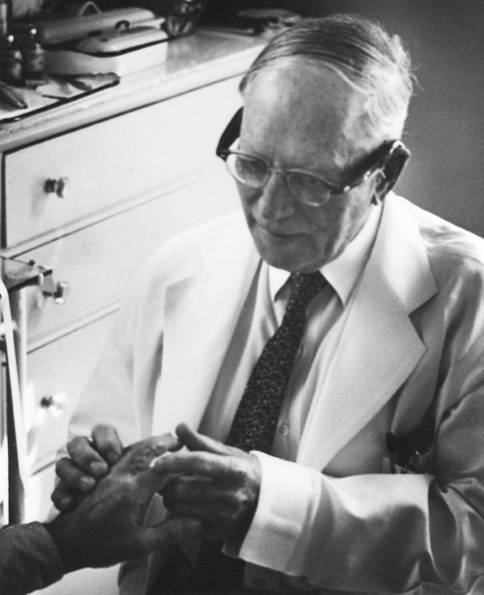
Sterling Bunnell, MD, had completed the first edition of Surgery of the Hand [20] when called on by Surgeon General Kirk to create US Army Hand Centers in 1944. His work, particularly in training dozens of protégés, laid the foundation for the subspecialty of hand surgery. (Courtesy of Sterling Bunnell Memorial Library, Health Sciences Library, California Pacific Medical Center, San Francisco, CA.)
Fig. 9
Fig. 9
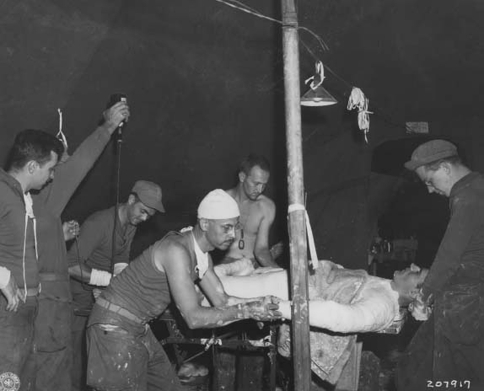
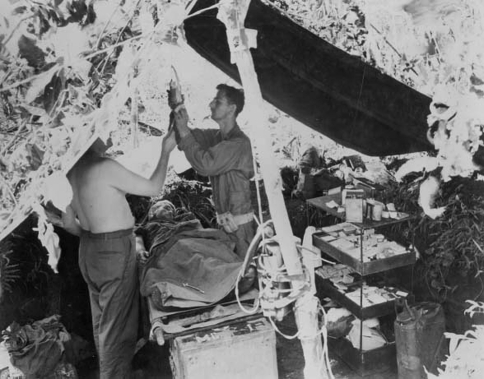
In a hastily constructed tent on Okinawa, US 10th Army medics complete a cast on a soldier wounded by shell fragments. Assistants, meanwhile, administer blood plasma. This photograph was taken on April 9, 1945. (Courtesy of Otis Historical Archives, National Museum of Health and Medicine, Armed Forces Institute of Pathology, Washington, DC.)
Fig. 10
Fig. 10
Blood plasma is given to the wounded at a medical station near the front line somewhere in the South Pacific during World War II. (Courtesy of Otis Historical Archives, National Museum of Health and Medicine, Armed Forces Institute of Pathology, Washington, DC.)
Fig. 11
Fig. 11
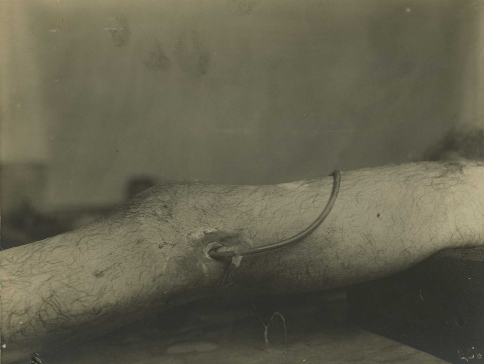
A tube is inserted in the leg of an American soldier wounded in World War I, providing irrigation of the knee with Dakin’s solution. (Courtesy of Otis Historical Archives, National Museum of Health and Medicine, Armed Forces Institute of Pathology, Washington, DC.)
Fig. 12
Fig. 12
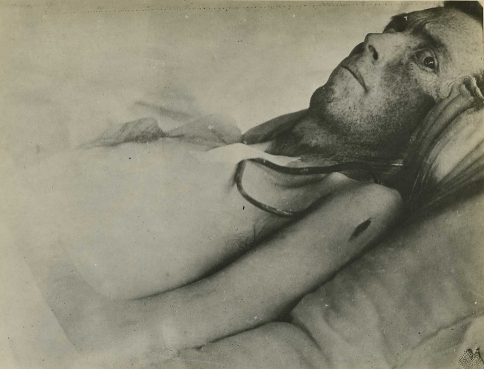
A US soldier receives treatment in June 1919 via an irrigation tube for Dakin’s solution. (Courtesy of Otis Historical Archives, National Museum of Health and Medicine, Armed Forces Institute of Pathology, Washington, DC.)

References

    1. {'text': '', 'ref_index': 1, 'ids': [{'type': 'PubMed', 'value': '6388417', 'is_inner': True, 'url': 'https://pubmed.ncbi.nlm.nih.gov/6388417/'}]}
    2. Aldrete JA, Marron GM, Wright AJ. The first administration of anesthesia in military surgery: on occasion of the Mexican-American War. Anesthesiology. 1984;61:585–588. - PubMed
    1. {'text': '', 'ref_index': 1, 'ids': [{'type': 'PubMed', 'value': '10511234', 'is_inner': True, 'url': 'https://pubmed.ncbi.nlm.nih.gov/10511234/'}]}
    2. American Society of Health-System Pharmacists. Armed Services Blood Program therapeutic guidelines on antimicrobial prophylaxis in surgery. Am J Health Syst Pharm. 1999;56:1839–1888. - PubMed
    1. {'text': '', 'ref_index': 1, 'ids': [{'type': 'PubMed', 'value': '17003202', 'is_inner': True, 'url': 'https://pubmed.ncbi.nlm.nih.gov/17003202/'}]}
    2. Andersen RC, Frisch HM, Farber GL, Hayda RA. Definitive treatment of combat casualties at military medical centers. J Am Acad Orthop Surg. 2006;14:S24–S31. - PubMed
    1. None
    2. Anderson R. An automatic method for treatment of fractures of the tibia and the fibula. J Bone Joint Surg Am. 1934;58:639–646.
    1. Artz CP, Bronwell AW, Sako Y. Preoperative and postoperative care of battle casualties. Available at: http://history.amedd.army.mil/booksdocs/korea/recad1/frameindex.html. Accessed Sept. 12, 2008.