


A preliminary trial: double-blind comparison of nefazodone, bupropion-SR, and placebo in the treatment of cannabis dependence
- PMID: 19219666
- PMCID: PMC2759381
- DOI: 10.1080/10550490802408936
A preliminary trial: double-blind comparison of nefazodone, bupropion-SR, and placebo in the treatment of cannabis dependence
Abstract
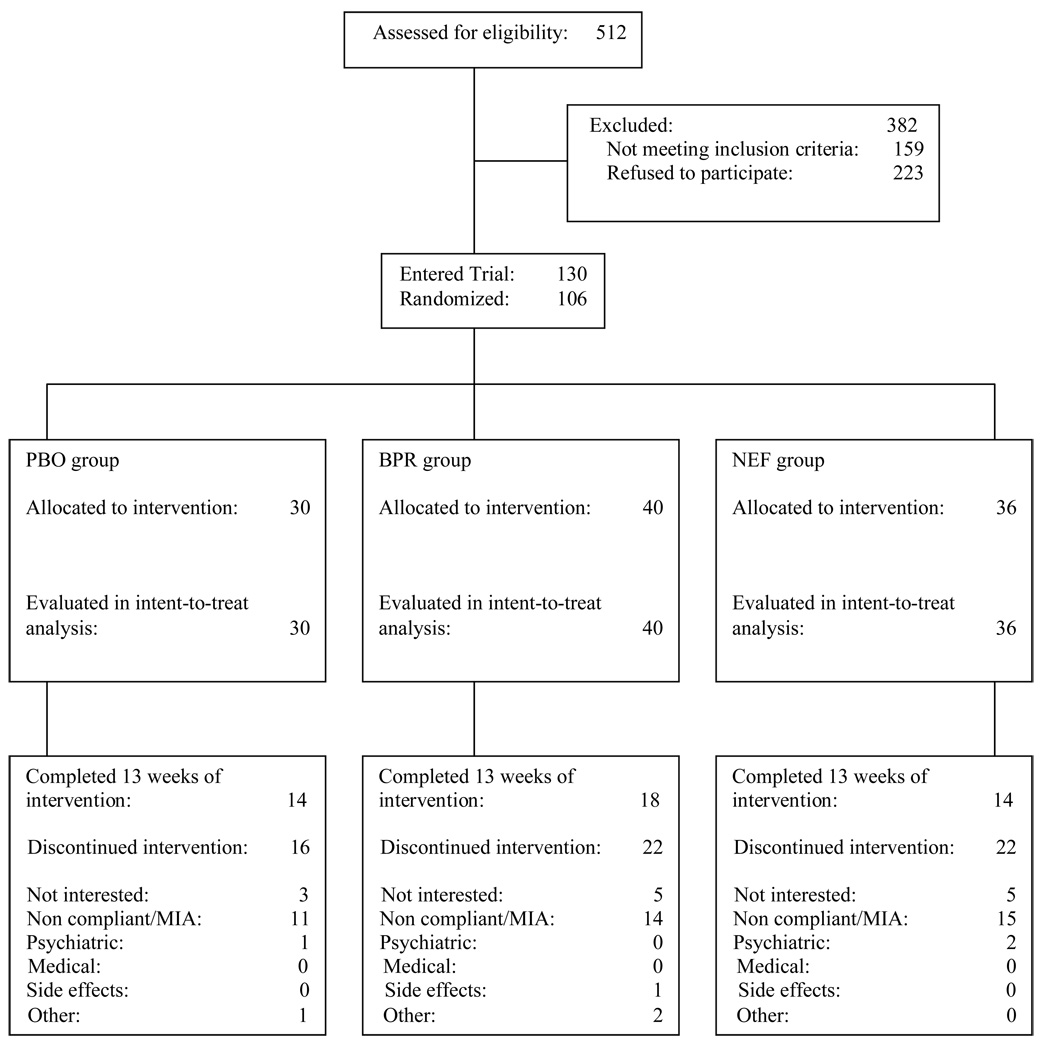
The present study investigated the efficacy of nefazodone and bupropion-sustained release for treating cannabis dependence. A double-blind, placebo-controlled, piggy back design was employed to assess if nefazodone and bupropion-sustained release increased the probability of abstinence from cannabis and reduced the severity of cannabis dependence and cannabis withdrawal symptoms during a 13-week outpatient treatment program. One-hundred and six participants (Mean = 32 years; females n = 25) were randomized to one of three medication conditions (nefazodone, bupropion-sustained release, or placebo) and participated in a weekly, individually based coping skills therapy program. Results indicated an increased probability of achieving abstinence over the course of treatment and a decrease in the severity of cannabis dependence and the withdrawal symptom of irritability. There were no significant effects demonstrated for nefazodone and bupropion-sustained release on cannabis use or cannabis withdrawal symptoms. The results indicate nefazodone and bupropion-sustained release may have limited efficacy in treating cannabis dependence.
Figures
References
-
- NIDA. NIDA Research Reports. 2005. < www.nida.nih.gov/ResearchReports/Marijuana/>.
-
- Stinson F, Ruan W, Pickering R, Grant B. Cannabis use disorders in the USA: prevalence, correlates and co-morbidity. Psychological Medicine. 2006;36(10):1447–1460. - PubMed
-
- Kalant H. Adverse effects of cannabis on health: an update of the literature since 1996. Progress in Neuro-Psychopharmacology and Biological Psychiatry. 2004;28:849–863. - PubMed
-
- Brook JS, Cohen P, Brook DW. Longitudinal study of co-occurring psychiatric disorders and substance use. Journal of American Academic Child and Adolescent Psychiatry. 1998;37(3):322–330. - PubMed
-
- Gruber AJ, Pope HG, Hudson JI, Yurgelun-Todd D. Attributes of long-term heavy cannabis users: a case-control study. Psychological Medicine. 2003;33(8):1415–1422. - PubMed
Publication types
MeSH terms
Substances
Grants and funding
LinkOut - more resources
Full Text Sources
Other Literature Sources
Medical
Research Materials
