


The endocannabinoid system as a target for the treatment of motor dysfunction
- PMID: 19220290
- PMCID: PMC2697699
- DOI: 10.1111/j.1476-5381.2008.00088.x
The endocannabinoid system as a target for the treatment of motor dysfunction
Abstract
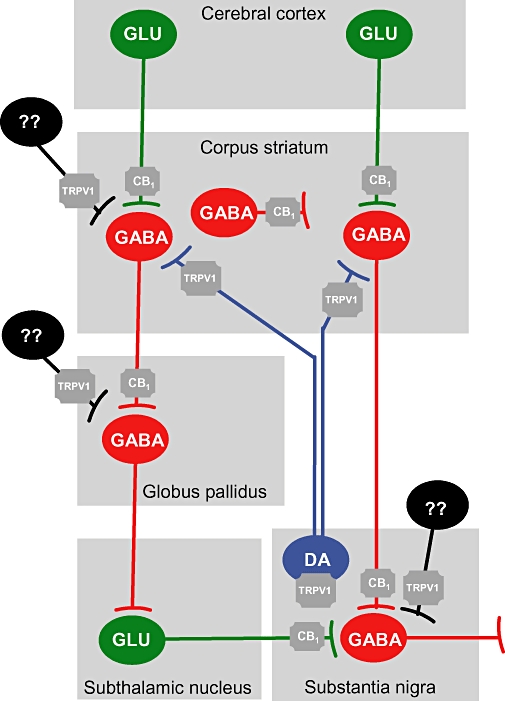
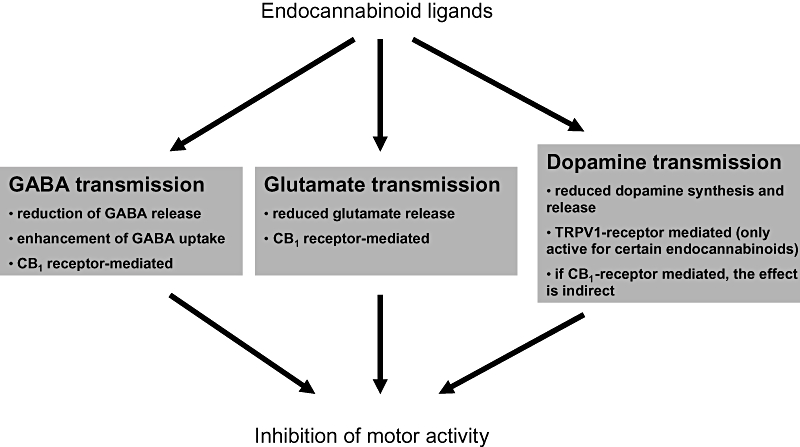
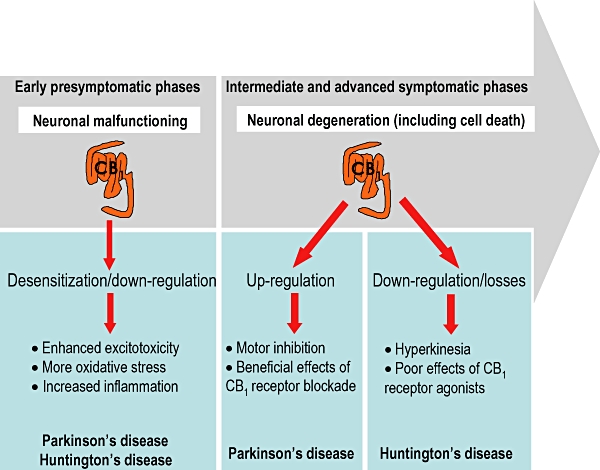
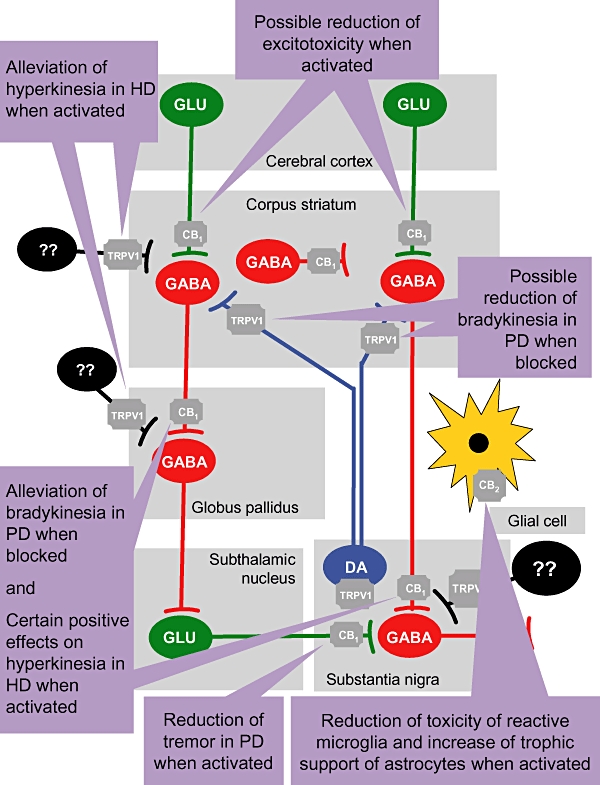
There is evidence that cannabinoid-based medicines that are selective for different targets in the cannabinoid signalling system (e.g. receptors, inactivation mechanism, enzymes) might be beneficial in basal ganglia disorders, namely Parkinson's disease (PD) and Huntington's disease (HD). These benefits not only include the alleviation of specific motor symptoms [e.g. choreic movements with cannabinoid receptor type 1 (CB(1))/transient receptor potential vanilloid type 1 agonists in HD; bradykinesia with CB(1) antagonists and tremor with CB(1) agonists in PD], but also the delay of disease progression due to the neuroprotective properties demonstrated for cannabinoids (e.g. CB(1) agonists reduce excitotoxicity; CB(2) agonists limit the toxicity of reactive microglia; and antioxidant cannabinoids attenuate oxidative damage). In addition, extensive biochemical, anatomical, physiological and pharmacological studies have demonstrated that: (i) the different elements of the cannabinoid system are abundant in basal ganglia structures and they are affected by these disorders; (ii) the cannabinoid system plays a prominent role in basal ganglia function by modulating the neurotransmitters that operate in the basal ganglia circuits, both in healthy and pathological conditions; and (iii) the activation and/or inhibition of the cannabinoid system is associated with important motor responses that are maintained and even enhanced in conditions of malfunctioning and/or degeneration. In this article we will review the available data regarding the relationship between the cannabinoid system and basal ganglia activity, both in healthy and pathological conditions and will also try to identify future lines of research expected to increase current knowledge about the potential therapeutic benefits of targeting this system in PD, HD and other basal ganglia disorders.
Figures
References
-
- Aguado T, Monory K, Palazuelos J, Stella N, Cravatt B, Lutz B, et al. The endocannabinoid system drives neural progenitor proliferation. FASEB J. 2005;19:1704–1706. - PubMed
-
- Battista N, Bari M, Tarditi A, Mariotti C, Bachoud-Lévi AC, Zuccato C, et al. Severe deficiency of the fatty acid amide hydrolase (FAAH) activity segregates with the Huntington's disease mutation in peripheral lymphocytes. Neurobiol Dis. 2007;27:108–116. - PubMed
-
- Bisogno T, Berrendero F, Ambrosino G, Cebeira M, Ramos JA, Fernández-Ruiz J, et al. Brain regional distribution of endocannabinoids: implications for their biosynthesis and biological function. Biochem Biophys Res Commun. 1999;256:377–380. - PubMed
Publication types
MeSH terms
Substances
LinkOut - more resources
Full Text Sources
Other Literature Sources
Medical
