


The effect of angiotensin-blocking agents on liver fibrosis in patients with hepatitis C
- PMID: 19220742
- PMCID: PMC3151254
- DOI: 10.1111/j.1478-3231.2009.01973.x
The effect of angiotensin-blocking agents on liver fibrosis in patients with hepatitis C
Abstract
Background: Multiple studies implicate the renin-angiotensin system in hepatic fibrogenesis. Few studies have examined the effects of angiotensin blockade on liver fibrosis via human histology.
Aims: We studied the histological effect of angiotensin II blocking agents in chronic hepatitis C patients.
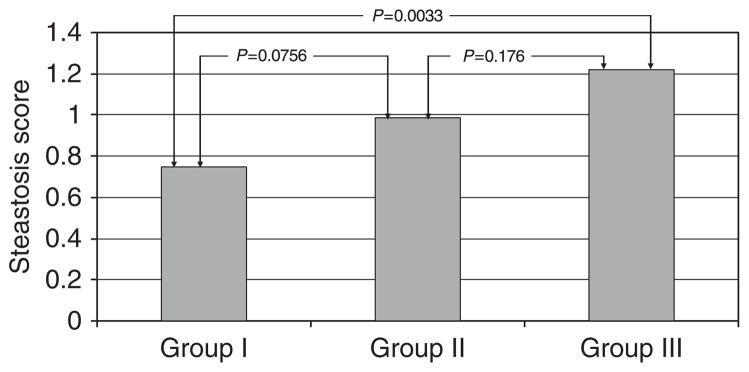
Methods: This was a retrospective study of 284 chronic hepatitis C patients from 2001 to 2006 who underwent a liver biopsy. Group I was comprised of 143 hypertensive patients who received angiotensin-blocking agents. Group II was comprised of 91 hypertensive subjects who received hypertensive agents other than angiotensin blockers. Group III was comprised of 50 non-hypertensive subjects.
Results: The groups were similar in age, sex, hepatitis C genotype, viral load and disease duration. They varied significantly in total diabetic patients (Group I, 43; Group II, 10; Group III, 1; P=0.0001), consistent with recommended use of angiotensin-converting enzyme inhibitors in hypertensive diabetics. Non-hypertensive patients had significantly less fibrosis than hypertensive patients, regardless of antihypertensive medications (Group I, 3.20; Group II, 3.73; Group III, 2.5; P=0.0002). Group I had significantly less fibrosis than Group II (P=0.02). This finding persisted in a non-diabetic subgroup of Groups I and II (Group I, 3.07; Group II, 3.69; P=0.0129).
Conclusion: Patients with hepatitis C and hypertension have increased fibrosis compared with non-hypertensive patients. Hypertensive patients receiving angiotensin-blocking agents had less fibrosis than hypertensive patients who did not receive angiotensin-blocking agents. This suggests an association with hypertension, possibly via the renin-angiotensin system in the fibrosis development and suggests a beneficial role of angiotensin II blockade in hepatitis C virus-related fibrosis.
Conflict of interest statement
No conflicts of interest exist.
Figures



Comment in
-
Angiotensin II antagonists in patients with recurrent hepatitis C virus infection after liver transplantation.Liver Int. 2010 Feb;30(2):334-5. doi: 10.1111/j.1478-3231.2009.02059.x. Epub 2009 Jun 9. Liver Int. 2010. PMID: 19515217 No abstract available.
-
Antifibrotic effect of angiotensin blockers in hypertensive hepatitis C patients.Liver Int. 2009 Nov;29(10):1597; author reply 1598. doi: 10.1111/j.1478-3231.2009.02115.x. Epub 2009 Sep 9. Liver Int. 2009. PMID: 19744164 No abstract available.
References
-
- Lauer GM, Walker BD. Hepatitis C virus infection. N Engl J Med. 2001;345:41–52. - PubMed
-
- Hui JM, Sud A, Farrell GC, et al. Insulin resistance is associated with chronic hepatitis C virus infection and fibrosis progression [corrected] Gastroenterology. 2003;125:1695–704. - PubMed
-
- Bataller R, Gabele E, Parsons CJ, et al. Systemic infusion of angiotensin II exacerbates liver fibrosis in bile duct-ligated rats. Hepatology. 2005;41:1046–55. - PubMed
Publication types
MeSH terms
Substances
Grants and funding
LinkOut - more resources
Full Text Sources
Medical
