Sustained Src inhibition results in signal transducer and activator of transcription 3 (STAT3) activation and cancer cell survival via altered Janus-activated kinase-STAT3 binding
- PMID: 19223541
- PMCID: PMC2929826
- DOI: 10.1158/0008-5472.CAN-08-2944
Sustained Src inhibition results in signal transducer and activator of transcription 3 (STAT3) activation and cancer cell survival via altered Janus-activated kinase-STAT3 binding
Abstract
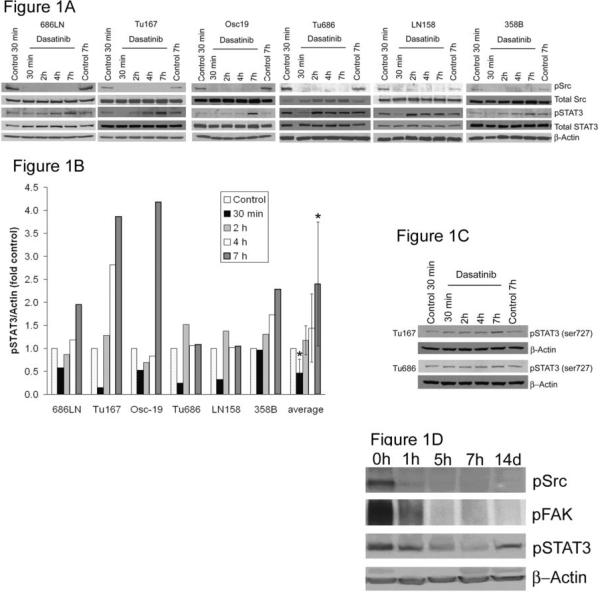
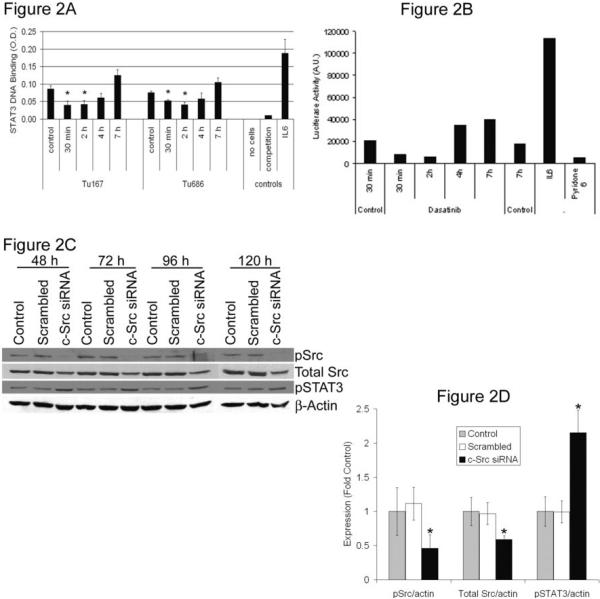
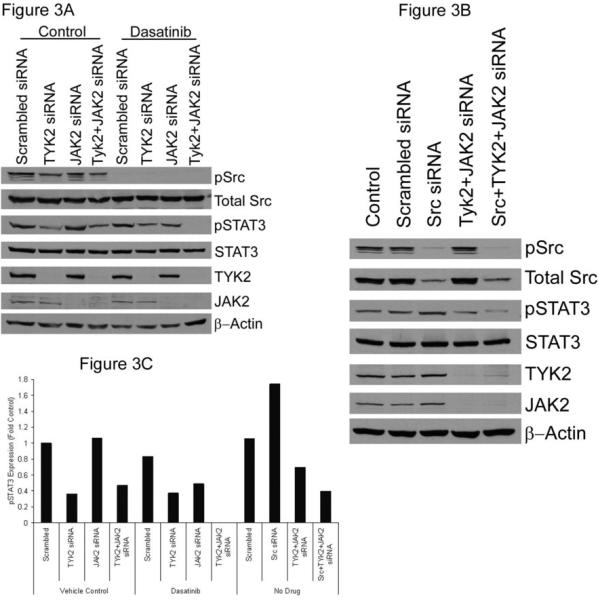
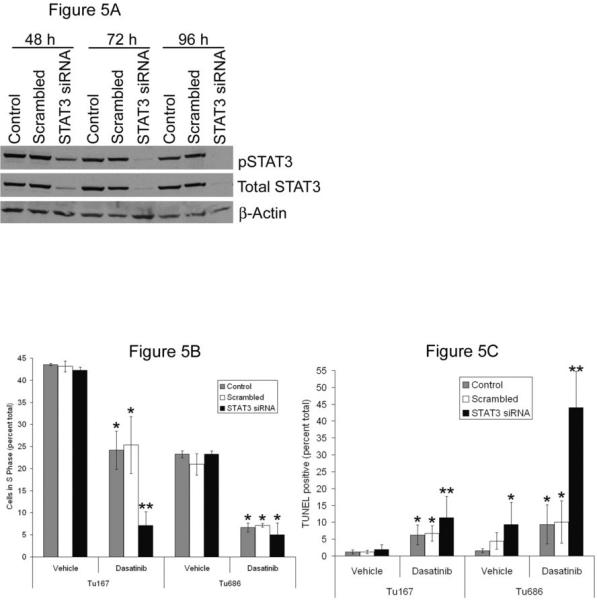
Locoregional and distant recurrence remains common and usually fatal for patients with advanced head and neck squamous cell carcinoma (HNSCC). One promising molecular target in HNSCC is the Src family kinases (SFK). SFKs can affect cellular proliferation and survival by activating the signal transducer and activator of transcription (STAT) family of transcription factors, especially STAT3. Surprisingly, sustained SFK inhibition resulted in only transient inhibition of STAT3. We investigated the mechanism underlying STAT3 activation and its biological importance. Specific c-Src knockdown with small interfering RNA (siRNA) resulted in STAT3 activation showing specificity, which was inhibited by Janus-activated kinase (JAK; TYK2 and JAK2) depletion with siRNA. Sustained SFK inhibition also resulted in recovered JAK-STAT3 binding and JAK kinase activity after an initial reduction, although JAK phosphorylation paradoxically decreased. To determine the biological significance of STAT3 activation, we combined specific STAT3 depletion with a pharmacologic SFK inhibitor and observed increased cell cycle arrest and apoptosis. Likewise, the addition of STAT3- or JAK-specific siRNA to c-Src-depleted cells enhanced cytotoxicity relative to cells incubated with c-Src siRNA alone. These results show that reactivation of STAT3 after sustained, specific c-Src inhibition is mediated through altered JAK-STAT3 binding and JAK kinase activity and that this compensatory pathway allows for cancer cell survival and proliferation despite durable c-Src inhibition. To our knowledge, this novel feedback pathway has never been described previously. Given that pharmacologic SFK inhibitors are currently being evaluated in clinical trials, these results have potential clinical implications for cancer therapy.
Figures


References
-
- Jemal A, Siegel R, Ward E, Murray T, Xu J, Thun MJ. Cancer statistics, 2007. CA Cancer J Clin. 2007;57:43–66. - PubMed
-
- Johnson FM, Gallick GE. SRC family nonreceptor tyrosine kinases as molecular targets for cancer therapy. Anticancer Agents Med Chem. 2007;7:651–9. - PubMed
-
- Johnson FM, Saigal B, Talpaz M, Donato NJ. Dasatinib (BMS-354825) tyrosine kinase inhibitor suppresses invasion and induces cell cycle arrest and apoptosis of head and neck squamous cell carcinoma and non-small cell lung cancer cells. Clin Cancer Res. 2005;11:6924–32. - PubMed
-
- van Oijen MG, Rijksen G, ten Broek FW, Slootweg PJ. Overexpression of c-Src in areas of hyperproliferation in head and neck cancer, premalignant lesions and benign mucosal disorders. J Oral Pathol Med. 1998;27:147–52. - PubMed
Publication types
MeSH terms
Substances
Grants and funding
LinkOut - more resources
Full Text Sources
Other Literature Sources
Medical
Miscellaneous