


Temporal trends of invasive Streptococcus pneumoniae serotypes and antimicrobial resistance patterns in Spain from 1979 to 2007
- PMID: 19225097
- PMCID: PMC2668361
- DOI: 10.1128/JCM.01454-08
Temporal trends of invasive Streptococcus pneumoniae serotypes and antimicrobial resistance patterns in Spain from 1979 to 2007
Abstract
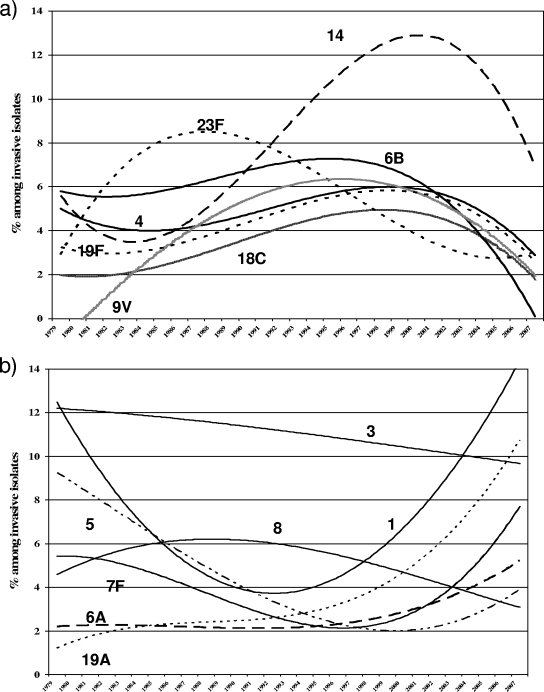
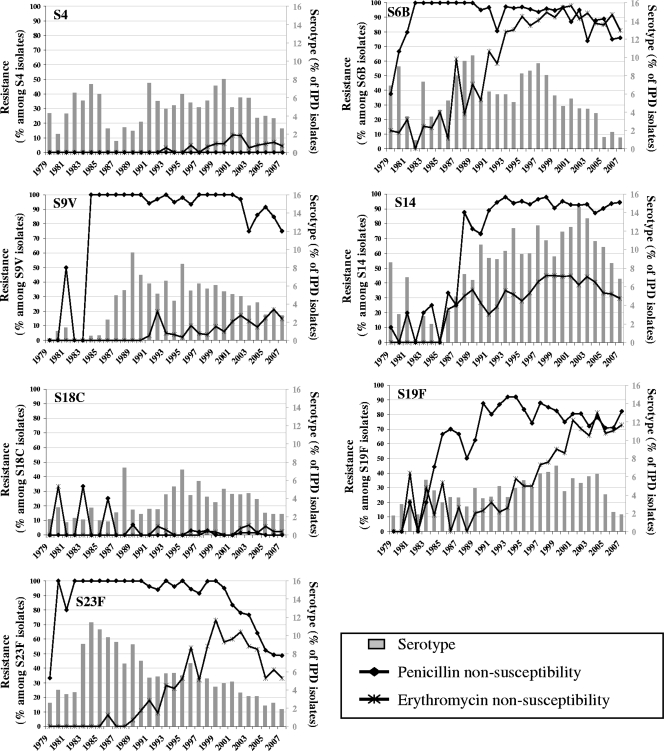
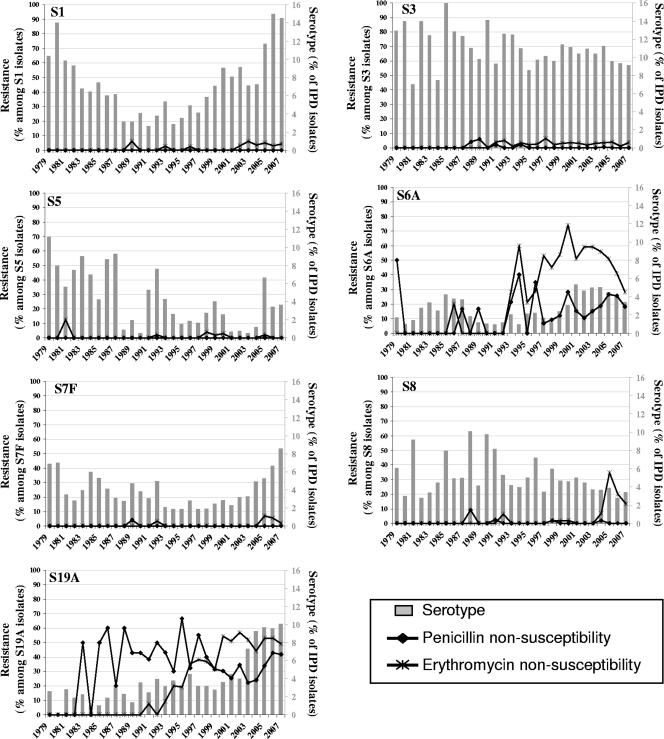
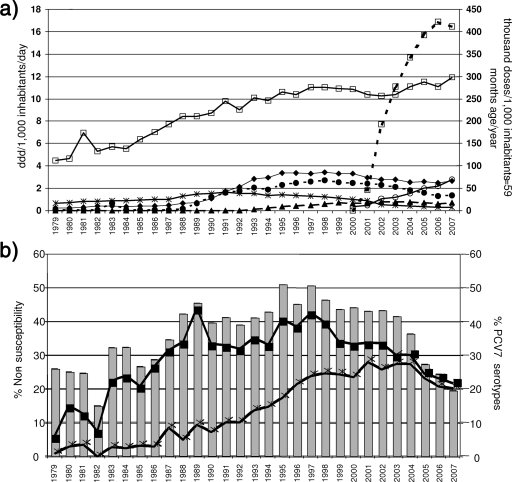
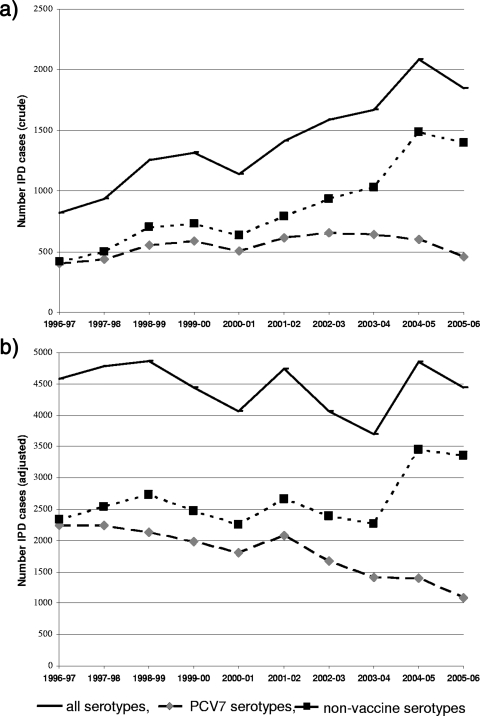
Temporal trends of serotypes from invasive pneumococcal disease (IPD) in Spain from 1979 to September 2007 under antibiotic and vaccine pressure were analyzed. A significant trend in pneumococcal conjugate 7-valent vaccine (PCV7) serotypes (except serotype 4) was found, whereby the prevalence increased from the early 1980s and decreased in the 2000s for all but serotype 23F, which began decreasing in the late 1980s. Among the major non-PCV7 serotypes, a significant decrease was observed for serotypes 1, 5, and 7F in the 1980s. From the late 1990s, serotypes 1, 5, 6A, 7F, and 19A increased significantly, while serotypes 3 and 8 showed similar but nonsignificant trends over time. The incidence of IPD cases was 10.7/100,000 for the period 1996 to 2006, with reporting coverage ranging from 18% to 43%. A significant decrease in IPD incidence due to PCV7 serotypes was observed, while the incidence of non-PCV7 serotypes increased, with the consequence that there was no clear pattern in the overall incidence of IPD. Penicillin nonsusceptibility was correlated with the proportion of PCV7 serotypes. Erythromycin nonsusceptibility increased in association with long-half-life macrolide consumption and then decreased in 2004 to 2007. The increase in PCV7 serotypes and antibiotic nonsusceptibility related to antibiotic consumption in the 1980s and 1990s was reversed in the 2000s, probably as a result of PCV7 immunization. The decrease in IPD incidence due to PCV7 serotypes was mirrored by an increase in that of non-PCV7 serotypes. The impact of various preventive/therapeutic strategies on pneumococcal evolution is serotype dependent, and the dynamics remain unpredictable.
Figures
References
-
- Byington, C. L., M. H. Samore, G. J. Stoddard, S. Barlow, J. Daly, K. Korgenski, S. Firth, D. Glover, J. Jensen, E. O. Mason, C. K. Shutt, and A. T. Pavia. 2005. Temporal trends of invasive disease due to Streptococcus pneumoniae among children in the intermountain west: emergence of nonvaccine serogroups. Clin. Infect. Dis. 4121-29. - PubMed
-
- Centers for Disease Control and Prevention. 2008. Invasive pneumococcal disease in children 5 years after conjugate vaccine introduction—eight states, 1998-2005. MMWR Morb. Mortal. Wkly. Rep. 57144-148. - PubMed
-
- Clinical and Laboratory Standards Institute. 2006. Methods for dilution antimicrobial susceptibility tests for bacterial that grow aerobically; 7th ed. Approved standard M7-A7. Clinical and Laboratory Standards Institute, Wayne, PA.
Publication types
MeSH terms
Substances
LinkOut - more resources
Full Text Sources
Medical
