


Gene X environment interaction of vigorous exercise and body mass index among male Vietnam-era twins
- PMID: 19225119
- PMCID: PMC2667452
- DOI: 10.3945/ajcn.2008.27170
Gene X environment interaction of vigorous exercise and body mass index among male Vietnam-era twins
Abstract
Background: Secular trends over the past several decades suggest an environmental influence on body mass index (BMI). However, twin models that incorporate a gene-environment correlation and gene x environment interaction have not been applied to elucidate specific environmental factors that affect the heritability of BMI.
Objective: Our aim was to determine whether one putative environmental predictor of obesity, vigorous exercise, shows evidence of a gene-environment correlation or gene x environment interaction with BMI among twins.
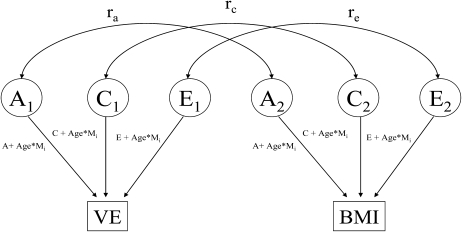
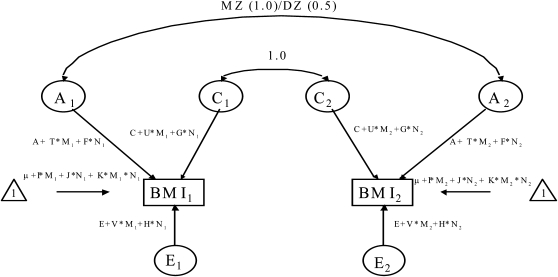
Design: Twin structural equation modeling was used to examine a gene-environment correlation and a gene x environment interaction of vigorous exercise with BMI among 2710 monozygotic and 2327 dizygotic male-male twin pairs from the Vietnam Era Twin Registry -- a national registry of twin pairs who served in the military during the Vietnam War era.
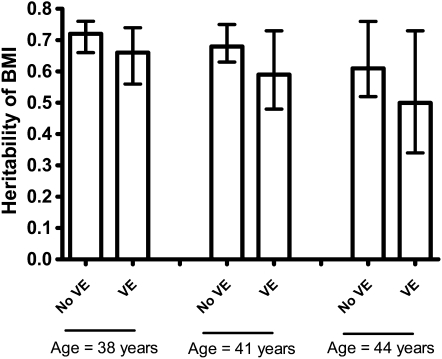
Results: Vigorous exercise significantly modified the additive genetic component of BMI, which indicated a gene x environment interaction (P < 0.001). BMI showed the greatest genetic influence among those who did not report vigorous exercise, with diminished genetic influence among those who did. Furthermore, vigorous exercise had a small but significant environmental effect on BMI (P = 0.006) -- a finding confirmed among monozygotic co-twins discordant for vigorous exercise.
Conclusions: Genetic influences on BMI are lower among those who report vigorous exercise. Consistent with an emerging literature, this suggests that vigorous exercise may mitigate some of the genetic influence on obesity. Molecular genetic studies of obesity should consider incorporating measures of behavioral and demographic factors to maximize the identification of novel obesity genes.
Figures
References
-
- Thorleifsson G, Walters GB, Gudbjartsson DF, et al. Genome-wide association yields new sequence variants at seven loci that associate with measures of obesity. Nat Genet 2009;41:18–24 - PubMed
Publication types
MeSH terms
Grants and funding
LinkOut - more resources
Full Text Sources
Medical
Miscellaneous
