


Reduced skeletal muscle capillarization and glucose intolerance
- PMID: 19225985
- PMCID: PMC2990692
- DOI: 10.1080/10739680802502423
Reduced skeletal muscle capillarization and glucose intolerance
Abstract
Objective: Reduced capillarization in hemiparetic skeletal muscle of chronic stroke patients can limit insulin, glucose, and oxygen supply to muscle, thereby contributing to impaired glucose metabolism and cardiovascular deconditioning. We hypothesized that compared to sedentary controls, stroke subjects have reduced skeletal muscle capillarization that is associated with glucose intolerance and reduced peak oxygen consumption (Vo(2peak)).
Methods: Twelve chronic stroke subjects (ages, 62.1+/-2.8 years), and matched sedentary controls with impaired (n=12) or normal (n=12) glucose tolerance underwent oral glucose tolerance tests, exercise tests, and vastus lateralis biopsies.
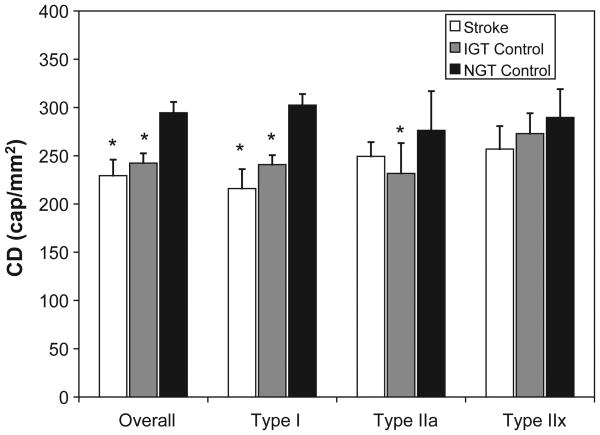
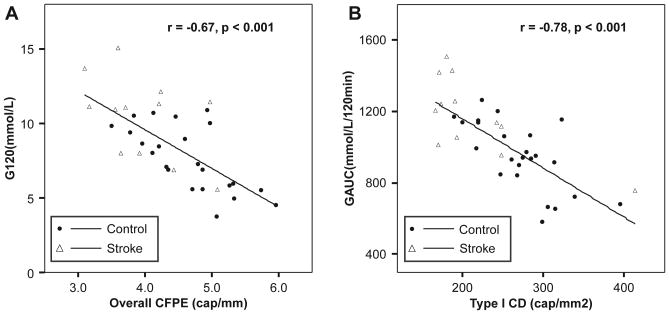
Results: Stroke subjects had lower capillarization in hemiparetic muscle than in nonparetic muscle and normal glucose tolerant controls ( approximately 22 and approximately 28%, respectively; P<0.05) and had similar bilateral capillarization, compared to controls with impaired glucose tolerance. Capillary density in hemiparetic muscle inversely correlated with 120-minute glucose (r=-0.70, P<0.01) and glucose area under the curve (r=-0.78, P<0.01). Vo(2peak) was approximately 40% lower in stroke subjects, compared to controls (P<0.001), but did not correlate with capillarization (P=n.s.).
Conclusions: Hemiparetic muscle capillarization is reduced after stroke, and reduced capillarization is associated with glucose intolerance in stroke and control subjects. Interventions to increase skeletal muscle capillarization may prove beneficial for improving glucose metabolism in chronic stroke patients.
Figures
References
-
- Ader M, Bergman RN. Importance of transcapillary insulin transport to dynamics of insulin action after intravenous glucose. Am J Physiol. 1994;266:E17–E25. - PubMed
-
- American Diabetes Association. Diagnosis and classification of diabetes mellitus. Diabetes Care. 2008;31(Suppl 1):S55–S60. - PubMed
-
- Brodal P, Ingjer F, Hermansen L. Capillary supply of skeletal muscle fibers in untrained and endurance-trained men. Am J Physiol. 1977;232:H705–H712. - PubMed
-
- Brooke MH, Kaiser KK. Three “myosin adenosine triphosphatase” systems: the nature of their pH lability and sulfhydryl dependence. J Histochem Cytochem. 1970;18:670–672. - PubMed
-
- Cowie CC, Rust KF, Byrd-Holt DD, Eberhardt MS, Flegal KM, Engelgau MM, Saydah SH, Williams DE, Geiss LS, Gregg EW. Prevalence of diabetes and impaired fasting glucose in adults in the U.S. population: National Health and Nutrition Examination Survey 1999–2002. Diabetes Care. 2006;29:1263–1268. - PubMed
Publication types
MeSH terms
Grants and funding
LinkOut - more resources
Full Text Sources
Other Literature Sources
Medical
Miscellaneous
