


Human cardiac fibroblasts express B-type natriuretic peptide: fluvastatin ameliorates its up-regulation by interleukin-1alpha, tumour necrosis factor-alpha and transforming growth factor-beta
- PMID: 19228263
- PMCID: PMC4515057
- DOI: 10.1111/j.1582-4934.2009.00704.x
Human cardiac fibroblasts express B-type natriuretic peptide: fluvastatin ameliorates its up-regulation by interleukin-1alpha, tumour necrosis factor-alpha and transforming growth factor-beta
Abstract
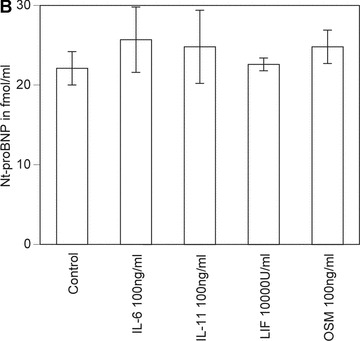
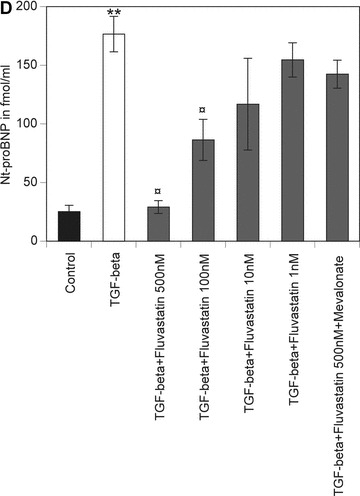
B-type natriuretic peptide (BNP) is a cardiac hormone, which plays a major role in body fluid and cardiovascular homeostasis. Produced by cardiac ventricles, its expression is highly regulated by various mediators. Canine cardiac fibroblasts have been identified as a source of BNP. Cardiac fibroblasts are key regulators of myocardial structure and function. We treated cultured human adult cardiac fibroblasts (HACF) with 2000 U/ml tumour necrosis factor-alpha (TNF-alpha), 200 U/ml interleukin-1alpha (IL-1alpha) or 50 ng/ml transforming growth factor-beta (TGF-beta) in the presence or absence of 500 nM fluvastatin. N-terminal pro-BNP (Nt-proBNP) concentration was determined by a competitive enzyme immunoassay. RealTime polymerase chain reaction (real-time PCR) was performed to investigate changes in BNP mRNA expression. Nt-proBNP peptide was present in the conditioned media of HACF and incubation with fluvastatin significantly reduced Nt-proBNP peptide levels. Treatment of HACF with TNF-alpha, IL-1alpha or TGF-beta significantly increased Nt-proBNP levels compared with untreated cells. This effect was completely abolished in the presence of fluvastatin. Real-time PCR analysis confirmed these changes at the level of mRNA expression. Our data suggest that cardiac fibroblasts are a potential source of BNP in the human heart. Pro-inflammatory cytokines, associated with ventricular dysfunction and cardiac fibrosis, seem to be major inducers of BNP production in cardiac fibroblasts. This effect can be reverted by a statin. Based on our data, we speculate that elevated plasma BNP levels might not only reflect increased myocardial stretch but also inflammatory and remodelling processes. A possible benefit of statin-induced reduction in BNP production requires further studies.
Figures




References
-
- Jarai R, Wojta J, Huber K. Circulating B-type natriuretic peptides in patients with acute coronary syndromes. Pathophysiological, prognostical and therapeutical considerations. Thromb Haemost. 2005;94:926–32. - PubMed
-
- Hall C. Essential biochemistry and physiology of (NT-pro)BNP. Eur J Heart Fail. 2004;6:257–60. - PubMed
-
- Tsuruda T, Boerrigter G, Huntley BK, et al. Brain natriuretic peptide is produced in cardiac fibroblasts and induces matrix metalloproteinases. Circ Res. 2002;91:1127–34. - PubMed
-
- Manabe I, Shindo T, Nagai R. Gene expression in fibroblasts and fibrosis: involvement in cardiac hypertrophy. Circ Res. 2002;91:1103–13. - PubMed
-
- Bradham WS, Moe G, Wendt KA, et al. TNF-alpha and myocardial matrix metalloproteinases in heart failure: relationship to LV remodeling. Am J Physiol Heart Circ Physiol. 2002;282:H1288–95. - PubMed
Publication types
MeSH terms
Substances
LinkOut - more resources
Full Text Sources
Research Materials
