


Differential expression of fibulin family proteins in the para-cervical weak zone and other areas of human fetal membranes
- PMID: 19230968
- PMCID: PMC2693720
- DOI: 10.1016/j.placenta.2009.01.007
Differential expression of fibulin family proteins in the para-cervical weak zone and other areas of human fetal membranes
Abstract
Objective: Human fetal membranes (FM) at term have been shown to contain a weak zone in the region overlying the cervix which exhibits characteristics of increased collagen remodeling and apoptosis. It has been hypothesized that the FM rupture initiation site is within this weak zone. Although the FM weak zone has been partially characterized, it is unclear what structural differences in the extracellular matrix result in its decreased rupture strength. A screen for differentially expressed proteins in the amnion of the weak zone versus other FM areas demonstrated that fibulin 1 was decreased. We investigated potential regional differences in all fibulin protein family members.
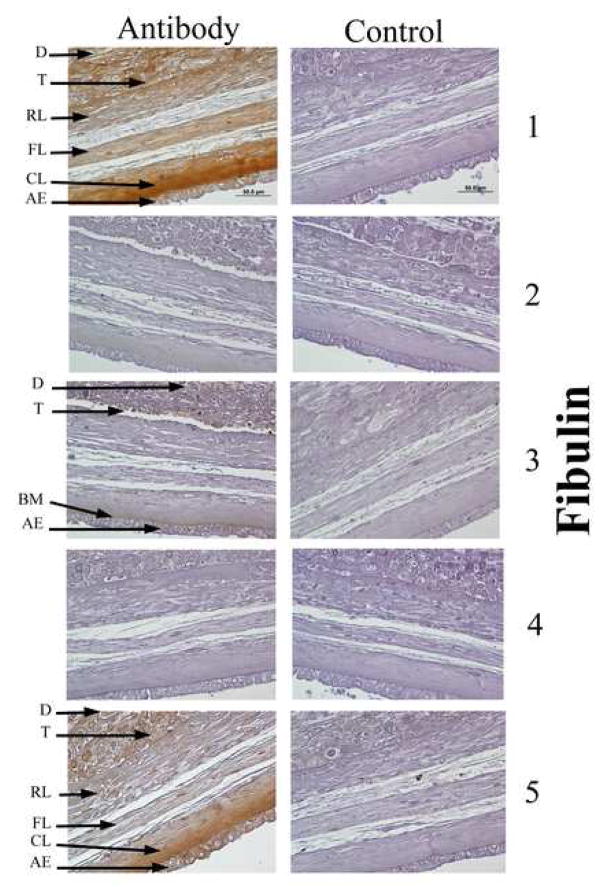
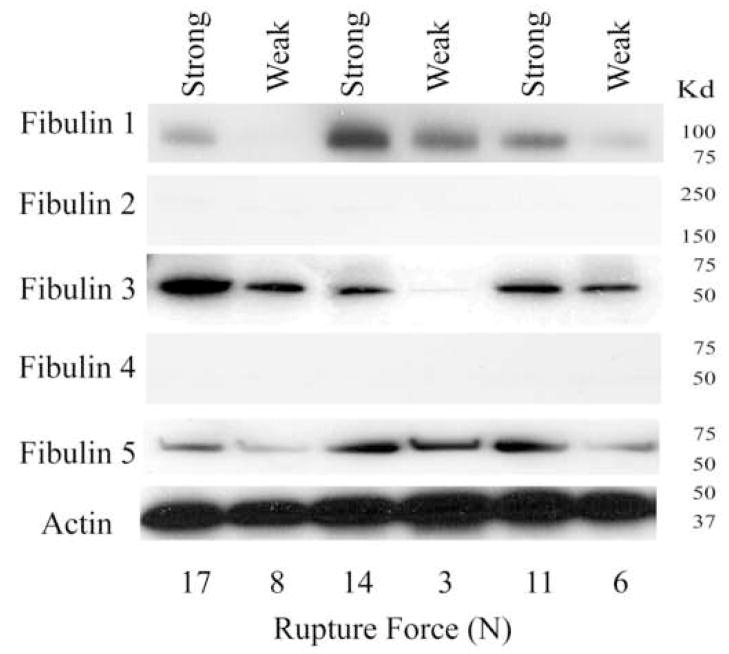
Methods: FM fibulins were localized by immunohistochemistry. Detected fibulins were screened by Western blot for differences in abundance in the amnion of the weak zone versus non-weak zone FM regions. Amnion epithelial and mesenchymal cells were also screened for fibulin production.
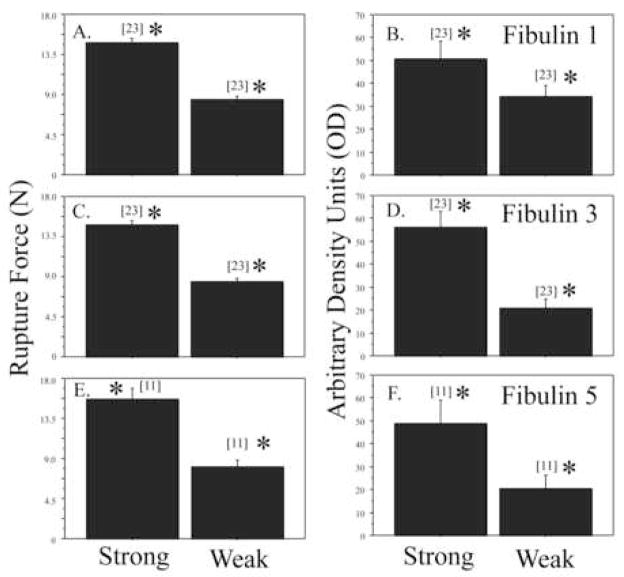
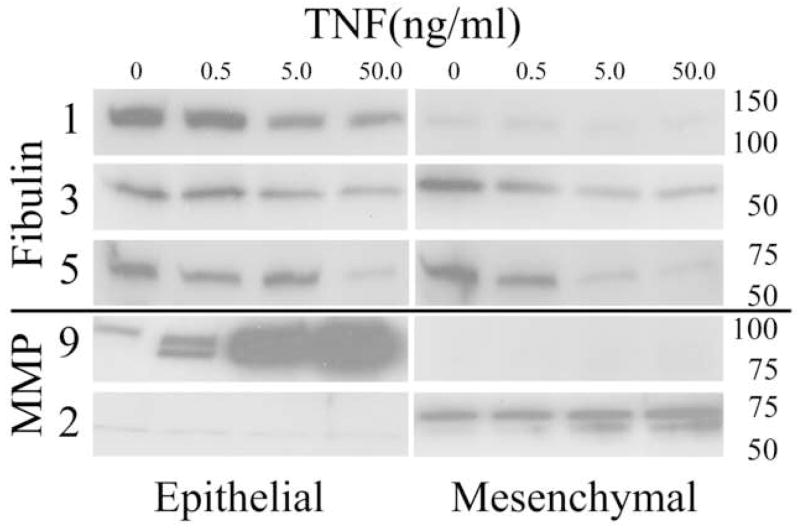
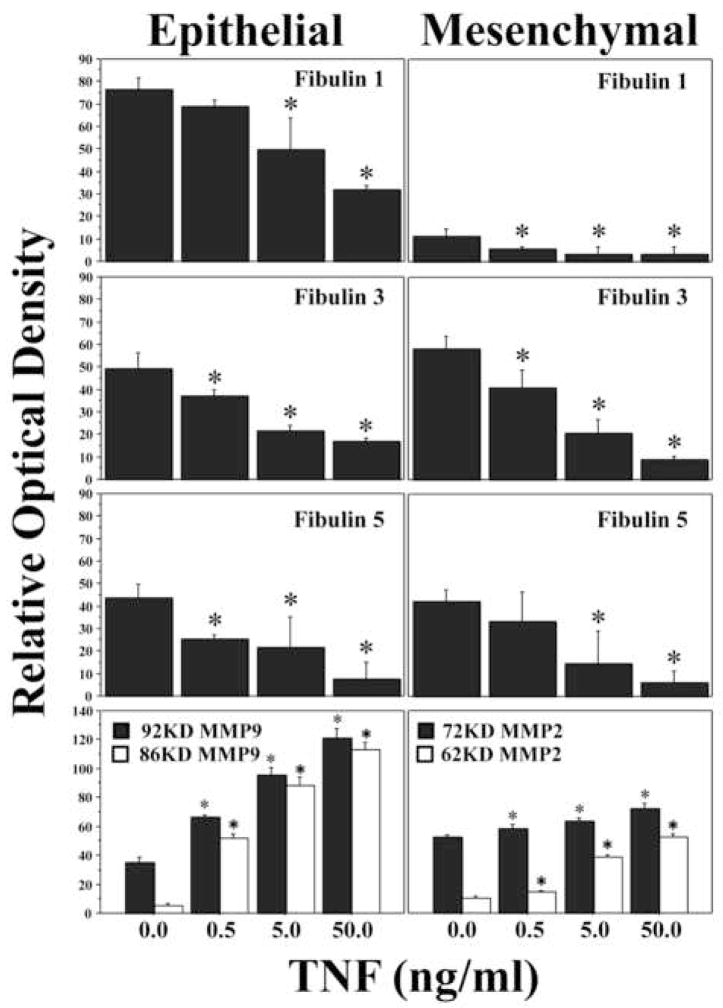
Results: Fibulins 1 and 5 were detected in the cytoplasm of and in a pericellular pattern surrounding all FM cells, and in a dense extracellular pattern in the amniotic compact zone. Fibulin 3 was detected within the cytoplasm of amnion epithelial and chorion trophoblast cells. Fibulins 2 and 4 were not detected. Fibulins 1, 3 and 5 demonstrated decreased abundance of 33%, 63% and 58% (all P<0.01) in amnion of the weak zone relative to other FM regions. Amnion cells produced all three detected fibulins. Furthermore, TNF inhibited amnion cell fibulin production in a dose dependent manner.
Conclusion: Fibulins 1, 3 and 5 were localized coincident with major microfibrillar networks in amnion. Each showed decreased abundance in the amnion component of the FM weak zone. Amnion epithelial and mesenchymal cells produced all three fibulins and their abundance was inhibited by TNF. We speculate that the amnion microfibrillar layer undergoes significant remodeling with the development of the FM weak zone.
Figures
References
-
- Menon R. Spontaneous preterm birth, a clinical dilemma: etiologic, pathophysiologic and genetic heterogeneities and racial disparity. Acta Obstet Gynecol Scand. 2008;87(6):590–600. - PubMed
-
- Parry S, Strauss JF. Premature rupture of the fetal membranes. N Engl J Med. 1998;338:663–70. - PubMed
-
- Lockwood CJ, Kuczynski E. Markers of risk for preterm delivery. J Perinat Med. 1999;27(1):5–20. - PubMed
-
- Menon R, Fortunato SJ. The role of matrix degrading enzymes and apoptosis in rupture of membranes. J Soc Gynecol Investig. 2004;11(7):427–37. - PubMed
-
- Moore RM, Mansour JM, Redline RW, Mercer BM, Moore JJ. The physiology of fetal membrane rupture: insight gained from the determination of physical properties. Placenta. 2006;27(11–12):1037–51. - PubMed
MeSH terms
Substances
Grants and funding
LinkOut - more resources
Full Text Sources
Other Literature Sources
Miscellaneous
