


Sustained efficacy of virtual reality distraction
- PMID: 19231295
- PMCID: PMC3140060
- DOI: 10.1016/j.jpain.2008.09.016
Sustained efficacy of virtual reality distraction
Abstract
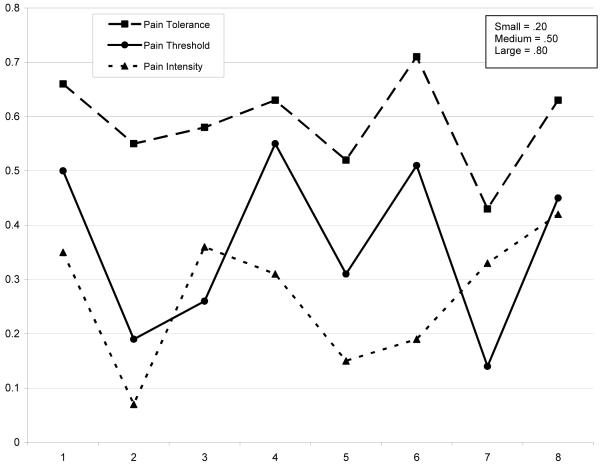
The current study tested whether the effectiveness of distraction using virtual reality (VR) technology in reducing cold pressor pain would maintain over the course of 8 weekly exposures. Twenty-eight adults, 18 to 23 years of age, underwent 1 baseline cold pressor trial and 1 VR distraction trial in randomized order each week. VR distraction led to significant increases in pain threshold and pain tolerance and significant decreases in pain intensity, time spent thinking about pain, and self-reported anxiety, relative to baseline. Repeated exposure did not appear to affect the benefits of VR. Implications for the long-term use of VR distraction as a nonpharmacological analgesic are discussed.
Perspective: This article addresses the concern that the efficacy of virtual reality-assisted distraction from pain could potentially decrease with repeated exposure. The current finding that efficacy did not diminish over several repeated exposures provides support for the use of virtual reality as an adjuvant treatment of pain.
Figures


References
-
- Bond A, Shine P, Bruce M. Validation of visual analogue scales in anxiety. Int J Methods Psychiatr Res. 1995;5:1–9.
-
- Cohen J. Statistical power analysis for the behavioral sciences. 2nd Edition Lawrence Erlbaum Associates; Hillsdale, NJ: 1988.
-
- Dahlquist LM, McKenna KD, Jones KK, Dillinger L, Weiss KE, Sonntag C. Active and passive distraction using a head-mounted display helmet: Effects on cold pressor pain in children. Health Psychol. 2007;26:794–801. - PubMed
-
- Edens JL, Gil KM. Experimental induction of pain: Utility in the study of clinical pain. Behav Ther. 1995;26:197–216.
-
- Faul F, Erdfelder E, Lang AG, Buchner A. G*Power 3: A flexible statistical power analysis program for the social, behavioral, and biomedical sciences. Behav Res Methods. 2007;39:175–191. - PubMed
Publication types
MeSH terms
Grants and funding
LinkOut - more resources
Full Text Sources
Other Literature Sources
Medical
