


Knee arthroplasty: are patients' expectations fulfilled? A prospective study of pain and function in 102 patients with 5-year follow-up
- PMID: 19234886
- PMCID: PMC2823230
- DOI: 10.1080/17453670902805007
Knee arthroplasty: are patients' expectations fulfilled? A prospective study of pain and function in 102 patients with 5-year follow-up
Abstract
Background and purpose: With an aging population expecting an active life after retirement, patients' expectations of improvement after surgery are also increasing. We analyzed the relationship between preoperative expectations and postoperative satisfaction and self-reported outcomes with regard to pain and physical function after knee arthroplasty.
Patients and methods: 102 patients (39 men) with knee osteoarthritis and who were assigned for TKR (mean age 71 (51-86) years) were investigated with KOOS, SF-36, and additional questions concerning physical activity level, expectations, satisfaction, and relevance of the outcome to the patient. These investigations took place preoperatively and postoperatively after 6 months, 1 year, and 5 years of follow-up.
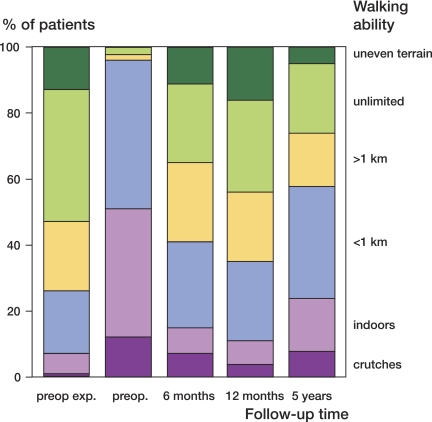
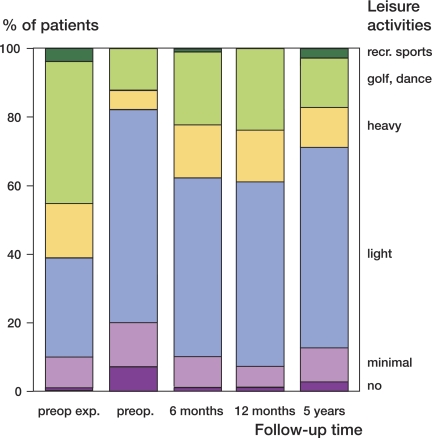
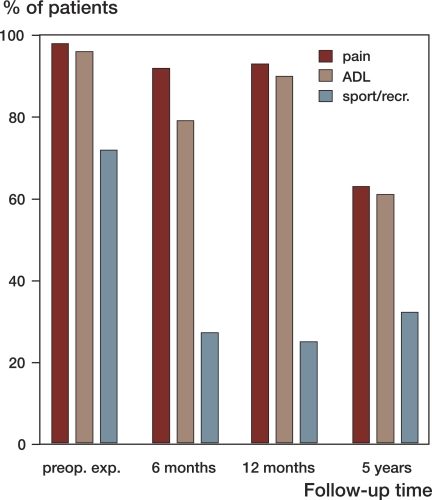
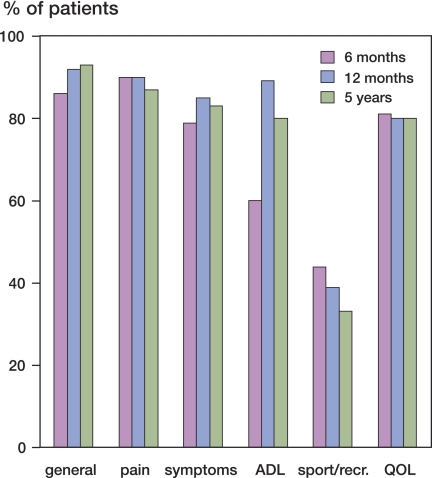
Results: Response rate at 5 years was 86%. In general, the patients' preoperative expectations were higher than their postoperative ability. For example, 41% expected to be able to perform activities such as golfing and dancing while only 14% were capable of these activities at 5 years. Having high or low preoperative expectations with regard to walking ability or leisure-time activities had no influence on the KOOS scores postoperatively. 93% of the patients were generally satisfied 5 years postoperatively, while 87% were satisfied with the relief of pain and 80% with their improvement in physical function at that time.
Interpretation: With an expanding population of mentally alert elderly, we can expect that great demands will be put on joint replacements. This study shows that patients have high preoperative expectations concerning reduction of pain. To a considerable extent, these expectations are fulfilled after one year. Expectations concerning demanding physical activities are not fulfilled to the same degree; however, most patients reported general satisfaction with the outcome indicating that satisfaction is not equivalent to fulfilled expectations. Preoperative counseling should include realistic information on outcomes concerning physical function and pain relief.
Figures
Comment in
-
Poor patient-reported outcome after hip replacement, related to poor perception of perioperative information, commoner in immigrants than in non-immigrants.Acta Orthop. 2016 Jun;87(3):218-24. doi: 10.3109/17453674.2015.1135664. Epub 2016 Feb 5. Acta Orthop. 2016. PMID: 26848766 Free PMC article.
References
-
- Aarons H, Hall G, Hughes S, Salmon P. Short-term recovery from hip and knee arthroplasty. J Bone Joint Surg (Br) 1996;78(4):555–8. - PubMed
-
- Bachmeier CJ, March LM, Cross MJ, Lapsley HM, Tribe KL, Courtenay BG, Brooks PM. A comparison of outcomes in osteoarthritis patients undergoing total hip and knee replacement surgery. Osteoarthritis Cartilage. 2001;9(2):137–46. - PubMed
-
- Barron CJ, Moffett JA, Potter M. Patient expectations of physiotherapy: definitions, concepts, and theories. Physeother Theory Pract. 2007;23(1):37–46. - PubMed
-
- Bellamy N, Buchanan W, Goldsmith C. Validation study of WOMAC: a health status instrument for measuring clinically important patient relevant outcomes following total hip or knee arthroplasty in osteoarthritis. J Orthop Rheumatol. 1988;1:95–108. - PubMed
-
- Bullens PH, van Loon CJ, de Waal Malefijt MC, Laan RF, Veth RP. Patient satisfaction after total knee arthroplasty: a comparison between subjective and objective outcome assessments. J Arthroplasty. 2001;16(6):740–7. - PubMed
Publication types
MeSH terms
LinkOut - more resources
Full Text Sources
Medical