


The search for genetic polymorphisms in the homocysteine/folate pathway that contribute to the etiology of human neural tube defects
- PMID: 19235830
- PMCID: PMC6129971
- DOI: 10.1002/bdra.20566
The search for genetic polymorphisms in the homocysteine/folate pathway that contribute to the etiology of human neural tube defects
Abstract
In this paper, we trace the history of current research into the genetic and biochemical mechanisms that underlie folate-preventable neural tube defects (NTDs). The inspired suggestion by Smithells that common vitamins might prevent NTDs ignited a decade of biochemical investigations-first exploring the nutritional and metabolic factors related to NTDs, then onto the hunt for NTD genes. Although NTDs were known to have a strong genetic component, the concept of common genetic variance being linked to disease risk was relatively novel in 1995, when the first folate-related polymorphism associated with NTDs was discovered. The realization that more genes must be involved started a rush to find polymorphic needles in genetic haystacks. Early efforts entailed the intellectually challenging and time-consuming task of identifying and analyzing candidate single nucleotide polymorphisms (SNPs) in folate pathway genes. Luckily, human genome research has developed rapidly, and the search for the genetic factors that contribute to the etiology of human NTDs has evolved to mirror the increased level of knowledge and data available on the human genome. Large-scale candidate gene analysis and genome-wide association studies are now readily available. With the technical hurdles removed, the remaining challenge is to gather a sample large enough to uncover the polymorphisms that contribute to NTD risk. In some respects the real work is beginning. Although moving forward is exciting, it is humbling that the most important result-prevention of NTDs by maternal folic acid supplementation-was achieved years ago, the direct result of Smithells' groundbreaking studies.
(c) 2009 Wiley-Liss, Inc.
Figures
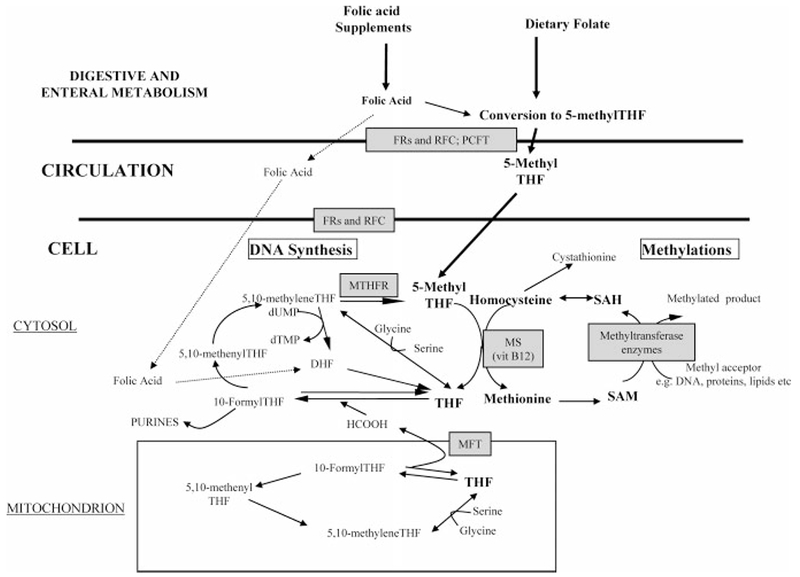
References
-
- Afman LA, Lievers KJ, Kluijtmans LA, et al. 2003a. Gene-gene interaction between the cystathionine beta-synthase 31 base pair variable number of tandem repeats and the methylenetetrahydrofolate reductase 677C > T polymorphism on homocysteine levels and risk for neural tube defects. Mol Genet Metab 78:211–5. - PubMed
-
- Afman LA, Trijbels FJ, Blom HJ. 2003b. The H475Y polymorphism in the glutamate carboxypeptidase II gene increases plasma folate without affecting the risk for neural tube defects in humans. J Nutr 133:75–77. - PubMed
-
- Amorim MR, Lima MA, Castilla EE, et al. 2007. Non-Latin European descent could be a requirement for association of NTDs and MTHFR variant 677C > T: a meta-analysis. Am J Med Genet A 143A:1726–1732. - PubMed
-
- Baker M 2008. Genome studies: genetics by numbers. Nature 451:516–518. - PubMed
-
- Barber R, Shalat S, Hendricks K, et al. 2000. Investigation of folate pathway gene polymorphisms and the incidence of neural tube defects in a Texas hispanic population. Mol Genet Metab 70:45–52. - PubMed
Publication types
MeSH terms
Substances
Grants and funding
LinkOut - more resources
Full Text Sources
Other Literature Sources
Medical
