


A randomized, double-blind, placebo-controlled, crossover study of XP13512/GSK1838262 in the treatment of patients with primary restless legs syndrome
- PMID: 19238802
- PMCID: PMC2635579
- DOI: 10.1093/sleep/32.2.159
A randomized, double-blind, placebo-controlled, crossover study of XP13512/GSK1838262 in the treatment of patients with primary restless legs syndrome
Abstract
Study objective: To evaluate the efficacy and tolerability of XP13512/ GSK1838262, an investigational nondopaminergic agent for the treatment of moderate-to-severe primary restless legs syndrome (RLS).
Design: Randomized, double-blind, placebo-controlled, crossover trial.
Setting: Nine US clinical sites.
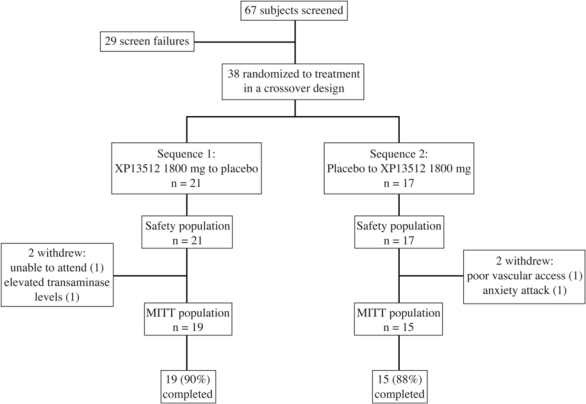
Patients: Thirty-eight treatment-naive subjects with RLS (mean +/- SD age 50.1 +/- 13.2 years).
Interventions: XP13512 1800 mg/day followed by placebo or placebo followed by XP13512 1800 mg/day for 14 days, with a 7-day washout between treatment periods.
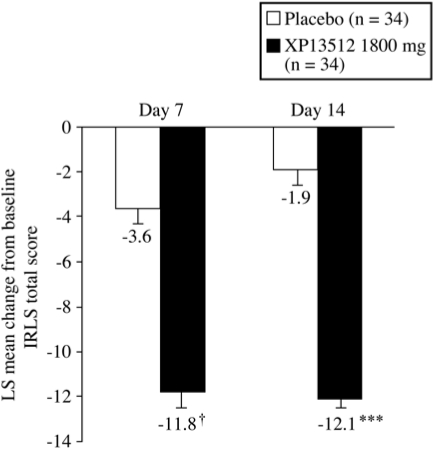
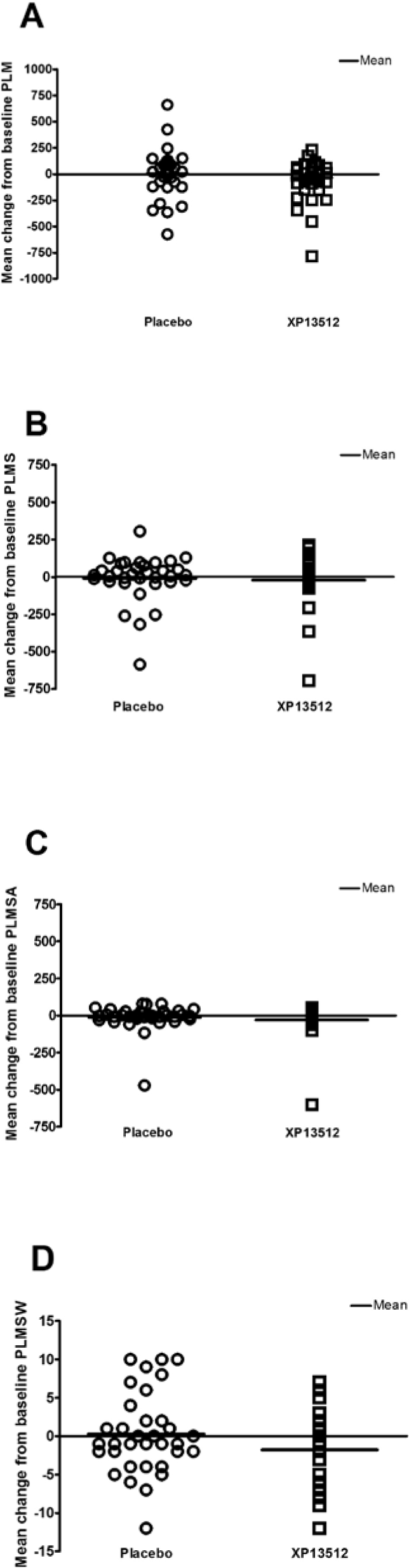
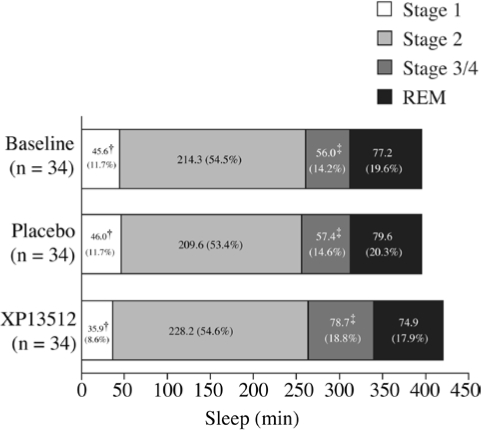
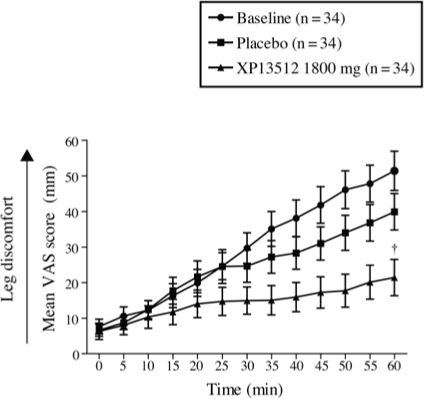
Measurements and results: The primary endpoint was mean change from baseline International RLS Study Group rating scale (IRLS) total score on Day 14, analyzed using analysis of variance with sequence, period, and treatment as fixed effects and subjects within sequence as a random effect. XP13512 significantly reduced IRLS total score on Day 14 compared with placebo (mean +/- SD: XP13512 -12.1 +/-6.5, placebo -1.9 +/- 6.3; P < 0.0001). Polysomnographic data showed that XP13512 significantly improved sleep architecture on Day 14 compared with placebo (mean +/- SD change from baseline sleep time [minutes]: stage 1: XP13512 -9.8 +/- 23.9, placebo 0.4 +/-23.2; adjusted P<0.0054, nominal P<0.0001; stage 3/4 (slow-wave sleep): XP13512 22.8 +/- 40.8, placebo 1.4 +/- 34.3; adjusted P=0.0092, nominal P=0.0002). The most frequently reported adverse events were somnolence (XP13512 30.6%, placebo 2.8%) and dizziness (XP13512 27.8%, placebo 5.6%).
Conclusions: XP13512 1800 mg/day significantly reduced RLS symptoms, improved sleep, and was generally well tolerated in subjects with moderate-to-severe primary RLS across 14 days of treatment.
Figures
References
-
- Allen RP, Walters AS, Montplaisir J, et al. Restless legs syndrome prevalence and impact: REST general population study. Arch Intern Med. 2005;165:1286–92. - PubMed
-
- Högl B, Kiechl S, Willeit J, et al. Restless legs syndrome: a community-based study of prevalence, severity, and risk factors. Neurology. 2005;64:1920–4. - PubMed
-
- Nichols DA, Allen RP, Grauke JH, et al. Restless legs syndrome symptoms in primary care: a prevalence study. Arch Intern Med. 2003;163:2323–9. - PubMed
-
- Saletu B, Gruber G, Saletu M, et al. Sleep laboratory studies in restless legs syndrome patients as compared with normals and acute effects of ropinirole.1. Findings on objective and subjective sleep and awakening quality. Neuropsychobiology. 2000;41:181–9. - PubMed
-
- Abetz L, Allen RP, Follet A, et al. Evaluating the quality of life of patients with restless legs syndrome. Clin Ther. 2004;26:925–35. - PubMed
