


Invasion of human coronary artery endothelial cells by Streptococcus mutans OMZ175
- PMID: 19239641
- PMCID: PMC2853226
- DOI: 10.1111/j.1399-302X.2008.00487.x
Invasion of human coronary artery endothelial cells by Streptococcus mutans OMZ175
Abstract
Introduction: Dissemination of oral bacteria into the bloodstream has been associated with eating, oral hygiene, and dental procedures; including tooth extraction, endodontic treatment, and periodontal surgery. Recently, studies identified Streptococcus mutans, the primary etiological agent of dental caries, as the most prevalent bacterial species found in clinical samples from patients who underwent heart valve and atheromatous plaque surgery.
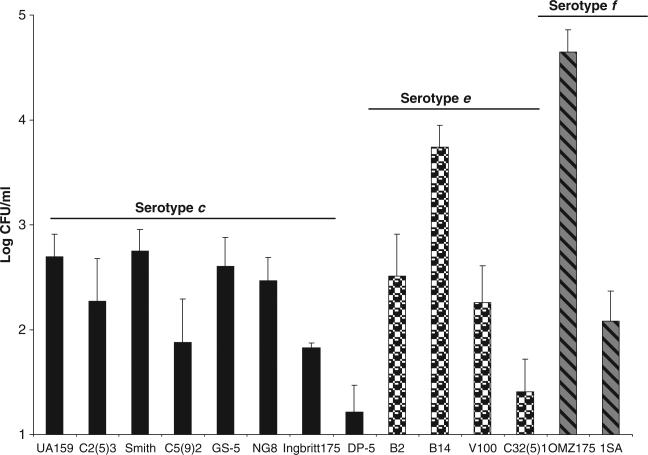
Methods: By using antibiotic protection assays, we tested the capacity of 14 strains of S. mutans to invade primary human coronary artery endothelial cells (HCAEC).
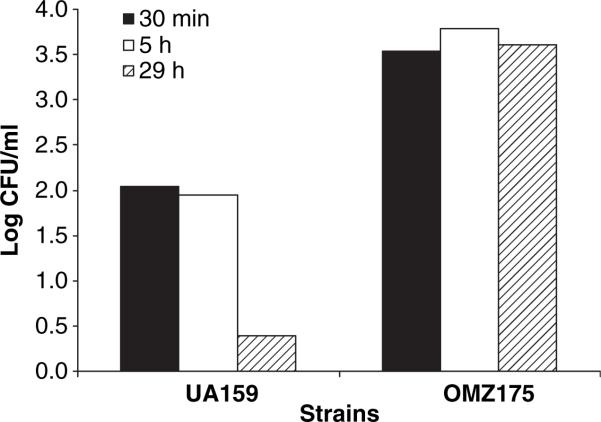
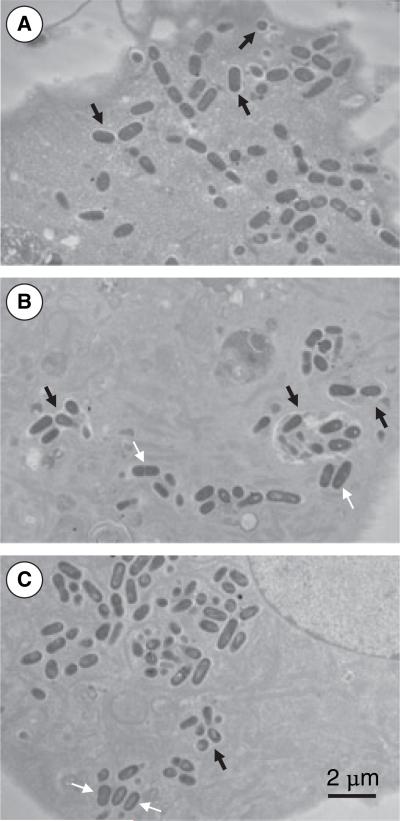
Results: Serotype e strain B14 and serotype f strain OMZ175 of S. mutans were able to efficiently invade HCAEC. Among the tested strains, serotype f S. mutans OMZ175 was the most invasive, whereas strains of serotype c S. mutans, the most prevalent serotype in dental plaque, were not invasive. Based on its high invasion rate, we further investigated the invasive properties of serotype f OMZ175. Using transmission electron microscopy and antibiotic protection assays we demonstrate that S. mutans OMZ175 is capable of attaching to the HCAEC surface, entering the cells and surviving in HCAEC for at least 29 h.
Discussion: Our findings highlight a potential role for S. mutans in the pathogenesis of certain cardiovascular diseases.
Figures
References
-
- Dorn BR, Burks JN, Seifert KN, Progulske-Fox A. Invasion of endothelial and epithelial cells by strains of Porphyromonas gingivalis. FEMS Microbiol Lett. 2000;187:139–144. - PubMed
-
- Douglas CW, Heath J, Hampton KK, Preston FE. Identity of viridans streptococci isolated from cases of infective endocarditis. J Med Microbiol. 1993;39:179–182. - PubMed
Publication types
MeSH terms
Grants and funding
LinkOut - more resources
Full Text Sources
Other Literature Sources
