Evidence of systemic Th2-driven chronic inflammation in patients with metastatic melanoma
- PMID: 19240164
- PMCID: PMC2757059
- DOI: 10.1158/1078-0432.CCR-08-1980
Evidence of systemic Th2-driven chronic inflammation in patients with metastatic melanoma
Abstract
Purpose: Immunotherapeutic modalities are commonly used for treatment of patients with melanoma. The therapeutic success in preclinical models has not yielded the expected clinical results. To understand this discrepancy, we attempted to define immune homeostasis of 209 patients with melanoma across stages of disease relative to normal controls.
Experimental design: Peripheral blood mononuclear cells (PBMC) and plasma were collected from patients and healthy donors. PBMC were analyzed for frequencies of natural killer, dendritic, and T cells and their functional status. Matched plasma samples were analyzed for the concentrations of 27 cytokines, chemokines, and growth factors. RNA was isolated from 24 metastatic melanoma tumor biopsies and profiled by microarray analysis.
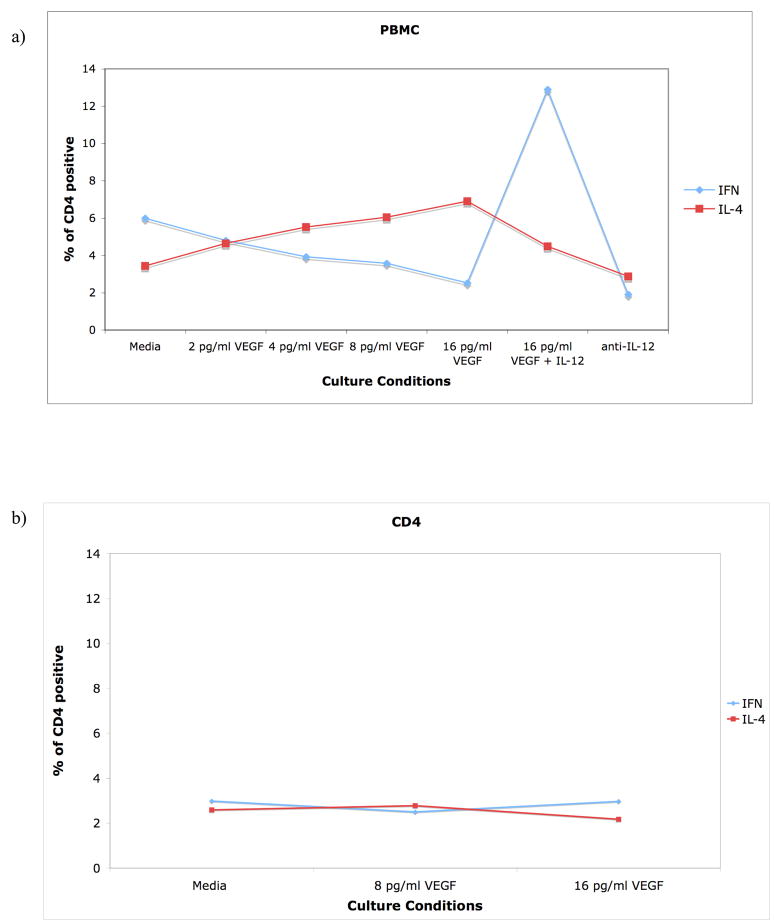
Results: The frequency of natural killer, T, and dendritic cells in patients does not significantly change across stages of melanoma. However, plasma concentrations of Th2 cytokines [interleukin (IL)-4, IL-5, IL-10, and IL-13] in tumor-bearing patients were significantly higher than those with resected melanoma. Expression array analysis of metastatic melanoma revealed that the malignant melanocytes were not the source of the Th2 cytokines but did highly up-regulate vascular endothelial growth factor (VEGF) transcripts, consistent with plasma VEGF concentrations. In vitro VEGF exposure of normal PBMC lead to repolarization from Th1 to Th2 emulating the state of metastatic melanoma.
Conclusions: Patients with metastatic melanoma exist in a state of Th2-mediated "chronic inflammation" as a result of at least VEGF overproduction by malignant tumors. These data support prior observations regarding the effect of VEGF on immune cell function and suggests consideration of VEGF inhibitors in future cancer immunotherapy clinical studies in metastatic melanoma.
Figures


References
-
- Riker AI, Jove R, Daud AI. Immunotherapy as part of a multidisciplinary approach to melanoma treatment. Front Biosci. 2006;11:1–14. - PubMed
-
- Rosenberg SA, Sherry RM, Morton KE, et al. Tumor progression can occur despite the induction of very high levels of self/tumor antigen-specific CD8+ T cells in patients with melanoma. J Immunol. 2005;175:6169–76. - PubMed
-
- Vaishampayan U, Abrams J, Darrah D, Jones V, Mitchell MS. Active immunotherapy of metastatic melanoma with allogeneic melanoma lysates and interferon alpha. Clin Cancer Res. 2002;8:3696–701. - PubMed
-
- Osanto S, Schiphorst PP, Weijl NI, et al. Vaccination of melanoma patients with an allogeneic, genetically modified interleukin 2-producing melanoma cell line. Hum Gene Ther. 2000;11:739–50. - PubMed
Publication types
MeSH terms
Substances
Grants and funding
LinkOut - more resources
Full Text Sources
Other Literature Sources
Medical