


DNA licensing as a novel androgen receptor mediated therapeutic target for prostate cancer
- PMID: 19240183
- PMCID: PMC3072142
- DOI: 10.1677/ERC-08-0205
DNA licensing as a novel androgen receptor mediated therapeutic target for prostate cancer
Abstract
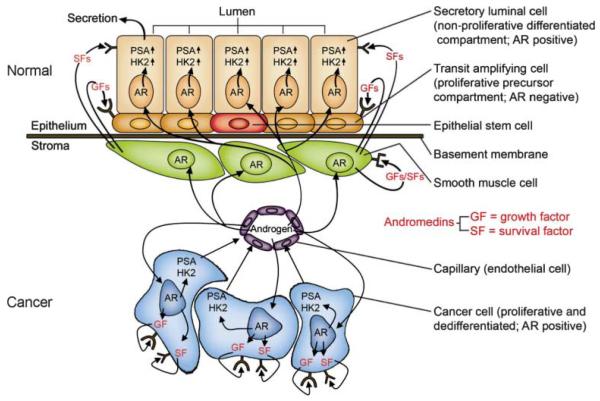
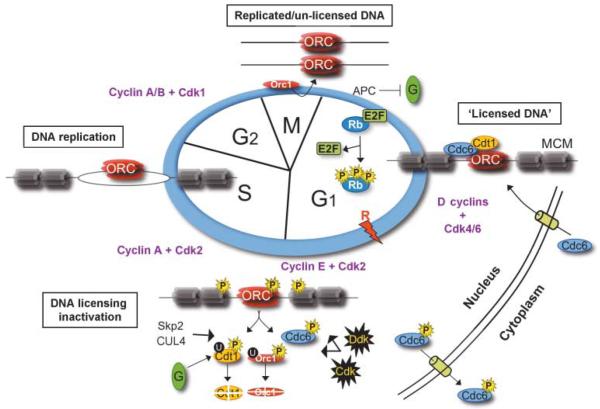
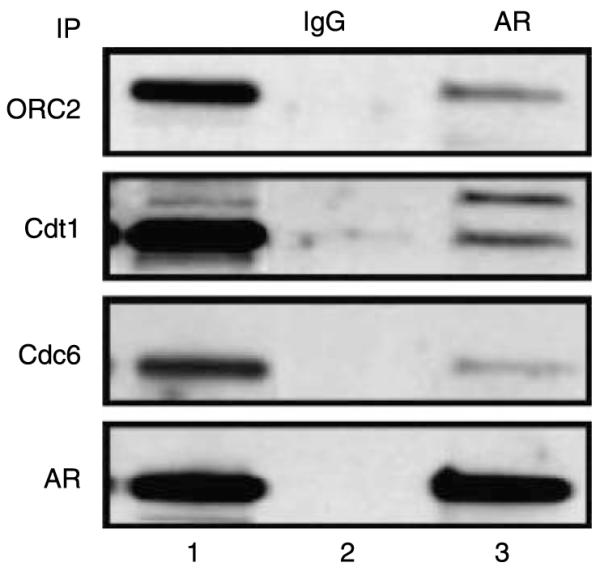
During middle G(1) of the cell cycle origins of replication orchestrate the ordered assembly of the pre-replication complex (pre-RC), allowing licensing of DNA required for DNA replication. Cyclin-dependent kinase activation of the pre-RC facilitates the recruitment of additional signaling factors, which triggers DNA unwinding and replication, while limiting such DNA replication to once and only once per cell cycle. For both the normal and malignant prostate, androgen is the major stimulator of cell proliferation and thus DNA replication. In both cases, the binding of androgen to the androgen receptor (AR) is required. However, the biochemical cascade involved in such AR-stimulated cell proliferation and DNA synthesis is dramatically different in normal versus malignant prostate cells. In normal prostate, AR-stimulated stromal cell paracrine secretion of andromedins stimulates DNA replication within prostatic epithelial cells, in which AR functions as a tumor suppressor gene by inducing proliferative quiescence and terminal differentiation. By direct contrast, nuclear AR in prostate cancer cells autonomously stimulates continuous growth via incorporation of AR into the pre-RC. Such a gain of function by AR-expressing prostate cancer cells requires that AR be efficiently degraded during mitosis since lack of such degradation leads to re-licensing problems, resulting in S-phase arrest during the subsequent cell cycle. Thus, acquisition of AR as part of the licensing complex for DNA replication represents a paradigm shift in how we view the role of AR in prostate cancer biology, and introduces a novel vulnerability in AR-expressing prostate cancer cells apt for therapeutic intervention.
Figures
References
-
- Arias EE, Walter JC. PCNA functions as a molecular platform to trigger Cdt1 destruction and prevent re-replication. Nature Cell Biology. 2006;8:84–90. - PubMed
-
- Arias EE, Walter JC. Strength in numbers: preventing rereplication via multiple mechanisms in eukaryotic cells. Genes and Development. 2007;21:497–518. - PubMed
-
- Bai VU, Cifuentes E, Menon M, Barrack ER, Reddy GP. Androgen receptor regulates Cdc6 in synchronized LNCaP cells progressing from G1 to S phase. Journal of Celluar Physiology. 2005;204:381–387. - PubMed
-
- Bell SP. The origin recognition complex: from simple origins to complex functions. Genes and Development. 2002;16:659–672. - PubMed
Publication types
MeSH terms
Substances
Grants and funding
LinkOut - more resources
Full Text Sources
Medical
Research Materials
