


Zinc deficiency increases organ damage and mortality in a murine model of polymicrobial sepsis
- PMID: 19242332
- PMCID: PMC2905048
- DOI: 10.1097/CCM.0b013e31819cefe4
Zinc deficiency increases organ damage and mortality in a murine model of polymicrobial sepsis
Abstract
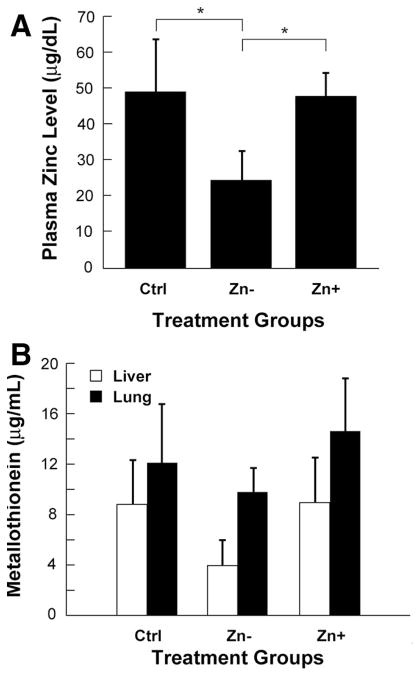
Objective: Zinc deficiency is common among populations at high risk for sepsis mortality, including elderly, alcoholic, and hospitalized patients. Zinc deficiency causes exaggerated inflammatory responses to endotoxin but has not been evaluated during bacterial sepsis. We hypothesized that subacute zinc deficiency would amplify immune responses and oxidant stress during bacterial sepsis {lsqb;i.e., cecal ligation and puncture (CLP){rsqb; resulting in increased mortality and that acute nutritional repletion of zinc would be beneficial.
Design: Prospective, randomized, controlled animal study.
Setting: University medical center research laboratory.
Subjects: Adult male C57BL/6 mice.
Interventions: Ten-week-old, male, C57BL/6 mice were randomized into three dietary groups: 1) control diet, 2) zinc-deficient diet for 3 weeks, and 3) zinc-deficient diet for 3 weeks followed by oral zinc supplementation for 3 days (n = 35 per diet). Mice were then assigned to receive either CLP or sham operation (n = 15 each per diet). CLP and sham-operated treatment groups were further assigned to a 7-day survival study (n = 10 per treatment per diet) or were evaluated at 24 hours (n = 5 per treatment per diet) for signs of vital organ damage.
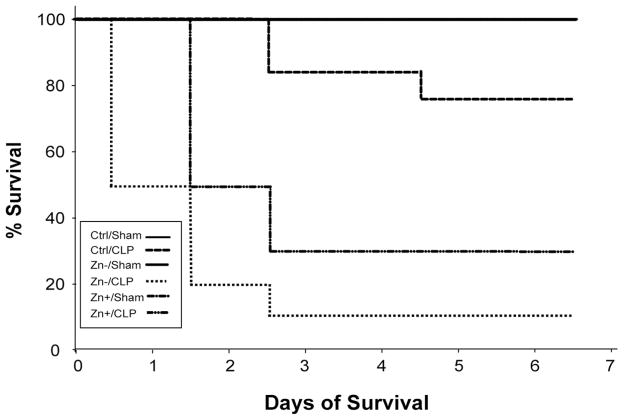
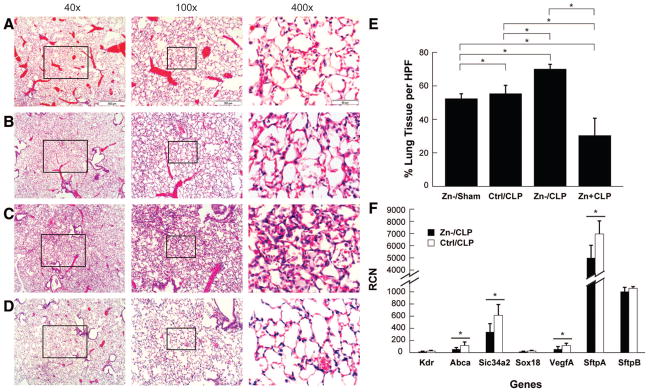
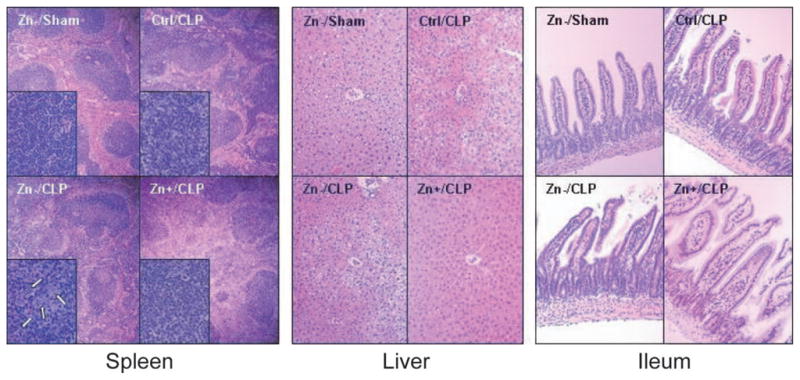
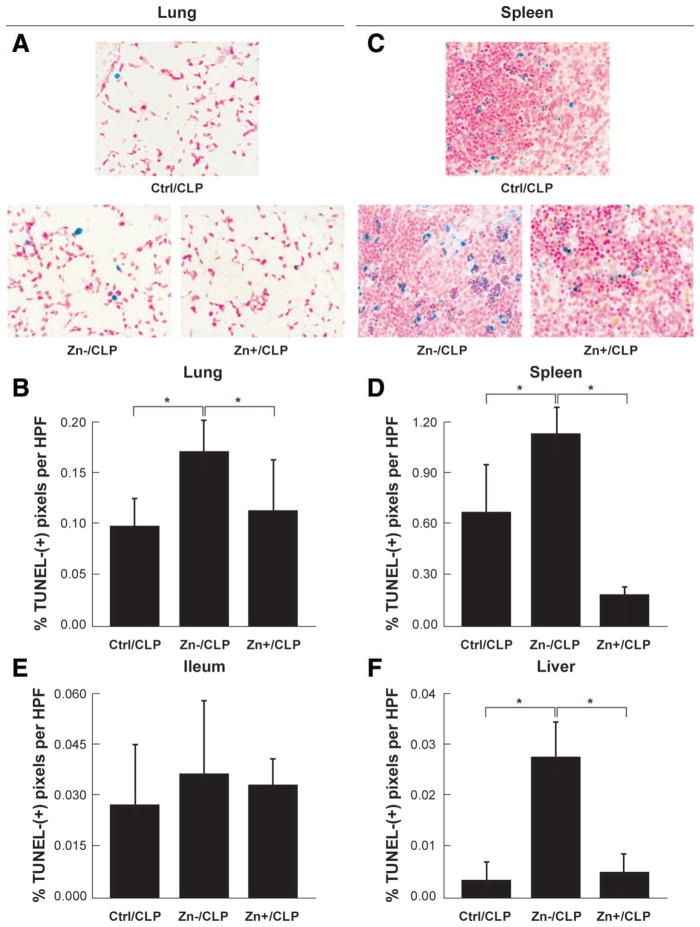
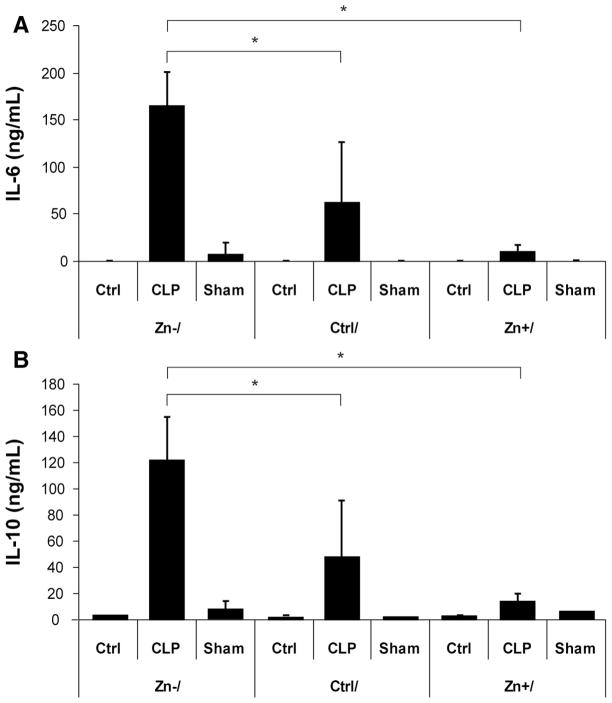
Measurements and main results: Sepsis mortality was significantly increased with zinc deficiency (90% vs. 30% on control diet). Zinc-deficient animals subject to CLP had higher plasma cytokines, more severe organ injury, including increased oxidative tissue damage and cell death, particularly in the lungs and spleen. None of the sham-operated animals died or developed signs of organ damage. Zinc supplementation normalized the inflammatory response, greatly diminished tissue damage, and significantly reduced mortality.
Conclusions: Subacute zinc deficiency significantly increases systemic inflammation, organ damage, and mortality in a murine polymicrobial sepsis model. Short-term zinc repletion provides significant, but incomplete protection despite normalization of inflammatory and organ damage indices.
Conflict of interest statement
The authors have not disclosed any potential conflicts of interest.
Figures
Comment in
-
Should zinc status be monitored and deficiency treated in critically ill patients?Crit Care Med. 2009 Apr;37(4):1513-4. doi: 10.1097/CCM.0b013e31819d2c57. Crit Care Med. 2009. PMID: 19318845 No abstract available.
References
-
- Alberti C, Brun-Buisson C, Goodman SV, et al. Influence of systemic inflammatory response syndrome and sepsis on outcome of critically ill infected patients. Am J Respir Crit Care Med. 2003;168:77– 84. - PubMed
-
- Guidet B, Aegerter P, Gauzit R, et al. Incidence and impact of organ dysfunctions associated with sepsis. Chest. 2005;127:942–951. - PubMed
-
- Moss M. Epidemiology of sepsis: Race, sex, and chronic alcohol abuse. Clin Infect Dis. 2005;41:S490 –S497. - PubMed
-
- Gaetke LM, McClain CJ, Talwalkar RT, et al. Effects of endotoxin on zinc metabolism in human volunteers. Am J Physiol. 1997;272:E952–E956. - PubMed
Publication types
MeSH terms
Substances
Grants and funding
LinkOut - more resources
Full Text Sources
Other Literature Sources
Medical
Miscellaneous
