


Genetics of antigenic variation in Plasmodium falciparum
- PMID: 19242694
- PMCID: PMC3640992
- DOI: 10.1007/s00294-009-0233-2
Genetics of antigenic variation in Plasmodium falciparum
Abstract
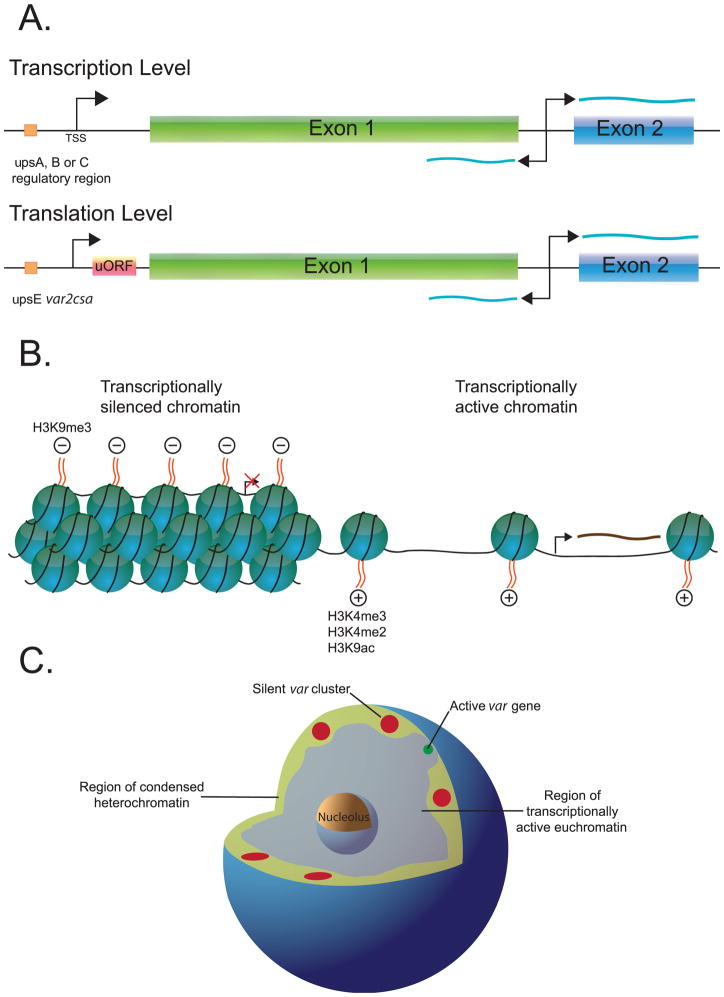
Malaria caused by the protozoan parasite Plasmodium falciparum is characterized by long-term, persistent infections that can last for many months. The ability of this parasite to avoid clearance by the human immune system is dependent on its capacity to continuously alter the surface exposed antigenic proteins that that are vulnerable to antibody recognition and attack, a process called antigenic variation. Significant work in recent years has contributed to our understanding of the mechanisms underlying this process, including the genes encoding the antigenic proteins and the DNA sequence elements that control their expression. In addition, the epigenetic "marks" that are associated with activation and silencing of individual genes have been extensively characterized. These studies have led to a model that includes multiple layers of regulation that ultimately lead to the tight coordination of expression of the genes responsible for antigenic variation by malaria parasites. Here we review some more recent data that adds additional complexity to our understanding of these regulatory layers.
Figures
References
-
- Andersen AA, Panning B. Epigenetic gene regulation by noncoding RNAs. Current Opinion in Cell Biology. 2003;15:281–289. - PubMed
-
- Aravind L, Iyer LM, Wellems TE, Miller LH. Plasmodium biology: Genomic gleanings. Cell. 2003;115:771–785. - PubMed
-
- Baruch DI. Adhesive receptors on malaria-parasitized red cells. Baillieres Best Pract Res Clin Haematol. 1999;12:747–761. - PubMed
-
- Baruch DI, Pasloske BL, Singh HB, Bi X, Ma XC, Feldman M, Taraschi TF, Howard RJ. Cloning the P. falciparum gene encoding PfEMP1, a malarial variant antigen and adherence receptor on the surface of parasitized human erythrocytes. Cell. 1995;82:77–87. - PubMed
Publication types
MeSH terms
Substances
Grants and funding
LinkOut - more resources
Full Text Sources
