


Plasma protein S contains zinc essential for efficient activated protein C-independent anticoagulant activity and binding to factor Xa, but not for efficient binding to tissue factor pathway inhibitor
- PMID: 19244162
- PMCID: PMC2704590
- DOI: 10.1096/fj.08-123174
Plasma protein S contains zinc essential for efficient activated protein C-independent anticoagulant activity and binding to factor Xa, but not for efficient binding to tissue factor pathway inhibitor
Abstract
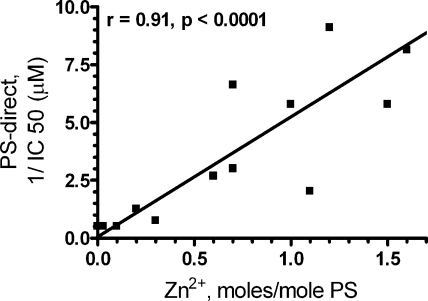
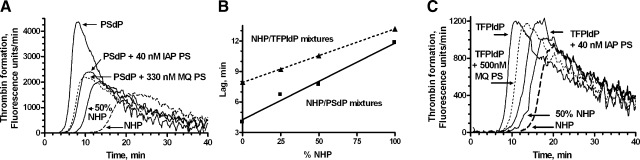
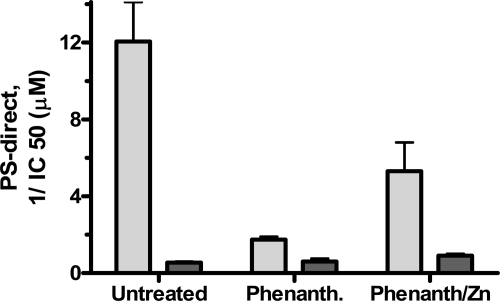
Protein S (PS) is a cofactor for activated protein C (APC), which inactivates coagulation factors (F) Va and VIIIa. Deficiency of protein C or PS is associated with risk of thrombosis. We found that PS also has APC-independent anticoagulant activity (PS-direct) and directly inhibits thrombin generated by FXa/FVa (prothrombinase complex). Here we report that PS contains Zn(2+) that is required for PS-direct and that is lost during certain purification procedures. Immunoaffinity-purified PS contained 1.4 +/- 0.6 Zn(2+)/mol, whereas MonoQ-purified and commercial PS contained 0.15 +/- 0.15 Zn(2+)/mol. This may explain the controversy regarding the validity of PS-direct. Zn(2+) content correlated positively with PS-direct in prothrombinase assays and clotting assays, but APC-cofactor activity of PS was independent of Zn(2+) content. PS-direct and Zn(2+) were restored to inactive PS under mildly denaturing conditions. Conversely, o-phenanthroline reversibly impaired the PS-direct of active PS. Zn(2+)-containing PS bound FXa more efficiently (K(d)(app)=9.3 nM) than Zn(2+)-deficient PS (K(d)(app)=110 nM). PS bound TFPI efficiently, independently of Zn(2+) content (K(d)(app)=21 nM). Antibodies that block PS-direct preferentially recognized Zn(2+)-containing PS, suggesting conformation differences at or near the interface of 2 laminin G-like domains near the PS C terminus. Thus, Zn(2+) is required for PS-direct and efficient FXa binding and may play a role in stabilizing PS conformation.
Figures



References
-
- Schwarz H P, Fischer M, Hopmeier P, Batard M A, Griffin J H. Plasma PS deficiency in familial thrombotic disease. Blood. 1984;64:1297–1300. - PubMed
-
- Mahmoodi B K, Brouwer J L, Veeger N J, van der Meer J. Hereditary deficiency of protein C or PS confers increased risk of arterial thromboembolic events at a young age. Circulation. 2008;118:1659–1657. - PubMed
-
- Mahasandana C, Suvatte V, Marlar R A, Manco-Johnson M J, Jacobson L J, Hathaway W E. Neonatal purpura fulminans associated with homozygous PS deficiency [Letter] Lancet. 1990;335:61–62. - PubMed
-
- Walker F J. Regulation of APC by a new protein: a possible function for bovine PS. J Biol Chem. 1980;255:5521–5524. - PubMed
-
- Heeb M J, Mesters R M, Tans G, Rosing J, Griffin J H. Binding of PS to FVa associated with inhibition of prothrombinase that is independent of APC. J Biol Chem. 1993;268:2872–2877. - PubMed
Publication types
MeSH terms
Substances
Grants and funding
LinkOut - more resources
Full Text Sources
Miscellaneous
