


Steroid hormone transforming aldo-keto reductases and cancer
- PMID: 19250190
- PMCID: PMC3038333
- DOI: 10.1111/j.1749-6632.2009.03700.x
Steroid hormone transforming aldo-keto reductases and cancer
Abstract
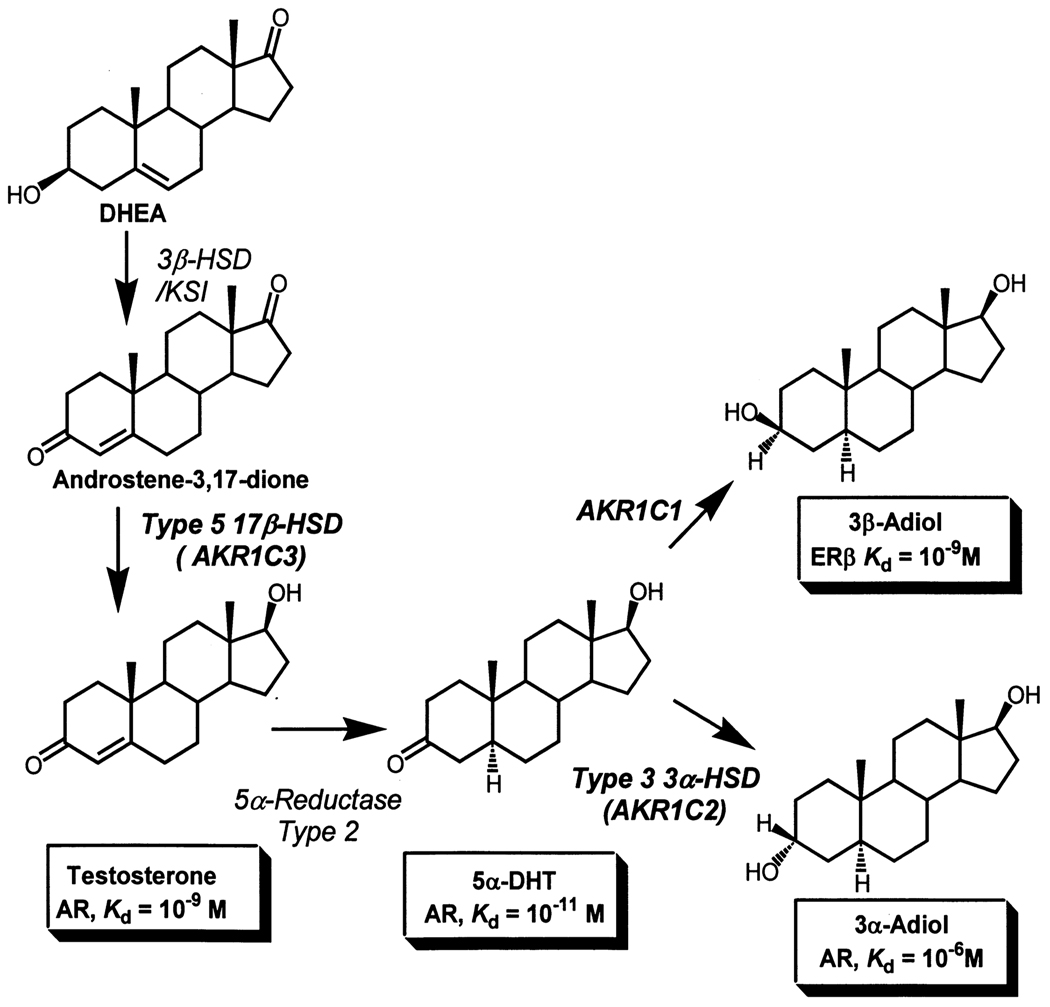
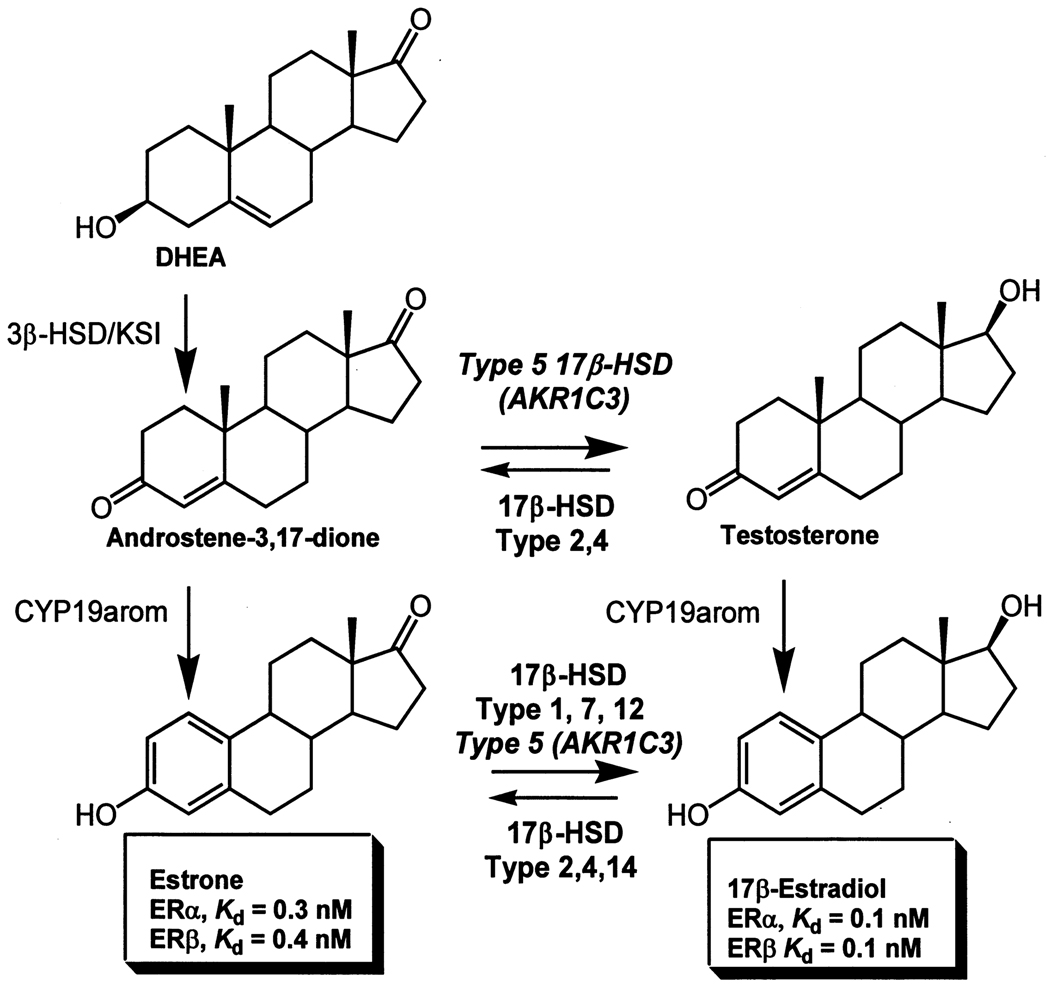
Prostate and breast cancer are hormone-dependent malignancies of the aging male and female and require the local production of androgens and estrogens to stimulate cell proliferation. Aldo-keto reductases (AKR) play key roles in this process. In the prostate, AKR1C3 (type 5 17beta-HSD) reduces Delta(4)-androstene-3,17-dione to yield testosterone while AKR1C2 (type 3 3alpha-HSD) eliminates 5alpha-dihydrotestosterone (5alpha-DHT), and AKR1C1 forms 3beta-androstanediol (a ligand for ERbeta). In the breast, AKR1C3 forms testosterone, which is converted to 17beta-estradiol by aromatase or reduces estrone to 17beta-estradiol directly. AKR1C3 also acts as a prostaglandin (PG) F synthase and forms PGF(2alpha) and 11beta-PGF(2alpha), which stimulate the FP receptor and prevent the activation of PPARgamma by PGJ(2) ligands. This proproliferative signaling may stimulate the growth of hormone-dependent and -independent prostate and breast cancer.
Figures
References
-
- Labrie FA, Belanger, Simard J. Intracrinology: Autonomy and freedom of peripheral tissues. Annuals Endocrinology. 1995;56:23–29. - PubMed
-
- Labrie F, Luu-The V, Lin SX, et al. Intracrinology: role of the family of 17β-hydroxysteroid dehydrogenases in human physiology and disease. J. Mol. Endocrinol. 2000;25:1–16. - PubMed
-
- Stanbrough M, Bubley GJ, Ross K, et al. Increased expression of genes converting adrenal androgens to testosterone in androgen-independent prostate cancer. Cancer Res. 2006;66:2815–2825. - PubMed
-
- Fujimoto N, Miyamoto H, Mizokami A, et al. Prostate cancer cells increase androgen sensitivity by increase in nuclear androgen receptor and androgen receptor co-activators: a possible mechanism of hormone-resistance of prostate cancer cells. Cancer Invest. 2007;25:32–37. - PubMed
Publication types
MeSH terms
Substances
Grants and funding
LinkOut - more resources
Full Text Sources
Medical
Research Materials
