A high number of losses in 13q14 chromosome band is associated with a worse outcome and biological differences in patients with B-cell chronic lymphoid leukemia
- PMID: 19252174
- PMCID: PMC2649343
- DOI: 10.3324/haematol.13862
A high number of losses in 13q14 chromosome band is associated with a worse outcome and biological differences in patients with B-cell chronic lymphoid leukemia
Abstract
Background: Among patients with B-cell chronic lymphoid leukemia, those with 13q14 deletion have a favorable outcome. However, whether the percentage of cells with 13q- influences the prognosis or the biological characteristics of this disease is unknown. We analyzed the clinico-biological characteristics and outcome of patients with B-cell chronic lymphoid leukemia with loss of 13q as the sole cytogenetic aberration.
Design and methods: Three hundred and fifty patients with B-cell chronic lymphoid leukemia were studied. Clinical data were collected and fluorescence in situ hybridization and molecular studies were carried out. In addition, a gene expression profile was obtained by microarray-based analysis.
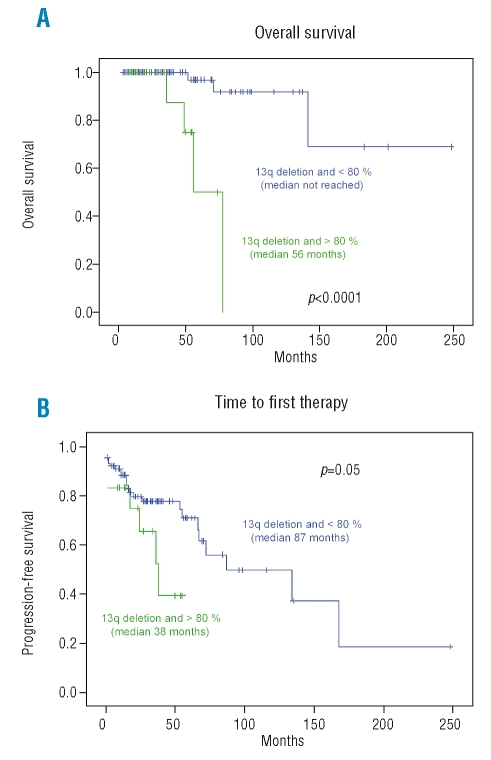
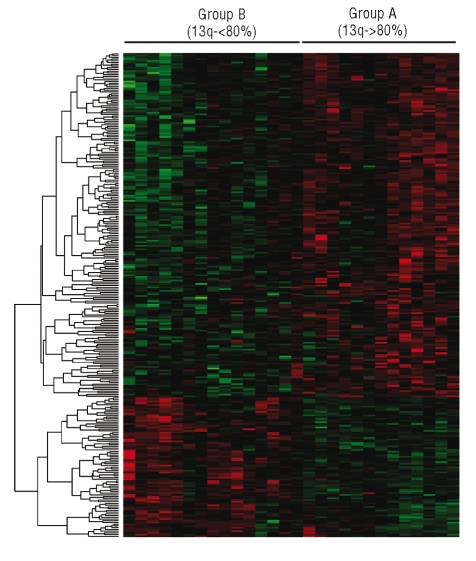
Results: In 109 out of the 350 cases (31.1%) loss of 13q was the sole cytogenetic aberration at diagnosis. In the subgroup of patients with 80% or more of cells with loss of 13q (18 cases), the overall survival was 56 months compared with not reached in the 91 cases in whom less than 80% of cells had loss of 13q (p< 0.0001). The variables included in the multivariate analysis for overall survival were the percentage of losses of 13q14 (p=0.001) and B symptoms (p=0.007). The time to first therapy in the group with 80% or more vs. less than 80% of losses was 38 months vs. 87 months, respectively (p=0.05). In the multivariate analysis the variables selected were unmutated status of IgV(H) (p=0.001) and a high level of beta(2)microglobulin (p=0.003). Interestingly, these differences regarding overall survival and time to first therapy were also present when other cut-offs were considered. The gene expression profile of patients with a high number of losses in 13q14 showed a high proliferation rate, downregulation of apoptosis-related genes, and dysregulation of genes related to mitochondrial functions.
Conclusions: Patients with B-cell chronic lymphoid leukemia with a high number of losses in 13q14 as the sole cytogenetic aberration at diagnosis display different clinical and biological features: short overall survival and time to first therapy as well as more proliferation and less apoptosis. A quantification of the number of cells showing a genetic abnormality should, therefore, be included in the study of the prognostic factors of B-cell chronic lymphoid leukemia.
Figures
References
-
- Chiorazzi N, Rai KR, Ferrarini M. Chronic lymphocytic leukemia. N Engl J Med. 2005;352:804–15. - PubMed
-
- Dighiero G. Unsolved issues in CLL biology and management. Leukemia. 2003;17:2385–91. - PubMed
-
- Montserrat E. New prognostic markers in CLL. Hematology Am Soc Hematol Educ Program. 2006:279–84. - PubMed
-
- Crespo M, Bosch F, Villamor N, Bellosillo B, Colomer D, Rozman M, et al. ZAP-70 expression as a surrogate for immunoglobulin-variable-region mutations in chronic lymphocytic leukemia. N Engl J Med. 2003;348:1764–75. - PubMed
-
- Durig J, Naschar M, Schmucker U, Renzing-Kohler K, Holter T, Huttmann A, et al. CD38 expression is an important prognostic marker in chronic lymphocytic leukaemia. Leukemia. 2002;16:30–5. - PubMed