


Abdominal compartment syndrome: pathophysiology and definitions
- PMID: 19254364
- PMCID: PMC2654860
- DOI: 10.1186/1757-7241-17-10
Abdominal compartment syndrome: pathophysiology and definitions
Abstract
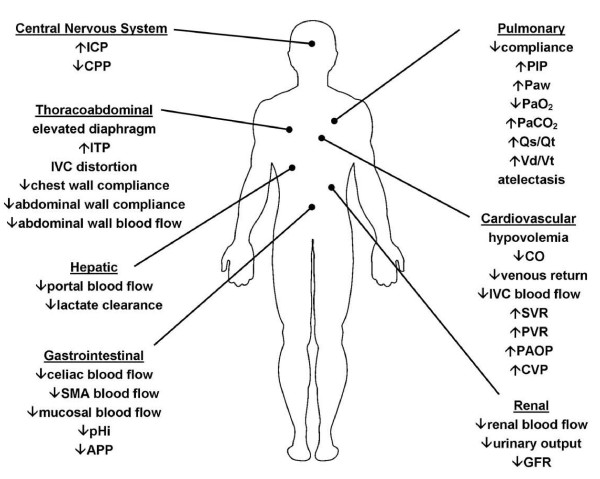
"Intra-abdominal hypertension", the presence of elevated intra-abdominal pressure, and "abdominal compartment syndrome", the development of pressure-induced organ-dysfunction and failure, have been increasingly recognized over the past decade as causes of significant morbidity and mortality among critically ill surgical and medical patients. Elevated intra-abdominal pressure can cause significant impairment of cardiac, pulmonary, renal, gastrointestinal, hepatic, and central nervous system function. The significant prognostic value of elevated intra-abdominal pressure has prompted many intensive care units to adopt measurement of this physiologic parameter as a routine vital sign in patients at risk. A thorough understanding of the pathophysiologic implications of elevated intra-abdominal pressure is fundamental to 1) recognizing the presence of intra-abdominal hypertension and abdominal compartment syndrome, 2) effectively resuscitating patients afflicted by these potentially life-threatening diseases, and 3) preventing the development of intra-abdominal pressure-induced end-organ dysfunction and failure. The currently accepted consensus definitions surrounding the diagnosis and treatment of intra-abdominal hypertension and abdominal compartment syndrome are presented.
Figures
References
-
- Schein M. Abdominal Compartment Syndrome:Historical Background. In: Ivatury R, Cheatham M, Malbrain M, Sugrue M, editor. Abdominal Compartment Syndrome. Georgetown, Texas: Landes Biosciences; 2006. pp. 1–7.
-
- Van Hee R. Historical highlights in concept and treatment of abdominal compartment syndrome. Acta Clin Belg Suppl. 2007:9–15. - PubMed
-
- Cheatham ML. Intra-abdominal hypertension and abdominal compartment syndrome. New Horizons. 1999;7:96–115.
-
- Cheatham M, Ivatury R, Malbrain M, Sugrue M. Epilogue: Options and Challenges for the Future. In: Ivatury R, Cheatham M, Malbrain M, Sugrue M, editor. Abdominal Compartment Syndrome. Georgetown, Texas: Landes Biosciences; 2006. pp. 297–302.
-
- Malbrain ML. Abdominal compartment syndrome: it is time. Acta Clin Belg Suppl. 2007;62:1–5. - PubMed
Publication types
MeSH terms
LinkOut - more resources
Full Text Sources
Medical
Miscellaneous
