


Animal evolution during domestication: the domesticated fox as a model
- PMID: 19260016
- PMCID: PMC2763232
- DOI: 10.1002/bies.200800070
Animal evolution during domestication: the domesticated fox as a model
Abstract
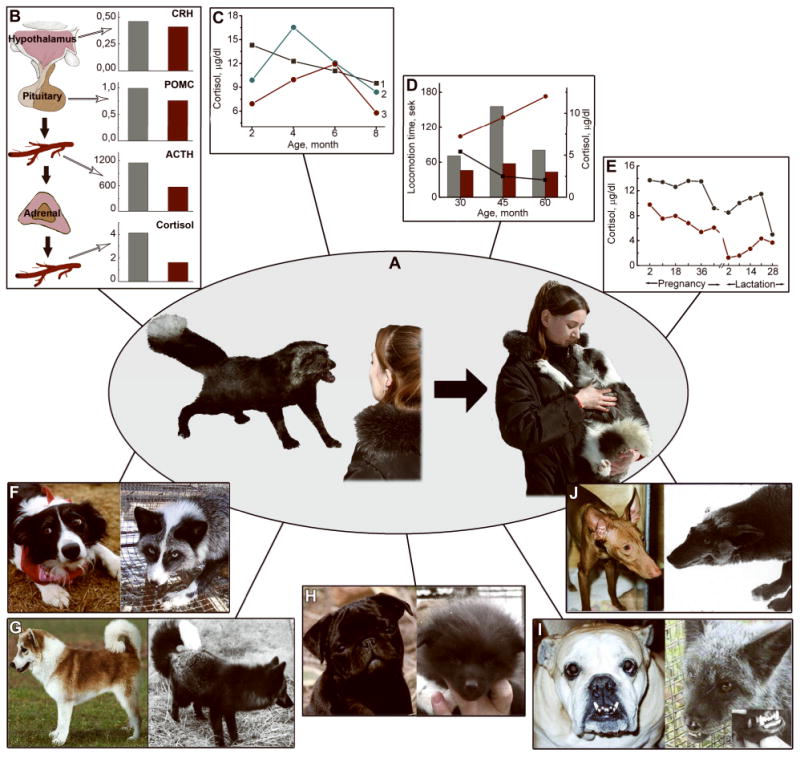
We review the evolution of domestic animals, emphasizing the effect of the earliest steps of domestication on its course. Using the first domesticated species, the dog (Canis familiaris), for illustration, we describe the evolutionary peculiarities during the historical domestication, such as the high level and wide range of diversity. We suggest that the process of earliest domestication via unconscious and later conscious selection of human-defined behavioral traits may accelerate phenotypic variations. The review is based on the results of a long-term experiment designed to reproduce early mammalian domestication in the silver fox (Vulpes vulpes) selected for tameability or amenability to domestication. We describe changes in behavior, morphology and physiology that appeared in the fox during its selection for tameability, which were similar to those observed in the domestic dog. Based on the data of the fox experiment and survey of relevant data, we discuss the developmental, genetic and possible molecular genetic mechanisms underlying these changes. We ascribe the causative role in evolutionary transformation of domestic animals to the selection for behavior and to the neurospecific regulatory genes it affects.
Figures
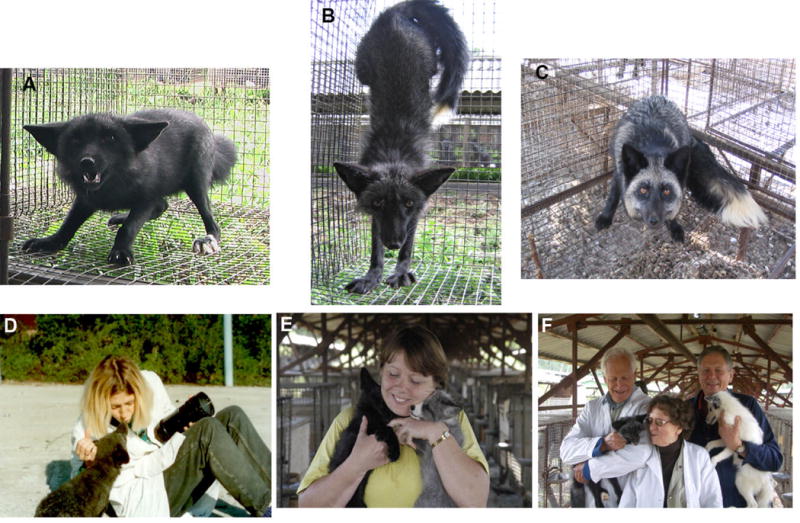
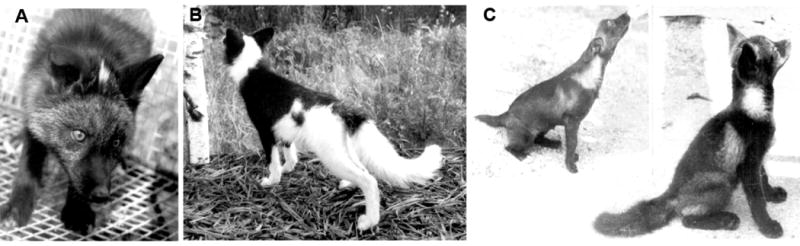
Left: a fox of the farm-bred population unselected for behavior. Foxes of this population show the typical aggressive response to human.
Right: a fox of the experimental domesticated population. The dog-like behavior of foxes of this population is the result of many years of selection for tameability.
References
-
- Darwin CR. The variation of animals and plants under domestication. 2-d. II. London: John Murray; 1875. p. 495.
-
- Belyaev DK. Domestication of animals. Sci J. 1969;5:47–52.
-
- Herre WK. Todays status of domestication research. Naturwissenschaftlich Rundschau. 1959;12:87–94. In Germany.
-
- Bogolyubski SH. Manual for State Universities. Moscow: Soviet Science; 1959. Origin and transformation of domestic animals. In Russian.
-
- Postel-Vinay O. The dog, a biological enigma. La Recherche. 2004;375:30–37. In French.
Publication types
MeSH terms
Grants and funding
LinkOut - more resources
Full Text Sources
Medical
