


Cooperation between integrin alphavbeta3 and VEGFR2 in angiogenesis
- PMID: 19267251
- PMCID: PMC2863048
- DOI: 10.1007/s10456-009-9141-9
Cooperation between integrin alphavbeta3 and VEGFR2 in angiogenesis
Abstract
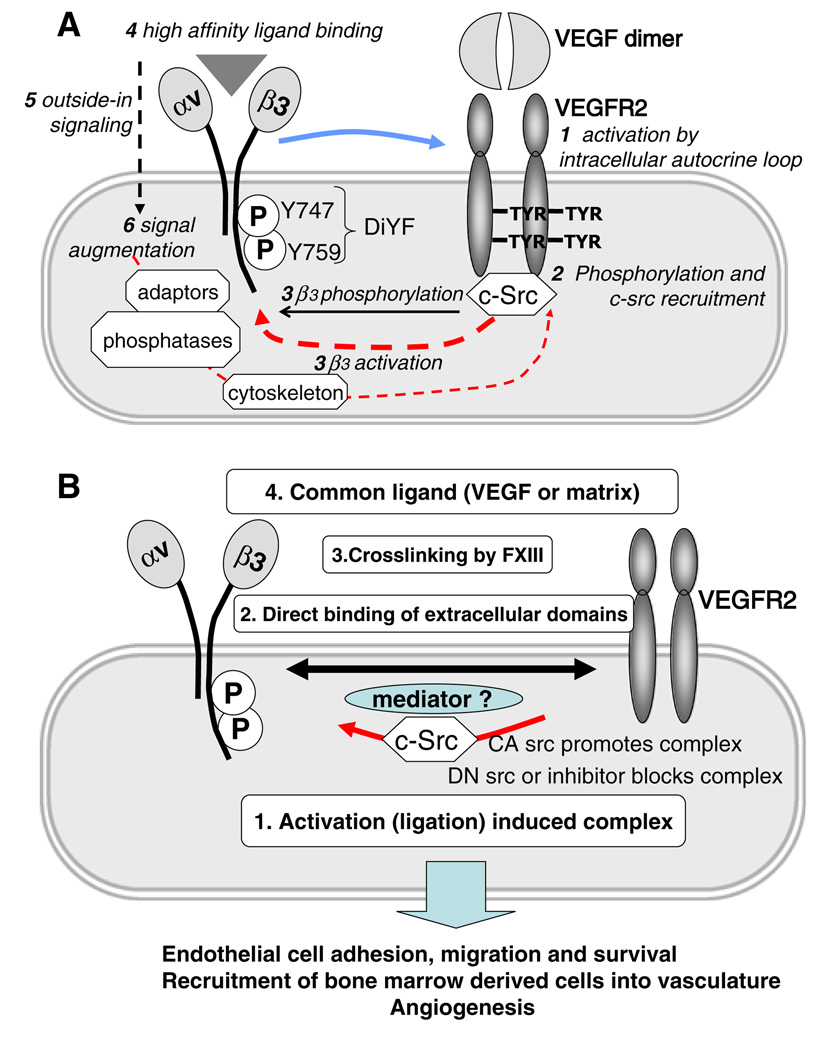
The cross-talk between receptor tyrosine kinases and integrin receptors are known to be crucial for a number of cellular functions. On endothelial cells, an interaction between integrin alphavbeta3 and VEGFR2 seems to be particularly important process during vascularization. Importantly, the functional association between VEGFR2 and integrin alphavbeta3 is of reciprocal nature since each receptor is able to promote activation of its counterpart. This mutually beneficial relationship regulates a number of cellular activities involved in angiogenesis, including endothelial cell migration, survival and tube formation, and hematopoietic cell functions within vasculature. This article discusses several possible mechanisms reported by different labs which mediate formation of the complex between VEGFR-2 and alphavbeta3 on endothelial cells. The pathological consequences and regulatory events involved in this receptor cross-talk are also presented.
Figures
References
-
- Folkman J. Angiogenesis: an organizing principle for drug discovery? Nat Rev Drug Discov. 2007;6:273–286. - PubMed
-
- Glade-Bender J, et al. VEGF blocking therapy in the treatment of cancer. Expert Opin Biol Ther. 2003;3:263–276. - PubMed
-
- Ribatti D. Napoleone Ferrara and the saga of vascular endothelial growth factor. Endothelium. 2008;15:1–8. - PubMed
-
- Dass CR, Choong PF. Cancer angiogenesis: targeting the heel of Achilles. J Drug Target. 2008;16:449–454. - PubMed
-
- Andreoli CM, Miller JW. Anti-vascular endothelial growth factor therapy for ocular neovascular disease. Curr Opin Ophthalmol. 2007;18:502–508. - PubMed
Publication types
MeSH terms
Substances
Grants and funding
LinkOut - more resources
Full Text Sources
Other Literature Sources
Molecular Biology Databases
