Outcome of using the histological pseudocapsule as a surgical capsule in Cushing disease
- PMID: 19267526
- PMCID: PMC2945523
- DOI: 10.3171/2008.8.JNS08339
Outcome of using the histological pseudocapsule as a surgical capsule in Cushing disease
Abstract
Object: Many patients with Cushing disease still have active or recurrent disease after pituitary surgery. The histological pseudocapsule of a pituitary adenoma is a layer of compressed normal anterior lobe that surrounds the adenoma and can be used during surgery to identify and guide removal of the tumor. In this study the authors examined the results of using the pseudocapsule as a surgical capsule in the resection of adenomas in patients with Cushing disease.
Methods: The authors reviewed a prospective database of data obtained in patients with Cushing disease who underwent surgery. The analysis included all cases in which a lesion was identified during surgery and in which the lesion was believed to be confined to the pituitary gland in patients with Cushing disease between January 1990 and March 2007. Since the objective was to determine the success of using the pseudocapsule as a surgical capsule, patients with invasive tumors and patients in whom no lesion was identified during surgery-challenging cases for surgical success-were excluded from analysis.
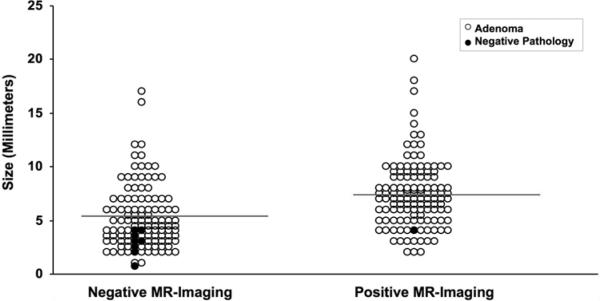
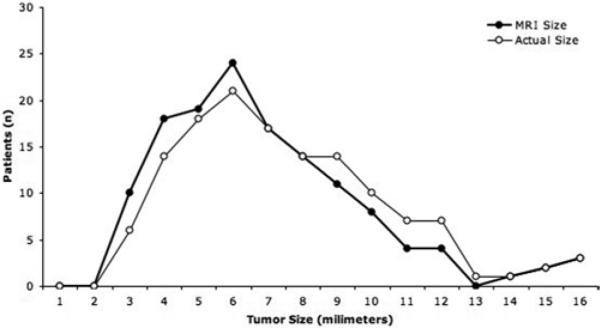
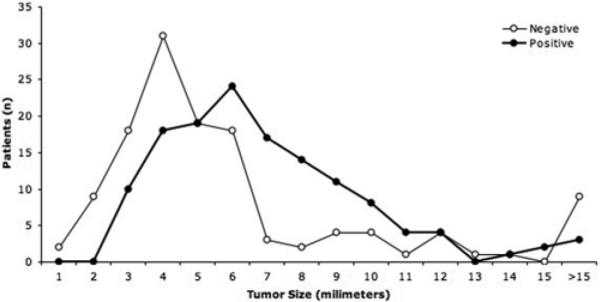
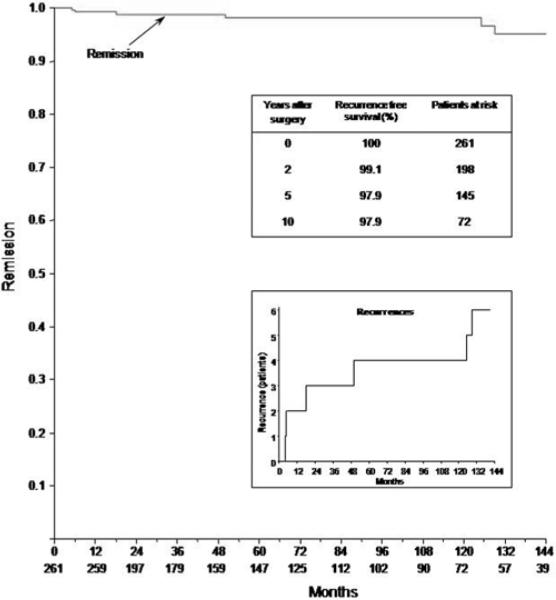
Results: In 261 patients an encapsulated adenoma was identified at surgery. Tumor was visible on MR imaging in 135 patients (52%); in 126 patients (48%) MR imaging detected no tumor. The range of tumor size overlapped considerably in the groups with positive and negative MR imaging results, indicating that in addition to size other features of the adenoma influence the results of MR imaging. In 252 patients hypercortisolism resolved after the first operation, whereas in 9 patients (3 with positive MR imaging and 6 with negative MR imaging) early reoperation was required. Hypercortisolism resolved in all 261 patients (256 with hypocortisolism and 5 with eucortisolism) before hospital discharge. Forty-six patients (18%) had postoperative electrolyte abnormalities (30 with hyponatremia and 16 with diabetes insipidus), but only 2 patients required treatment at discharge. The mean clinical follow-up duration was 84 months (range 12-215 months). Six patients (2%) had recurrence of hypercortisolism, all of whom were treated successfully with reoperation.
Conclusions: Because of their small size, adenomas can be challenging to identify in patients with Cushing disease. Use of the histological pseudocapsule of an adenoma allows accurate identification of the tumor and helps guide its complete excision. With this approach the overall remission rate is high and the rate of complications is low.
Figures

Comment in
-
Pituitary surgery. Editorial.J Neurosurg. 2009 Sep;111(3):527-8; discussion 528-30. doi: 10.3171/2008.9.JNS081073. J Neurosurg. 2009. PMID: 19267525 No abstract available.
References
-
- Atkinson AB, Kennedy A, Wiggam MI, McCance DR, Sheridan B. Long-term remission rates after pituitary surgery for Cushing's disease: the need for long-term surveillance. Clin Endocrinol (Oxf) 2005;63:549–559. - PubMed
-
- Batista D, Courkoutsakis NA, Oldfield EH, Griffin KJ, Keil M, Patronas NJ, et al. Detection of adrenocorticotropin-secreting pituitary adenomas by magnetic resonance imaging in children and adolescents with cushing disease. J Clin Endocrinol Metab. 2005;90:5134–5140. - PubMed
-
- Blevins LS, Jr, Christy JH, Khajavi M, Tindall GT. Outcomes of therapy for Cushing's disease due to adrenocorticotropin-secreting pituitary macroadenomas. J Clin Endocrinol Metab. 1998;83:63–67. - PubMed
-
- Chee GH, Mathias DB, James RA, Kendall-Taylor P. Transsphenoidal pituitary surgery in Cushing's disease: can we predict outcome? Clin Endocrinol (Oxf) 2001;54:617–626. - PubMed
-
- Ciric I. Pituitary tumors. Neurol Clin. 1985;3:751–768. - PubMed
Publication types
MeSH terms
Substances
Grants and funding
LinkOut - more resources
Full Text Sources
Medical