


Functional organization of the S. cerevisiae phosphorylation network
- PMID: 19269370
- PMCID: PMC2856666
- DOI: 10.1016/j.cell.2008.12.039
Functional organization of the S. cerevisiae phosphorylation network
Abstract
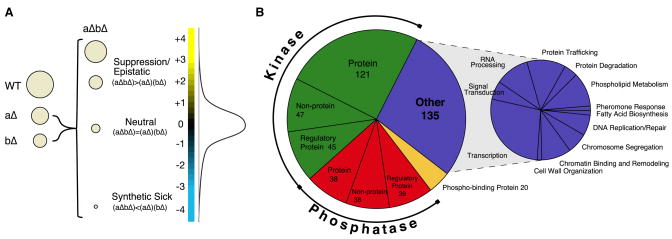
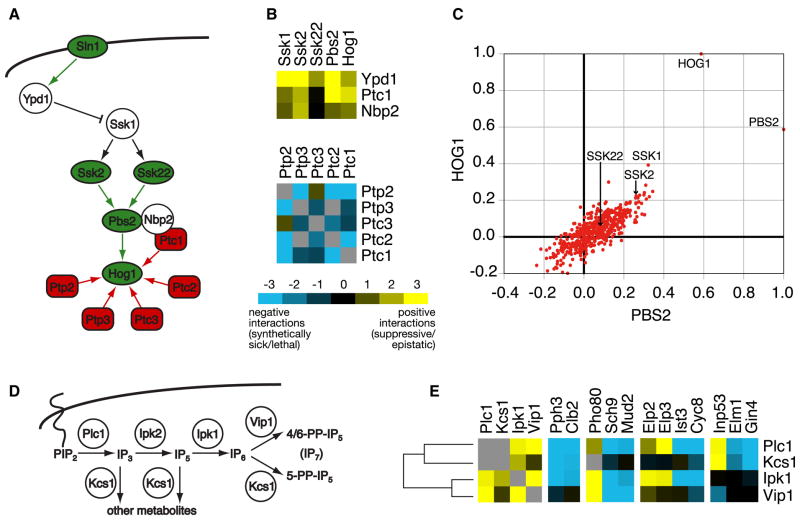
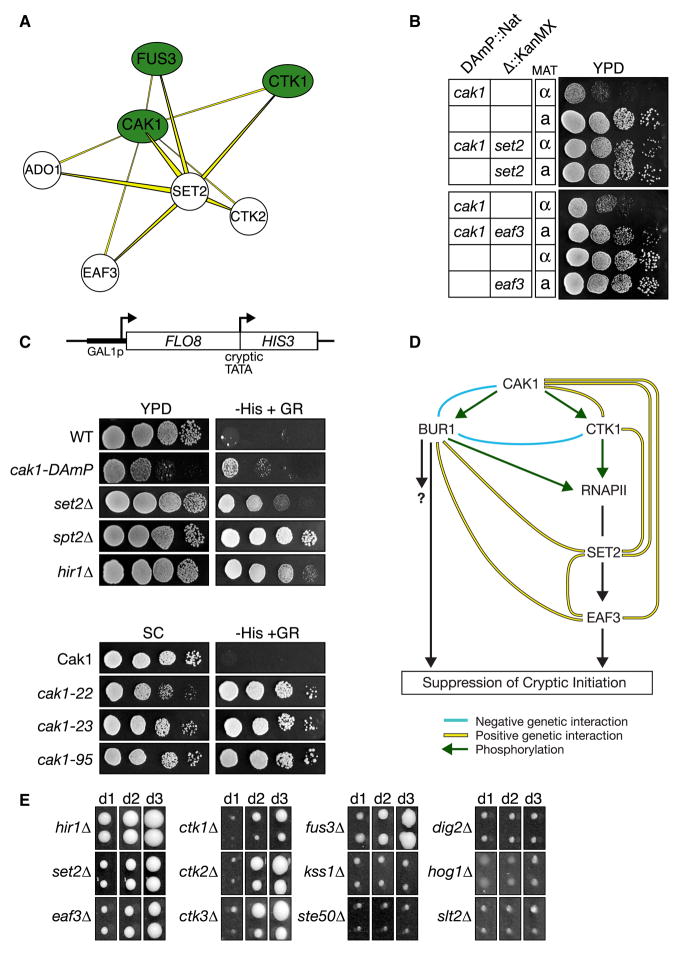
Reversible protein phosphorylation is a signaling mechanism involved in all cellular processes. To create a systems view of the signaling apparatus in budding yeast, we generated an epistatic miniarray profile (E-MAP) comprised of 100,000 pairwise, quantitative genetic interactions, including virtually all protein and small-molecule kinases and phosphatases as well as key cellular regulators. Quantitative genetic interaction mapping reveals factors working in compensatory pathways (negative genetic interactions) or those operating in linear pathways (positive genetic interactions). We found an enrichment of positive genetic interactions between kinases, phosphatases, and their substrates. In addition, we assembled a higher-order map from sets of three genes that display strong interactions with one another: triplets enriched for functional connectivity. The resulting network view provides insights into signaling pathway regulation and reveals a link between the cell-cycle kinase, Cak1, the Fus3 MAP kinase, and a pathway that regulates chromatin integrity during transcription by RNA polymerase II.
Figures


References
-
- Alcazar-Roman AR, Wente SR. Inositol polyphosphates: a new frontier for regulating gene expression. Chromosoma. 2008;117:1–13. - PubMed
-
- Bishop AC, Ubersax JA, Petsch DT, Matheos DP, Gray NS, Blethrow J, Shimizu E, Tsien JZ, Schultz PG, Rose MD, et al. A chemical switch for inhibitor-sensitive alleles of any protein kinase. Nature. 2000;407:395–401. - PubMed
Publication types
MeSH terms
Substances
Grants and funding
LinkOut - more resources
Full Text Sources
Other Literature Sources
Molecular Biology Databases
