


Physical therapists' use of cognitive-behavioral therapy for older adults with chronic pain: a nationwide survey
- PMID: 19270046
- PMCID: PMC2716379
- DOI: 10.2522/ptj.20080163
Physical therapists' use of cognitive-behavioral therapy for older adults with chronic pain: a nationwide survey
Abstract
Background: Increasing evidence supports the use of cognitive-behavioral therapy (CBT) for patients with chronic pain.
Objective: This study determined whether physical therapists incorporate CBT techniques (eg, relaxation, activity pacing) when treating older patients with chronic pain, ascertained their interest in and barriers to using CBT, and identified participant-related factors associated with interest in CBT.
Design: This cross-sectional study used a telephone survey.
Methods: One hundred fifty-two members of the Geriatrics and Orthopaedics sections of the American Physical Therapy Association completed the survey. Associations between participant-related factors and interest in CBT were assessed in statistical general linear models.
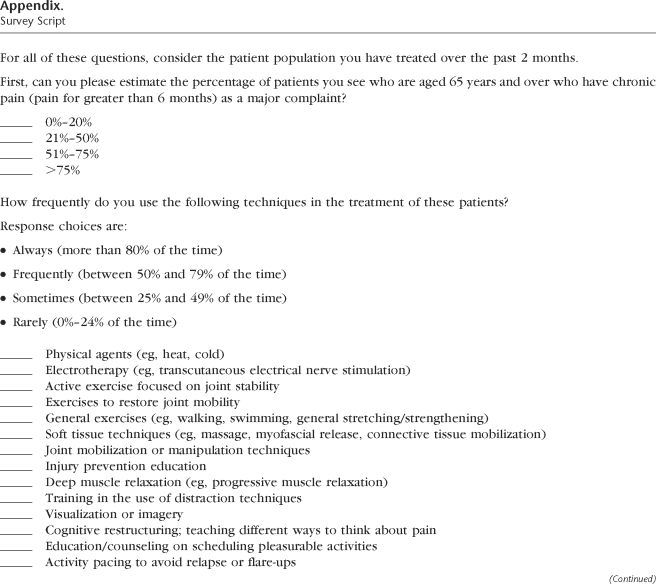
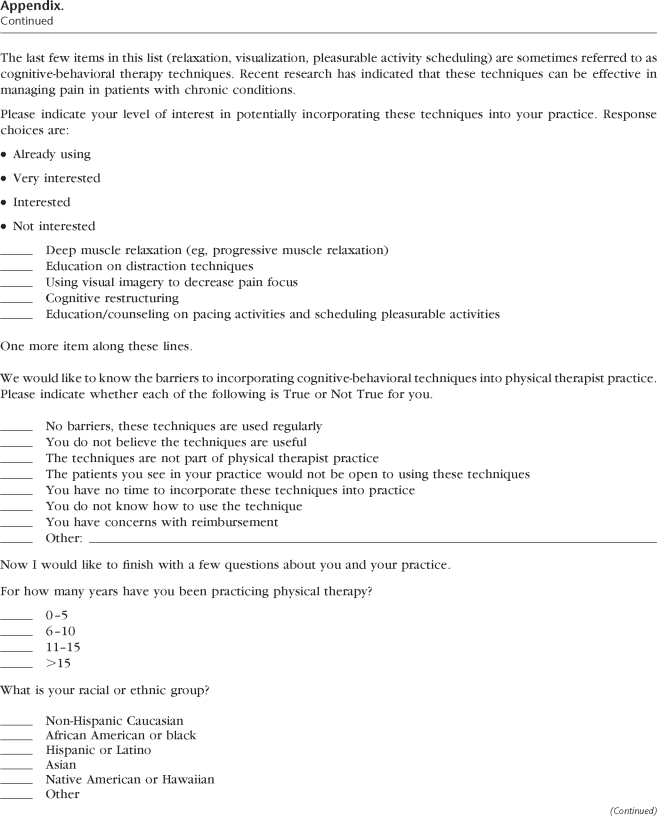
Results: Commonly used CBT interventions included activity pacing and pleasurable activity scheduling, frequently used by 81% and 30% of the respondents, respectively. Non-CBT treatments included exercises focusing on joint stability (94%) and mobility (94%), and strengthening and stretching programs (91%). Respondents' overall interest in CBT techniques was 12.70 (SD=3.4, scale range=5-20). Barriers to use of CBT included lack of knowledge of and skill in the techniques, reimbursement concerns, and time constraints. Practice type and the interaction of percentage of patients with pain and educational degree of the physical therapist were independently associated with provider interest in CBT in a general linear model that also included 6 other variables specified a priori.
Limitations: Data are based on self-report without regard to treatment emphasis.
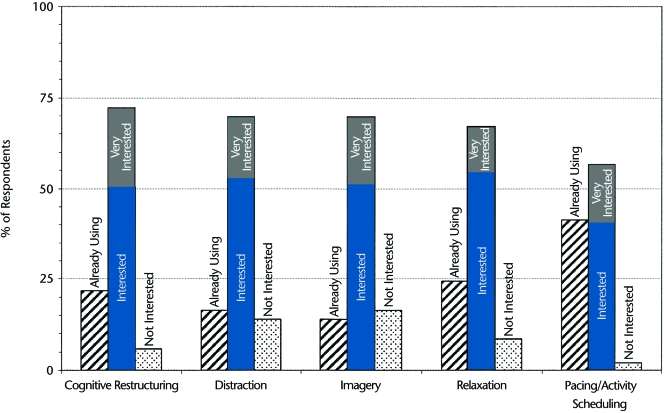
Conclusions: Although only a minority of physical therapists reported use of some CBT techniques when treating older patients with chronic pain, their interest in incorporating these techniques into practice is substantial. Concerns with their skill level using the techniques, time constraints, and reimbursement constitute barriers to use of the interventions.
Figures
Comment in
-
Invited commentary.Phys Ther. 2009 May;89(5):470-2; author reply 472-3. doi: 10.2522/ptj.20080163.ic. Phys Ther. 2009. PMID: 19411242 No abstract available.
References
-
- Miró J, Paredes S, Rull M, et al. Pain in older adults: a prevalence study in the Mediterranean region of Catalonia. Eur J Pain. 2007;11:83–92. - PubMed
-
- Edwards RR. Age differences in the correlates of physical functioning in patients with chronic pain. J Aging Health. 2006;18:56–69. - PubMed
-
- Weiner DK, Sakamoto S, Perera S, et al. Chronic low back pain in older adults: prevalence, reliability, and validity of physical examination findings. J Am Geriatr Soc. 2006;54:11–20. - PubMed
-
- Leong IY, Farrell MJ, Helme RD, et al. The relationship between medical comorbidity and self-rated pain, mood disturbance, and function in older people with chronic pain. J Gerontol A Biol Sci Med Sci. 2007;62:550–555. - PubMed
Publication types
MeSH terms
Grants and funding
LinkOut - more resources
Full Text Sources
Medical
