Protein kinase C isoforms: Multi-functional regulators of cell life and death
- PMID: 19273207
- PMCID: PMC5204454
- DOI: 10.2741/3385
Protein kinase C isoforms: Multi-functional regulators of cell life and death
Abstract
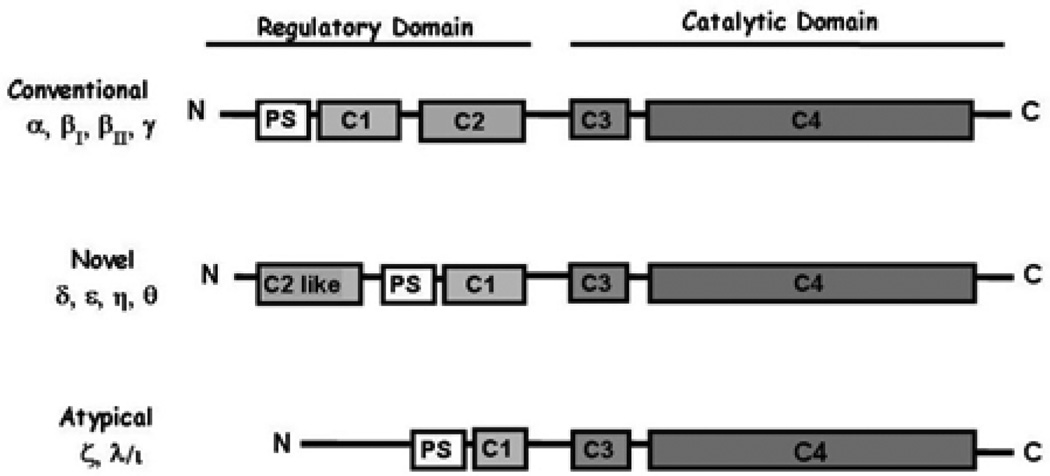
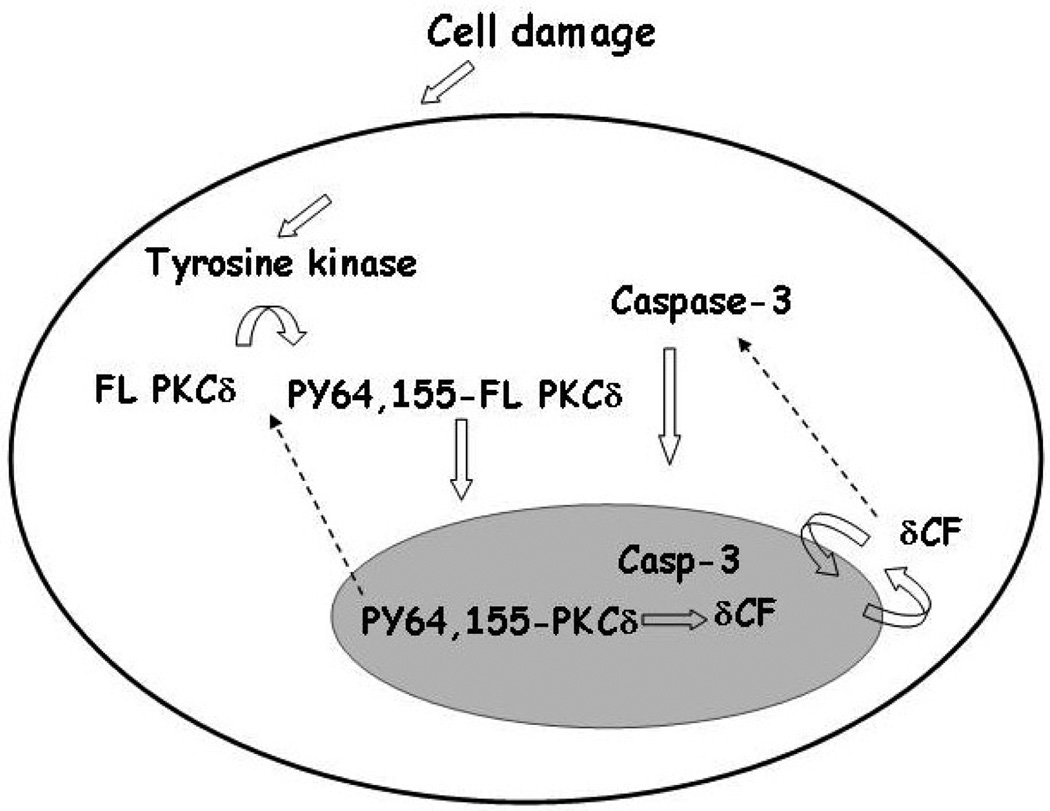
The protein kinase C (PKC) family consists of 10 related serine/threonine protein kinases some of which are critical regulators of cell proliferation, survival and cell death. While early studies relied on broad spectrum chemical activators or inhibitors of this family, the generation of isoform specific tools has greatly facilitated our understanding of the contribution of specific PKC isoforms to cell proliferation and apoptosis. These studies suggest that PKC-alpha, PKC-epsilon, and the atypical PKC's, PKC-lambda/iota and PKC-zeta, preferentially function to promote cell proliferation and survival, while the novel isoform, PKC-delta is an important regulator of apoptosis. The essential role of this kinase family in both cell survival and apoptosis suggests that specific isoforms may function as molecular sensors, promoting cell survival or cell death depending on environmental cues. Given their central role in cell and tissue homeostasis, it is not surprising that the expression or activity of some of these kinases is altered in human diseases, particularly cancer.
Figures
References
-
- Inoue M, Kishimoto A, Takai Y, Nishizuka Y. Studies on a cyclic nucleotide-independent protein kinase and its proenzyme in mammalian tissues. II. Proenzyme and its activation by calcium-dependent protease from rat brain. J Biol Chem. 1977;252:7610–7616. - PubMed
-
- Takai Y, Kishimoto A, Inoue M, Nishizuka Y. Studies on a cyclic nucleotide-independent protein kinase and its proenzyme in mammalian tissues. I. Purification and characterization of an active enzyme from bovine cerebellum. J Biol Chem. 1977;252:7603–7609. - PubMed
-
- Newton AC. Protein kinase C: structural and spatial regulation by phosphorylation, cofactors, and macromolecular interactions. Chem Rev. 2001;101:2352–2364. - PubMed
-
- Dempsey EC, Newton AC, Mochly-Rosen D, Fields AP, Reyland ME, Insel PA, Messing RO. Protein kinase C isozymes and the regulation of diverse cell responses. Am J Physiol. 2000;279:L429–L438. - PubMed
Publication types
MeSH terms
Substances
Grants and funding
LinkOut - more resources
Full Text Sources
Other Literature Sources