


GPR109A is a G-protein-coupled receptor for the bacterial fermentation product butyrate and functions as a tumor suppressor in colon
- PMID: 19276343
- PMCID: PMC3747834
- DOI: 10.1158/0008-5472.CAN-08-4466
GPR109A is a G-protein-coupled receptor for the bacterial fermentation product butyrate and functions as a tumor suppressor in colon
Abstract
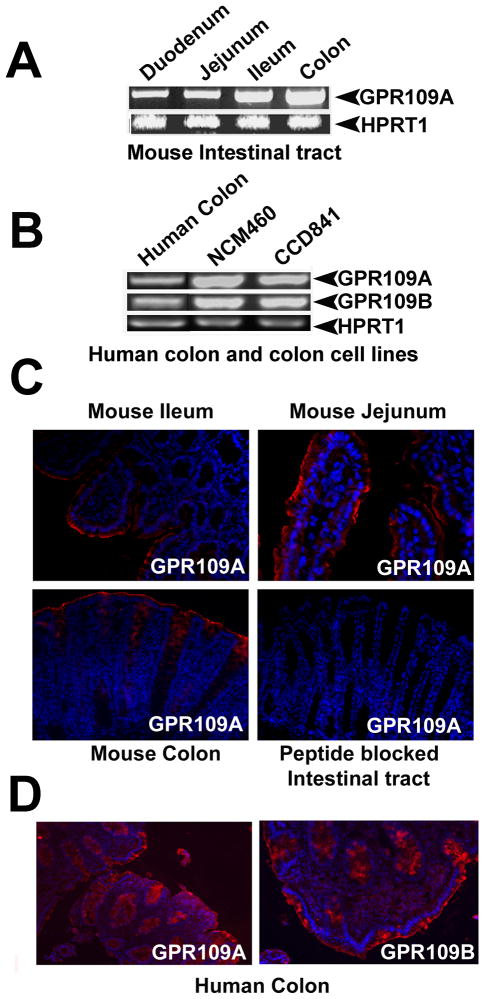
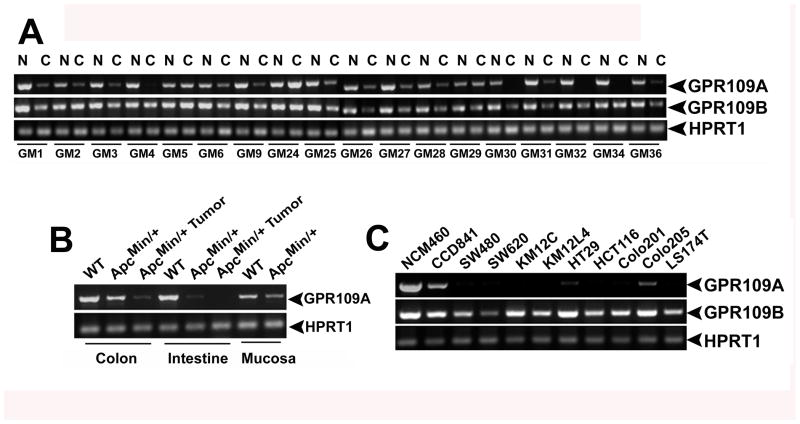
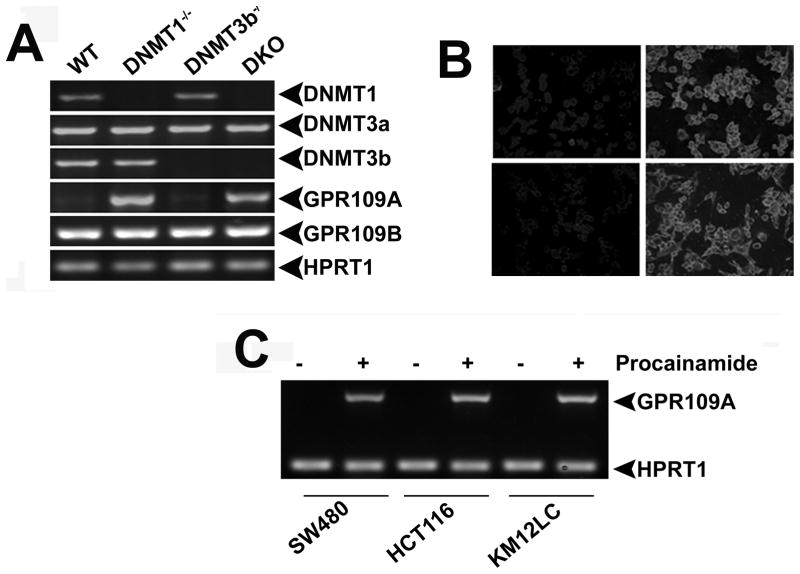
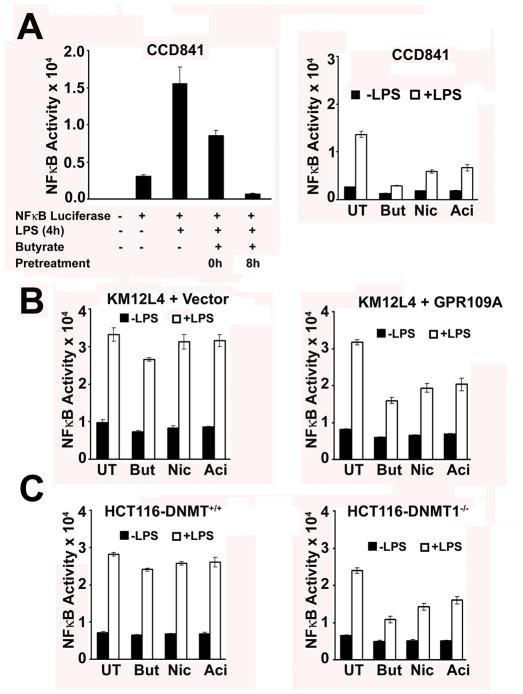
Short-chain fatty acids, generated in colon by bacterial fermentation of dietary fiber, protect against colorectal cancer and inflammatory bowel disease. Among these bacterial metabolites, butyrate is biologically most relevant. GPR109A is a G-protein-coupled receptor for nicotinate but recognizes butyrate with low affinity. Millimolar concentrations of butyrate are needed to activate the receptor. Although concentrations of butyrate in colonic lumen are sufficient to activate the receptor maximally, there have been no reports on the expression/function of GPR109A in this tissue. Here we show that GPR109A is expressed in the lumen-facing apical membrane of colonic and intestinal epithelial cells and that the receptor recognizes butyrate as a ligand. The expression of GPR109A is silenced in colon cancer in humans, in a mouse model of intestinal/colon cancer, and in colon cancer cell lines. The tumor-associated silencing of GPR109A involves DNA methylation directly or indirectly. Reexpression of GPR109A in colon cancer cells induces apoptosis, but only in the presence of its ligands butyrate and nicotinate. Butyrate is an inhibitor of histone deacetylases, but apoptosis induced by activation of GPR109A with its ligands in colon cancer cells does not involve inhibition of histone deacetylation. The primary changes in this apoptotic process include down-regulation of Bcl-2, Bcl-xL, and cyclin D1 and up-regulation of death receptor pathway. In addition, GPR109A/butyrate suppresses nuclear factor-kappaB activation in normal and cancer colon cell lines as well as in normal mouse colon. These studies show that GPR109A mediates the tumor-suppressive effects of the bacterial fermentation product butyrate in colon.
Figures

References
-
- Hooper LV, Gordon JI. Commensal host-bacterial relationships in the gut. Science. 2001;292:1115–8. - PubMed
-
- Backhed F, Ley RE, Sonnenburg JL, Peterson DA, Gordon JI. Host-bacterial mutualism in the human intestine. Science. 2005;307:1915–20. - PubMed
-
- Turnbaugh PJ, Ley RE, Mahowald MA, Magrini V, Mardis ER, Gordon JI. An obesity-associated gut microbiome with increased capacity for energy harvest. Nature. 2006;444:1027–31. - PubMed
-
- Topping DL, Clifton PM. Short-chain fatty acids and human colonic function: Roles of resistant starch and nonstarch polysaccharides. Physiol Rev. 2001;81:1031–64. - PubMed
-
- Mortensen PB, Clausen MR. Short-chain fatty acids in the human colon: relation to gastrointestinal health and disease. Scand J Gastroenterol. 1996;216:132–48. - PubMed
MeSH terms
Substances
Grants and funding
LinkOut - more resources
Full Text Sources
Other Literature Sources
Molecular Biology Databases
Research Materials
