


Brachial-ankle pulse wave velocity is associated with walking distance in patients referred for peripheral arterial disease evaluation
- PMID: 19278681
- PMCID: PMC2956123
- DOI: 10.1016/j.atherosclerosis.2009.02.003
Brachial-ankle pulse wave velocity is associated with walking distance in patients referred for peripheral arterial disease evaluation
Abstract
Objective: Impaired functional capacity predicts morbidity and increased mortality in patients with PAD. We hypothesized that brachial-ankle pulse wave velocity (baPWV), a measure of arterial stiffness, is associated with functional capacity in patients undergoing noninvasive evaluation for peripheral arterial disease (PAD).
Methods: We studied 114 patients (age 68+/-10 years) referred to Mayo Clinic's noninvasive vascular laboratory. Functional capacity was estimated in terms of distance walked in 5 min on a treadmill at a speed of 1.0-2.0 mph. Ankle-brachial index (ABI) was obtained with Doppler method before and 1 min after exercise. baPWV was estimated noninvasively using an oscillometric device. The association of baPWV with walking distance was assessed using accelerated failure time and Cox proportional-hazards models.
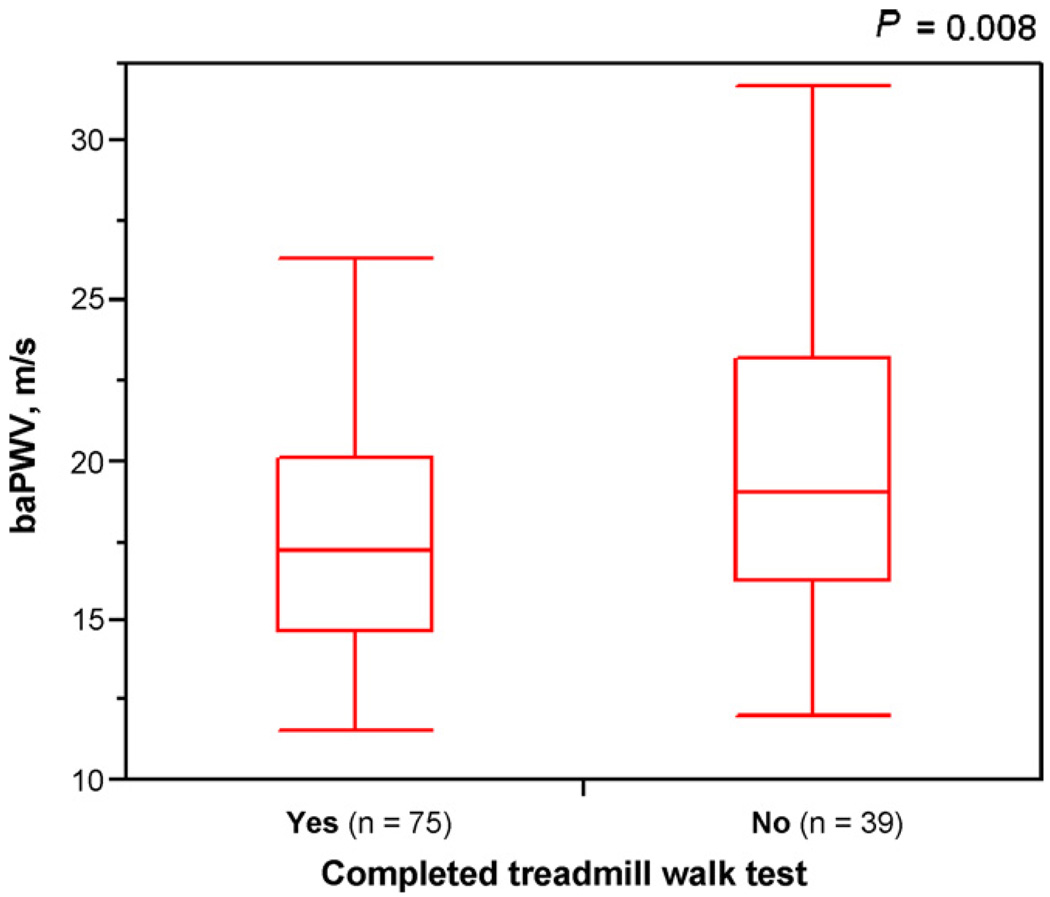
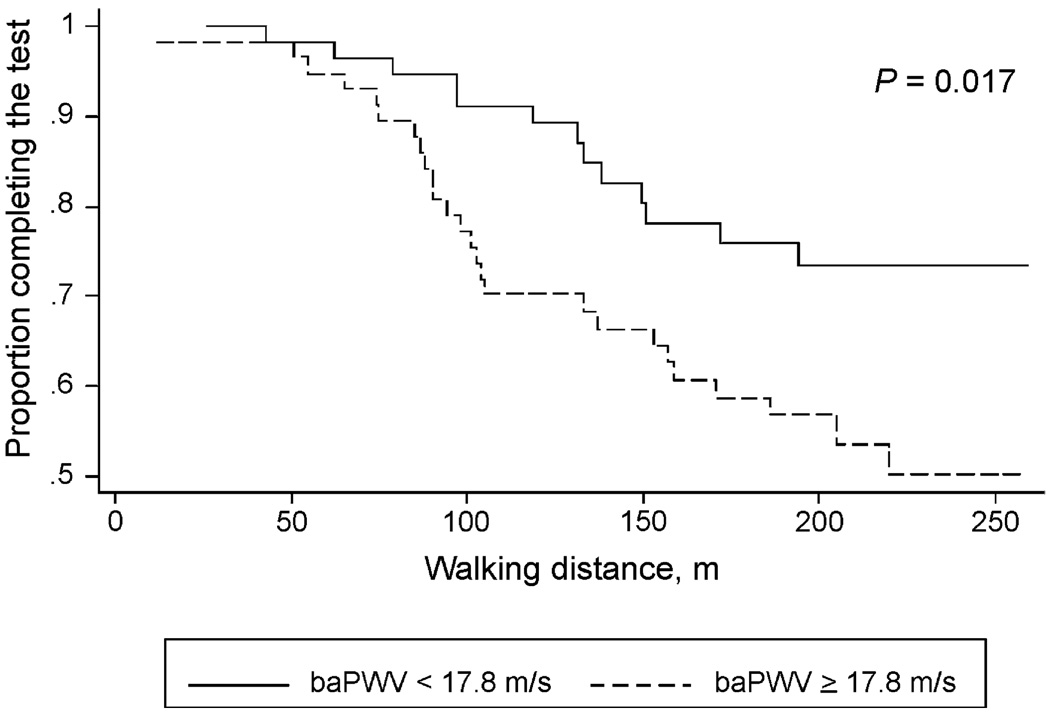
Results: The mean baPWV was higher in patients who were unable to complete the walk test compared to those who successfully completed the test (P=0.008). Higher baPWV was associated with a lower walking distance after adjustment for heart rate, mean arterial pressure, and cardiovascular risk factors (P=0.017) and after additional adjustment for pulse pressure (P=0.034) and ABI (P=0.030). Higher baPWV was associated with failure to complete the treadmill walk test, after adjustment for heart rate, mean arterial pressure, and cardiovascular risk factors (P=0.025) and after additional adjustment for pulse pressure (P=0.041) and ABI (P=0.039).
Conclusion: Increased baPWV, a measure of arterial stiffness, is associated with impaired functional capacity in patients undergoing evaluation for PAD.
Figures
References
-
- Hirsch AT, Criqui MH, Treat-Jacobson D, et al. Peripheral arterial disease detection, awareness, and treatment in primary care. JAMA. 2001;286:1317–1324. - PubMed
-
- Hirsch AT, Haskal ZJ, Hertzer NR, et al. ACC/AHA Guidelines for the management of patients with peripheral arterial disease (lower extremity, renal, mesenteric, and abdominal aortic) Circulation. 2006;113:e463–e654. - PubMed
-
- Saw J, Bhatt DL, Moliterno DJ, et al. The influence of peripheral arterial disease on outcomes: a pooled analysis of mortality in eight large randomized percutaneous coronary intervention trials. J AmColl Cardiol. 2006;48:1567–1572. - PubMed
-
- Feringa HH, Karagiannis SE, Schouten O, et al. Prognostic significance of declining ankle-brachial index values in patients with suspected or known peripheral arterial disease. Eur J Vasc Endovasc Surg. 2007;34:206–213. - PubMed
-
- Criqui MH, Langer RD, Fronek A, et al. Mortality over a period of 10 years in patients with peripheral arterial disease. N Engl J Med. 1992;326:381–386. - PubMed
Publication types
MeSH terms
Grants and funding
LinkOut - more resources
Full Text Sources
