


A very low-carbohydrate diet improves symptoms and quality of life in diarrhea-predominant irritable bowel syndrome
- PMID: 19281859
- PMCID: PMC2693479
- DOI: 10.1016/j.cgh.2009.02.023
A very low-carbohydrate diet improves symptoms and quality of life in diarrhea-predominant irritable bowel syndrome
Abstract
Background & aims: Patients with diarrhea-predominant irritable bowel syndrome (IBS-D) anecdotally report symptom improvement after initiating a very low-carbohydrate diet (VLCD). This study prospectively evaluated a VLCD in IBS-D.
Methods: Participants with moderate to severe IBS-D were provided a 2-week standard diet, then 4 weeks of a VLCD (20 g carbohydrates/d). A responder was defined as having adequate relief of gastrointestinal symptoms for 2 or more weeks during the VLCD. Changes in abdominal pain, stool habits, and quality of life also were measured.
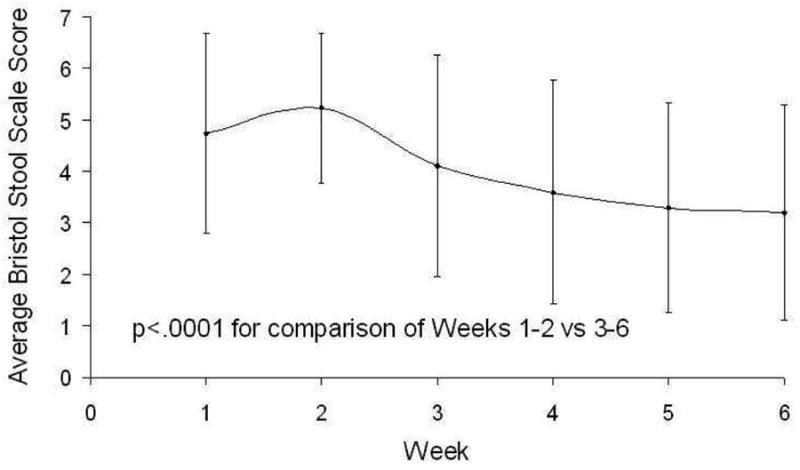
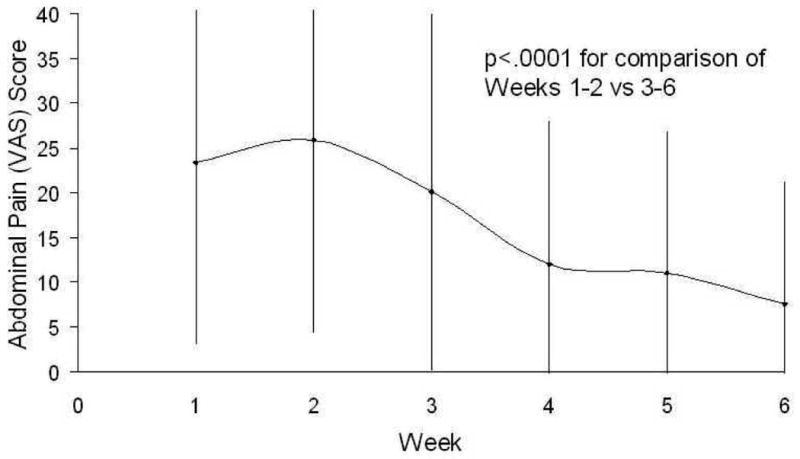
Results: Of the 17 participants enrolled, 13 completed the study and all met the responder definition, with 10 (77%) reporting adequate relief for all 4 VLCD weeks. Stool frequency decreased (2.6 +/- 0.8/d to 1.4 +/- 0.6/d; P < .001). Stool consistency improved from diarrheal to normal form (Bristol Stool Score, 5.3 +/- 0.7 to 3.8 +/- 1.2; P < .001). Pain scores and quality-of-life measures significantly improved. Outcomes were independent of weight loss.
Conclusions: A VLCD provides adequate relief, and improves abdominal pain, stool habits, and quality of life in IBS-D.
Conflict of interest statement
No conflicts of interest exist for the authors of this manuscript. The sponsors were not involved in the data collection, data analysis, or data interpretation in preparing this manuscript.
Figures
Comment in
-
Considering the necessity of a very low carbohydrate diet on diarrhea-predominant irritable bowel syndrome.Clin Gastroenterol Hepatol. 2010 Jan;8(1):98. doi: 10.1016/j.cgh.2009.09.004. Epub 2009 Sep 16. Clin Gastroenterol Hepatol. 2010. PMID: 19765673 No abstract available.
References
-
- Longstreth GF, Thompson WG, Chey WD, Houghton LA, Mearin F, Spiller RC. Functional Bowel Disorders. In: Drossman DA, Corazziari E, Delvaux M, Spiller RC, Talley NJ, Thompson WG, Whitehead WE, editors. Rome III: The Functional Gastrointestinal Disorders. 3rd. McLean, VA: Degnon Associates, Inc.; 2006. pp. 487–555.
-
- Simren M, Mansson A, Langkilde AM, Svedlund J, Abrahamsson H, Bengtsson U, Bjornsson ES. Food-related gastrointestinal symptoms in the irritable bowel syndrome. Digestion. 2001;63:108–15. - PubMed
-
- Burden S. Dietary treatment of irritable bowel syndrome: current evidence and guidelines for future practice. J Hum Nutr Diet. 2001;14:231–41. - PubMed
-
- Dapoigny M, Stockbrugger RW, Azpiroz F, Collins S, Coremans G, Muller-Lissner S, Oberndorff A, Pace F, Smout A, Vatn M, Whorwell P. Role of alimentation in irritable bowel syndrome. Digestion. 2003;67:225–33. - PubMed
-
- Floch MH. Use of diet and probiotic therapy in the irritable bowel syndrome: analysis of the literature. J Clin Gastroenterol. 2005;39:S243–6. - PubMed
Publication types
MeSH terms
Grants and funding
LinkOut - more resources
Full Text Sources
Other Literature Sources
Medical
Miscellaneous
