Comparative Study
. 2009 Jun;16(6):559-72.
doi: 10.1177/1933719109332825. Epub 2009 Mar 12.

Eutopic endometrium from women with endometriosis shows altered ultrastructure and glycosylation compared to that from healthy controls--a pilot observational study

Affiliations
Comparative Study

Eutopic endometrium from women with endometriosis shows altered ultrastructure and glycosylation compared to that from healthy controls--a pilot observational study

Carolyn J P Jones et al. Reprod Sci. 2009 Jun.

Abstract

Endometrial curettings from a cohort of 24 women with endometriosis were compared with matched biopsies from 14 healthy, fertile women and examined for ultrastructural changes and the secretion of glycans bound by the lectin from Dolichos biflorus. Ultrastructural analysis of glandular endometrial tissue from women with stages I to III endometriosis showed heterogeneous responses to the disease, biopsies often showing a mixture of features, combining delays in the maturation sequence with characteristics of later phenotypes particularly in the mid-late secretory phase of the menstrual cycle. Expression of glycans bound by Dolichos biflorus agglutinin was very variable in these cases but generally matched the observed ultrastructure. Biopsies from women with stage IV endometriosis showed immature gland morphology later in the cycle and also failed to express Dolichos biflorus agglutinin-binding glycans, suggesting an association between histological and biochemical function in advanced disease states. These findings may explain in part endometriosis-associated subfertility as blastocyst attachment is intimately associated with appropriate glycosylation and gland morphology.


Figures
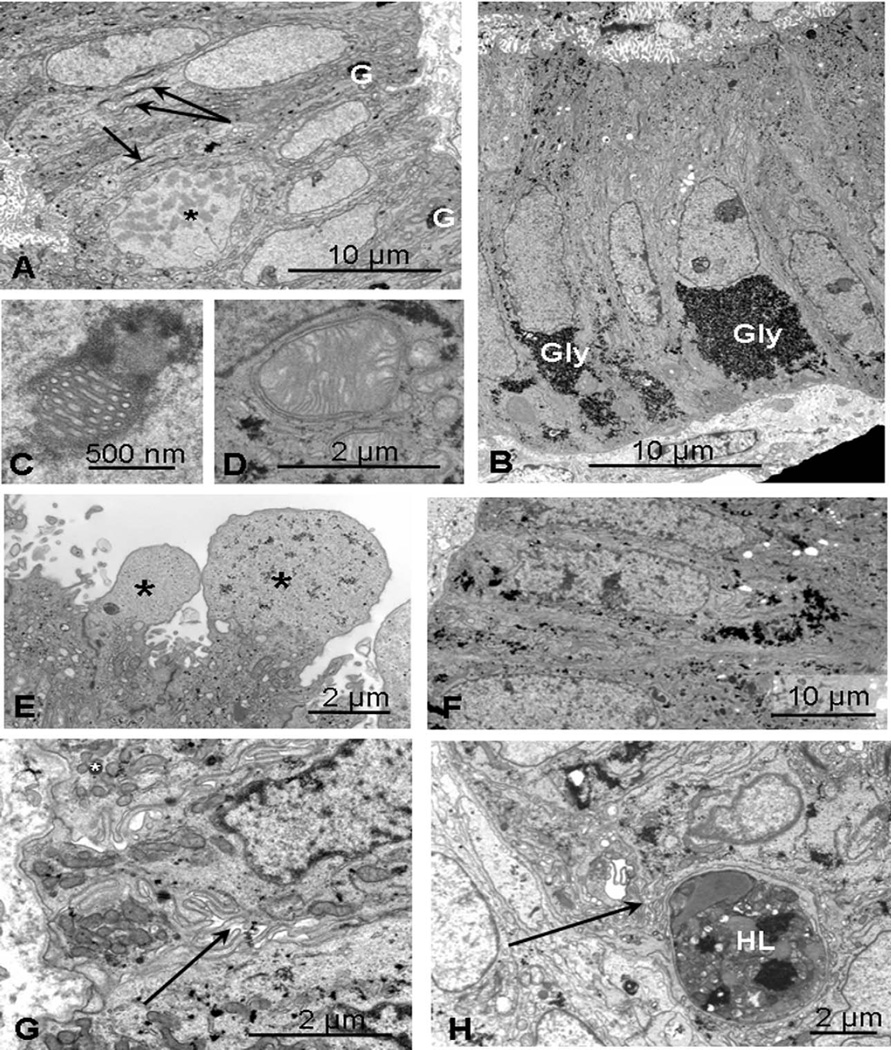
Figure 1
Figure 1
Normal control endometrium. A, Mid-proliferative: day 9 specimen showing a cell undergoing mitosis (*) and smooth euchromatic nuclei, small mitochondria and vertically orientated Golgi saccules (arrows). Small basal aggregates of glycogen are visible (G). B, Early secretory: day 17 specimen with basal deposits of glycogen (Gly), supranuclear endoplasmic reticulum, and Golgi bodies. C, Nuclear channel system. D, Giant mitochondrion. E, Mid-secretory: pinopods (*) characteristic of days 19–22. F, Mid-late secretory: at day 24, diffuse, scattered aggregates of glycogen are present. G, Scattered basal mitochondria with occasional fat droplets (*) and complex lateral interdigitations (arrow). H, Day 27 showing a large heterolysosome (HL) containing remnants of dead cells.
Figure 2
Figure 2
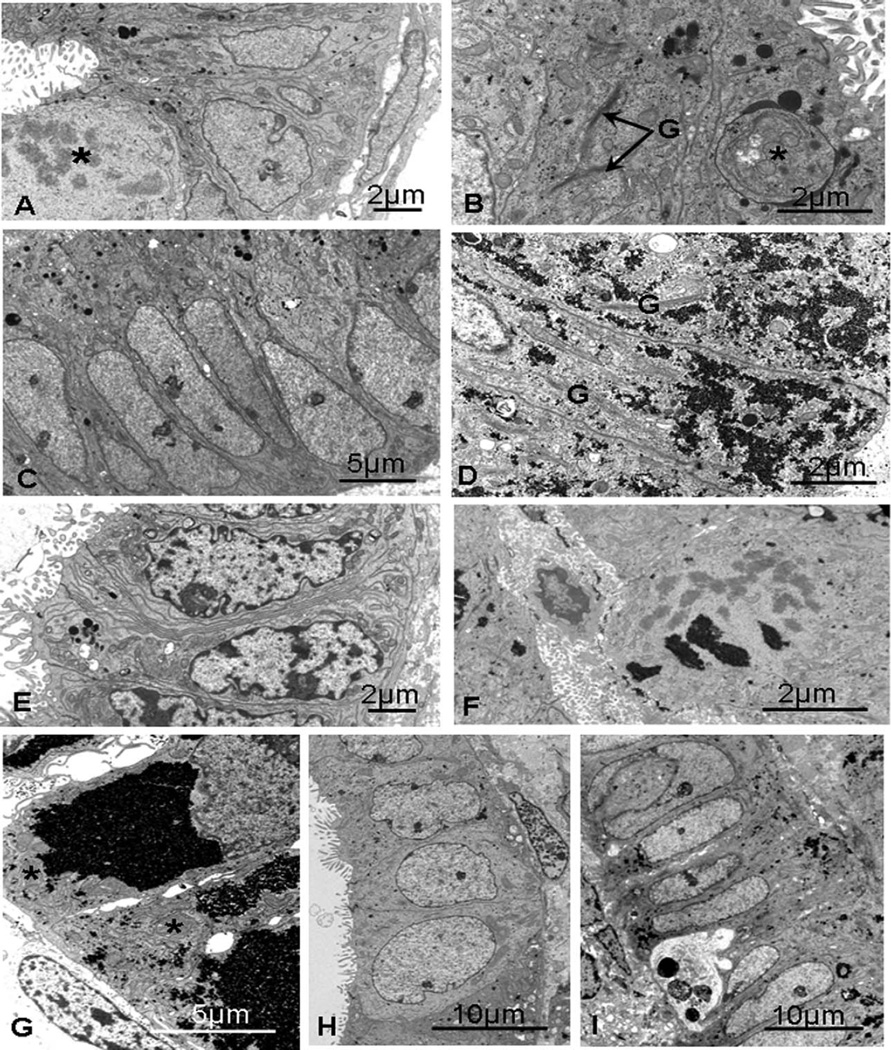
Endometriotic eutopic epithelium, days 5 to 17. A, Day 5 (PL16): a mitotic figure (*) and mainly euchromatic nuclei, with fine cisternae of endoplasmic reticulum and occasional secretory droplets. B, Day 9 (PL3): secretory droplets, finely dispersed glycogen, and an early phagosome (*) with prominent Golgi saccules (G). C, Day 16 (PL8): proliferative phase–like endometrium with euchromatic nuclei and apical secretory droplets. D, Day 15 (PL1): dispersed glycogen and long, vertically orientated Golgi saccules (G). E, Day 15 (PL17): basally situated heterochromatic nuclei, small mitochondria, and complex lateral interdigitations present a later phenotype. F, Day 17 (PL21): a cell in mitosis containing clumps of glycogen. G, Day 17 (PL5): large amounts of glycogen are present. H, Day 17 (PL5): nuclei are very euchromatic though cells are cuboidal and lacking glycogen. I, Day 17 (PL27): smooth, euchromatic nuclei together with dispersed aggregates of glycogen and an intraepithelial leucocyte with heterophagosomes.
Figure 3
Figure 3
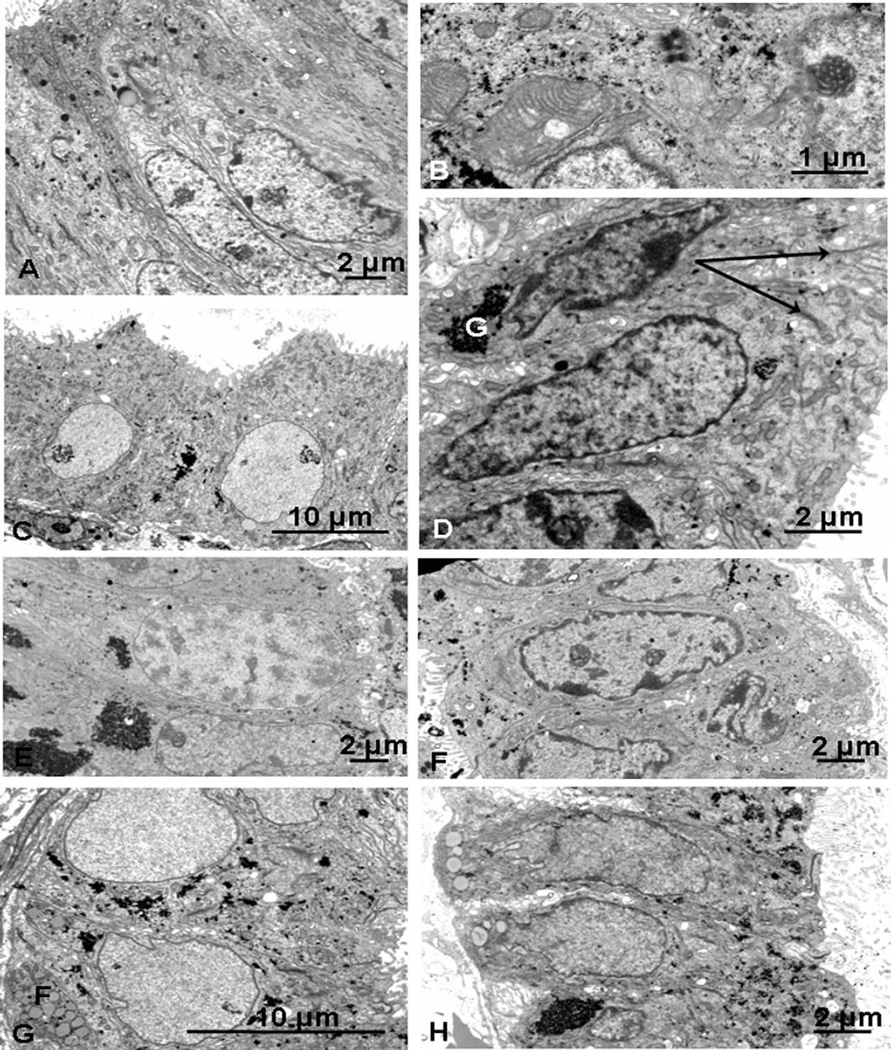
Endometriotic eutopic epithelium, days 19 to 25. A, Day 19 (PL12): immature-looking cell cytoplasm with no glycogen and numerous apical secretory droplets and narrow cisternae of rough endoplasmic reticulum. B, Day 20 (PL23): giant mitochondria and a nucleolar channel system are present. C, Day 21 (PL28): dilated glands with round, basally situated euchromatic nuclei, and cytoplasm like that of the late secretory phase with occasional aggregates of glycogen. D, Day 21 (PL36): heterochromatic nuclei, occasional aggregates of glycogen (G), and short, narrow Golgi cisternae (arrows) with rod-shaped mitochondria plentiful apically. E, Day 22 (PL20): a cell in early prophase, with cells containing large aggregates of glycogen. F, Day 24 (PL26): cells more typical of the mid-secretory phase, with heterochromatic nuclei and some scattered glycogen deposits. G, Day 25 (PL30): regular, euchromatic nuclei basally situated in cells with some glycogen and clusters of fat droplets (F) basally and Golgi saccules apically. H, Day 25 (PL33): large aggregates and scattered deposits of glycogen, and nuclei more heterochromatic than in PL030 with basal fat droplets and intercellular spaces.
Figure 4
Figure 4
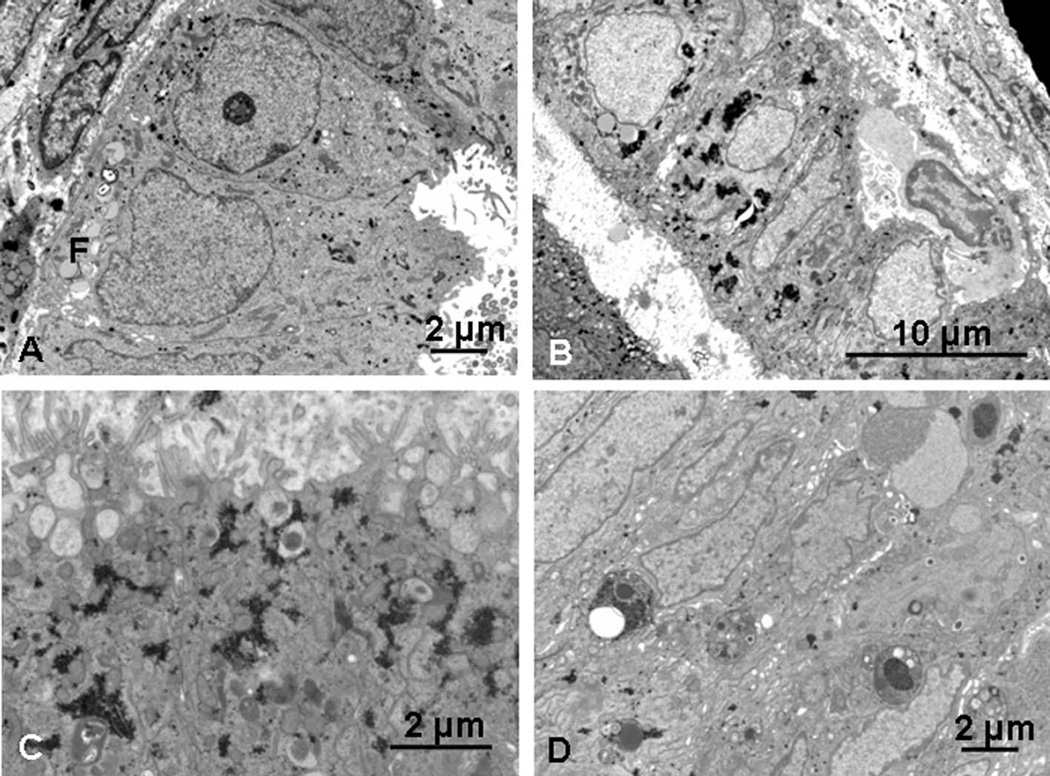
Endometriotic endometrium, days 27 to 29. A, Day 27 (PL22): basally situated, euchromatic nuclei with a few fat droplets (F) basally. A few scattered remnants of glycogen and secretory droplets are present in apical cytoplasm, and microvilli are blunt. B, Day 29 (PL29): euchromatic nuclei and glycogen deposits together with occasional fat droplets, and an intraepithelial lymphocyte. C, Day 29 (PL29): apical secretory vacuoles with flocculent contents, sometimes with a dense core, are present, with some glycogen. D, Day 29 (PL29): several heterophagosomes are present, with heterogeneous contents.
Figure 5
Figure 5
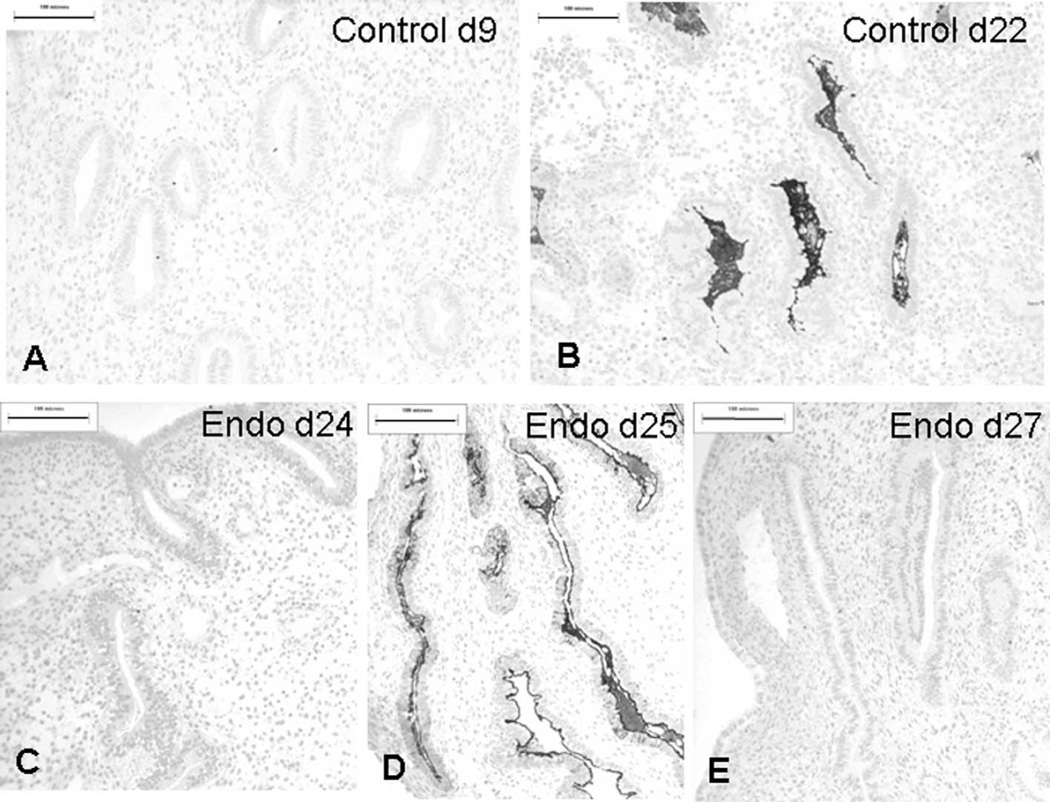
Dolichos biflorus agglutinin (DBA) binding in control and endometriotic endometrium. A, Day 9 control specimen shows no binding of DBA. B, By 22 days, control endometrium shows binding of DBA to secretions in the dilated glands. C, Day 24 (PL25) endometriotic endometrium contains tubular glands with no binding of DBA. D, Day 25 (PL30) endometriotic endometrium with abundant DBA-binding glandular secretions. E, Day 27 (PL22) endometriotic endometrium with narrow, tubular glands, and complete absence of DBA binding. Scale bar: 100 µm.

References

    1. Eskenazi B, Warner ML. Epidemiology of endometriosis. Obstet Gynecol Clin North Am. 1997;24:235–258. - PubMed
    1. Gruppo Italiano Per lo Studio Dell’endometriosi. Prevalence and anatomical distribution of endometriosis in women with selected gynecological conditions: results from a multicentric Italian study. Hum Reprod. 1994;9:1158–1162. - PubMed
    1. Awwad JT, Sayegh RA, Tao XJ, Hassan T, Awwas ST, Isaacson K. The SCID mouse: an experimental model for endometriosis. Hum Reprod. 1999;14:3107–3111. - PubMed
    1. Rossi G, Somigliana E, Moschetta M, et al. Dynamic aspects of endometriosis in a mouse model through analysis of implantation and progression. Arch Gynecol Obstet. 2000;263:102–107. - PubMed
    1. D’Hooghe TM. Clinical relevance of the baboon as a model for the study of endometriosis. Fertil Steril. 1997;68:613–625. - PubMed

Publication types