


doi: 10.1039/b819375d.
Epub 2008 Dec 2.
Light-activation of gene function in mammalian cells via ribozymes
Affiliations
- PMID: 19283293
- PMCID: PMC3702056
- DOI: 10.1039/b819375d
Item in Clipboard
Light-activation of gene function in mammalian cells via ribozymes
Chem Commun (Camb).
.
Abstract
A ribozyme based gene control element enabled the spatio-temporal regulation of gene function in mammalian cell culture with light.
Figures
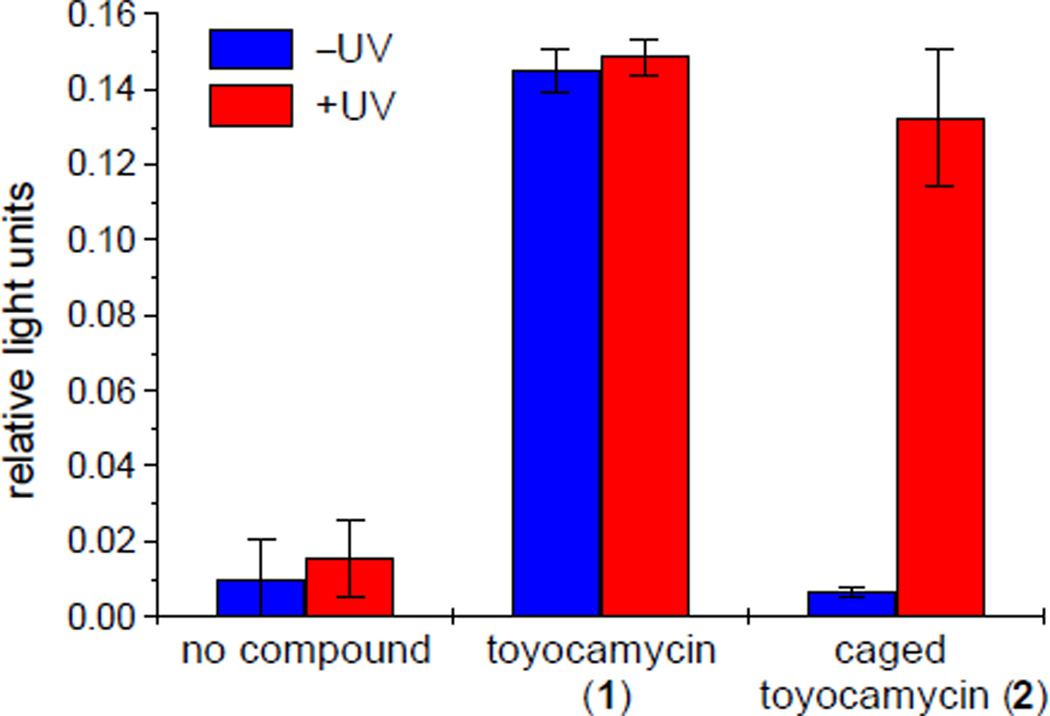
Luciferase assay demonstrating the induction of gene expression with toyocamycin (1), the inactivity of caged toyocamycin (2) in the absence of UV light, and the restoration of gene activity through UV irradiation. All experiments were conducted in triplicate and the average ratio of luciferase light units (firefly/Renilla) with its standard deviation is reported.
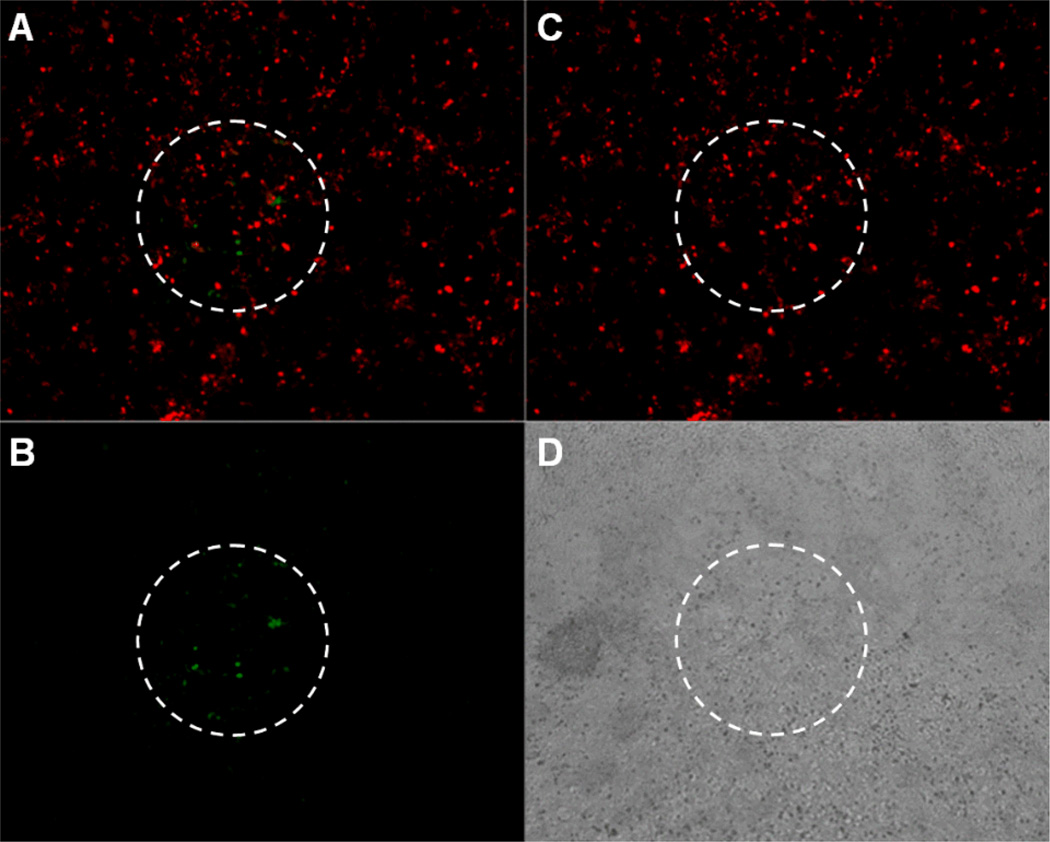
Spatial control of gene expression in 293T cells harboring N117-GFP. The area within the white circle was briefly irradiated with UV light. A) Montage of the GFP and DsRed images. B) GFP expression is only visible in the irradiated area. C) DsRed transfection control. D) Brightfield image of the cell monolayer.
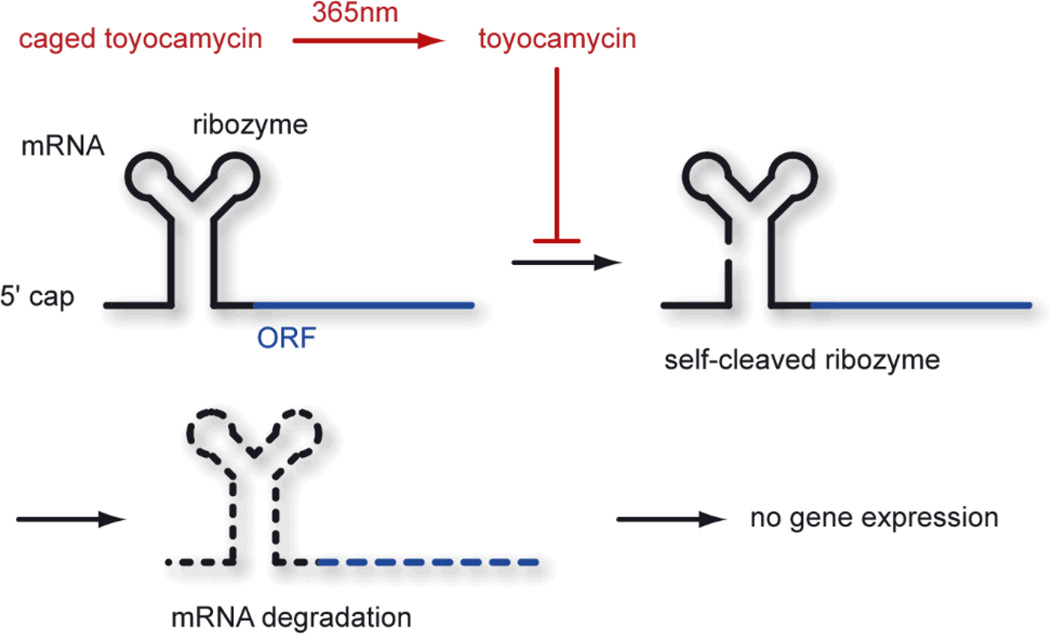
A self-cleaving hammerhead ribozyme located in the 5’ untranslated region of a transgene leads to gene silencing. Toyocamycin (1) inhibits ribozyme function and induces expression of an open reading frame (ORF). Using a caged toyocamycin (2), this process can be controlled with light.
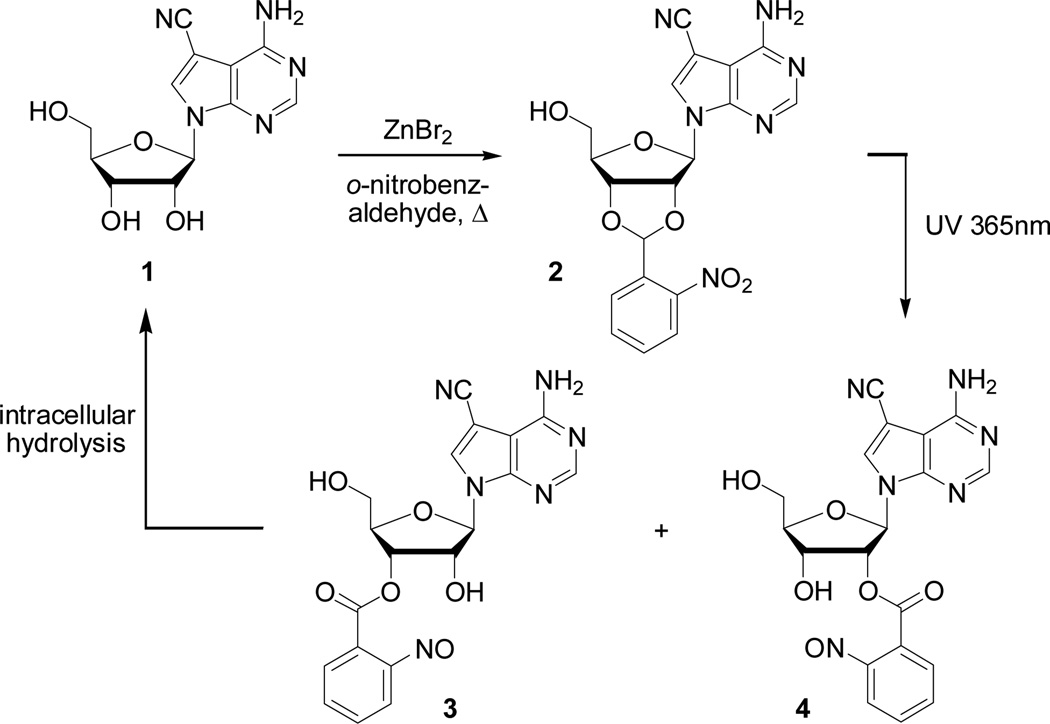
Conversion of toyocamycin (1) into caged toyocamycin 2. UV light irradiation generates the esters 3 and 4 which are hydrolyzed intracellularly to generate toyocamycin (1).
References
Publication types
MeSH terms
Substances
Grants and funding
LinkOut - more resources
Full Text Sources
Other Literature Sources
