. 2009 Mar 13;33(5):654-60.
doi: 10.1016/j.molcel.2009.01.031.

Resampling and editing of mischarged tRNA prior to translation elongation

Affiliations

Resampling and editing of mischarged tRNA prior to translation elongation

Jiqiang Ling et al. Mol Cell. .

Abstract

Faithful translation of the genetic code depends on the GTPase EF-Tu delivering correctly charged aminoacyl-tRNAs to the ribosome for pairing with cognate codons. The accurate coupling of cognate amino acids and tRNAs by the aminoacyl-tRNA synthetases is achieved through a combination of substrate specificity and product editing. Once released by aminoacyl-tRNA synthetases, both cognate and near-cognate aminoacyl-tRNAs were considered to be committed to ribosomal protein synthesis through their association with EF-Tu. Here we show instead that aminoacyl-tRNAs in ternary complex with EF-Tu*GTP can readily dissociate and rebind to aminoacyl-tRNA synthetases. For mischarged species, this allows resampling by the product editing pathway, leading to a reduction in the overall error rate of aminoacyl-tRNA synthesis. Resampling of mischarged tRNAs was shown to increase the accuracy of translation over ten fold during in vitro protein synthesis, supporting the presence of an additional quality control step prior to translation elongation.


Figures
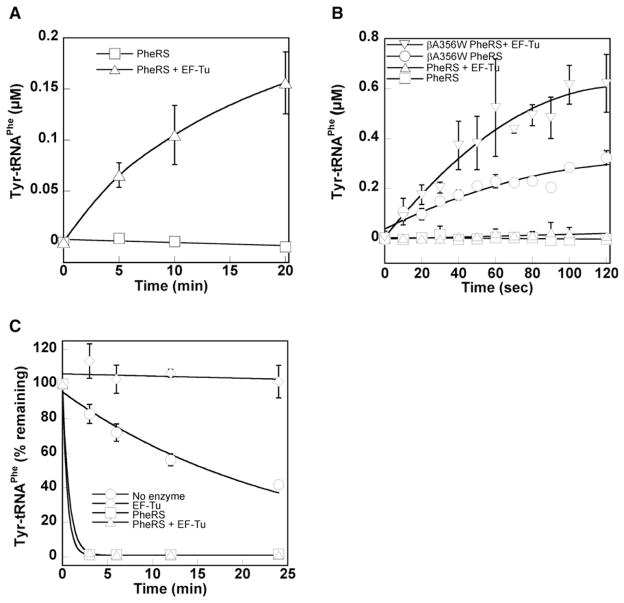
Figure 1
Figure 1. PheRS Editing Site Competes with EF-Tu for Tyr-tRNAPhe
(A) Tyrosylation by E. coli PheRS (0.75 μM) at 2°C ± 10 μM activated E. coli EF-Tu. (B) Tyrosylation by wild-type or editing-defective (βA356W) E. coli PheRS (0.25 μM) at 37°C ± 10 μM activated E. coli EF-Tu. (C) Hydrolysis of Tyr-tRNAPhe. WT β subunit EcPheRS (0.75 μM) and activated E. coli EF-Tu (10 μM) were mixed and preincubated at 37°C for 3 min before the addition of 1 μM Tyr-tRNAPhe. Phe-tRNAPhe was previously shown to be stable under these conditions (Ling et al., 2007a). Error bars correspond to the standard deviation from three independent experiments.
Figure 2
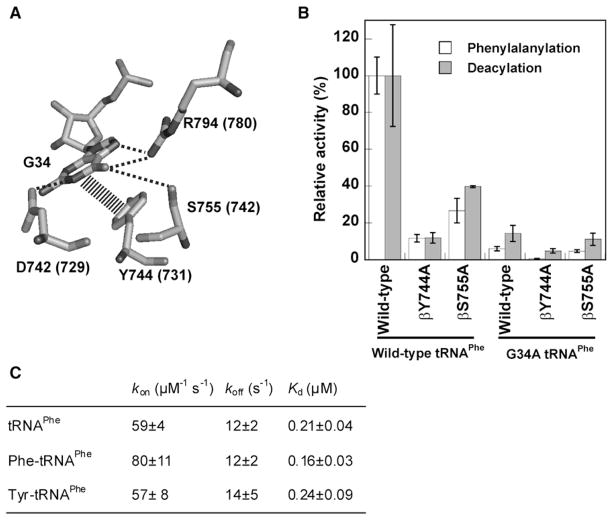
Figure 2. Recognition of E. coli tRNAPhe during Aminoacylation and Editing
(A) Recognition of G34 by PheRS in the aminoacylation conformation (Goldgur et al., 1997). E. coli PheRS numbering is shown (equivalent T. thermophilus residues in parentheses). (B) Relative phenylalanylation and Tyr-tRNAPhe deacylation activities. (C) Parameters for Phe-tRNAPhe and Tyr-tRNAPhe binding to βA356W PheRS. Error bars correspond to the standard deviation from three independent experiments.
Figure 3
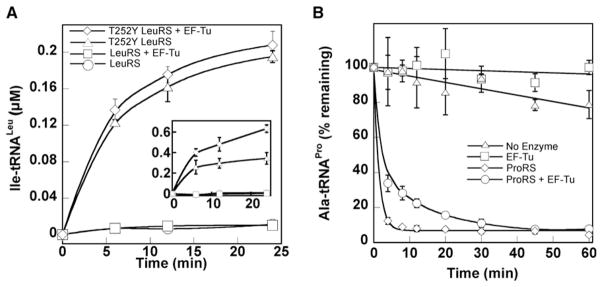
Figure 3. Misacylation by LeuRS and ProRS
(A) Isoleucylation of total E. coli tRNAs by wild-type and editing-defective (T252Y) E. coli LeuRS variants at 2°C (8 μM enzyme) or 37°C (2.4 μM enzyme, inset) ± 10 μM activated E. coli EF-Tu. (B) Hydrolysis of 0.5 μM Ala-tRNAPro at 37°C ± EF-Tu, 2.5 μM EcProRS, and 10 μM activated E. coli EF-Tu. Pro-tRNAPro was previously shown to be stable under these conditions (Beuning and Musier-Forsyth, 2000). Error bars correspond to the standard deviation from three independent experiments.
Figure 4
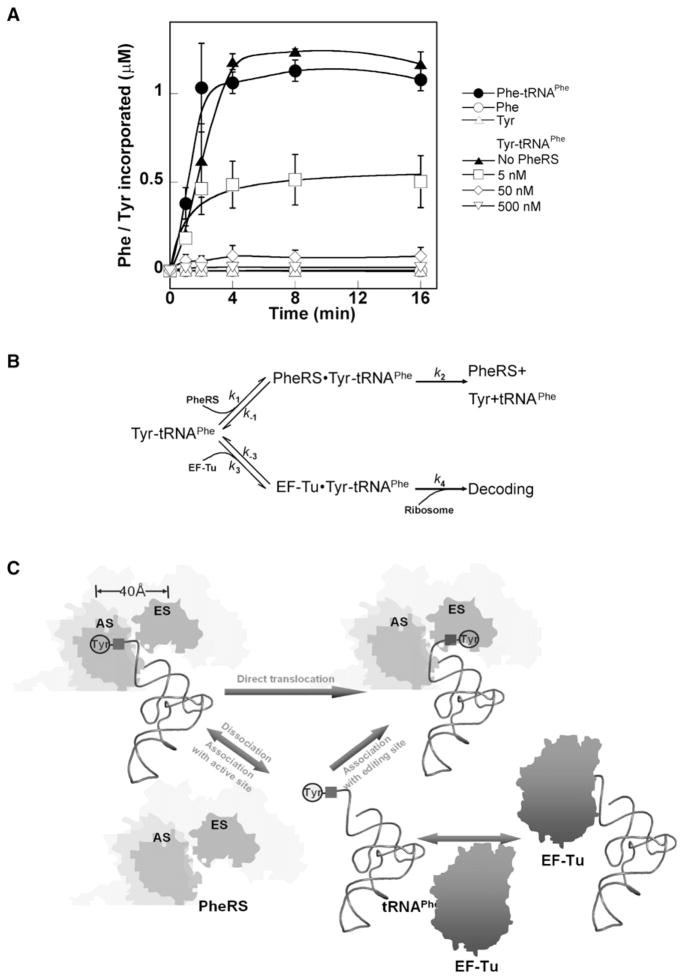
Figure 4. Resampling and Editing of Misacylated tRNA
(A) Poly(U)-directed poly-Phe and poly-Tyr synthesis at 37°C. As controls, 1 μM [14C] Phe or [3H] Tyr were added instead of [14C] Phe-tRNAPhe or [3H] Tyr-tRNAPhe. For poly-Tyr synthesis 0, 5, 50, or 500 nM PheRS was included as indicated. PheRS was also added to poly-Phe synthesis reactions at the same concentrations, but no change in poly-Phe synthesis was observed (data not shown). (B) Scheme of competition for Tyr-tRNAPhe between PheRS and EF-Tu. As k1[PheRS] > k3 [EF-Tu] and k2 > > k−1, the majority of free-standing Tyr-tRNAPhe is bound by PheRS and hydrolyzed, whereas only a small fraction is utilized by the ribosome in protein synthesis. (C) Model for concerted editing pathways. (Top) cis-editing pathway. Upon synthesis at the active site (AS), a fraction of Tyr-tRNAPhe directly translocates to the editing site for hydrolysis, which is not accessible to EF-Tu. (Bottom) trans-editing pathway. Tyr-tRNAPhe dissociates from PheRS and is competed for by EF-Tu and PheRS. Tyr-tRNAPhe bound to the editing site is rapidly hydrolyzed to yield a very low level of EF-Tu-bound Tyr-tRNAPhe in vivo. Error bars correspond to the standard deviation from three independent experiments.

References

    1. Ahel I, Korencic D, Ibba M, Söll D. Trans-editing of mischarged tRNAs. Proc Natl Acad Sci USA. 2003;100:15422–15427. - PMC - PubMed
    1. An S, Musier-Forsyth K. Trans-editing of Cys-tRNAPro by Haemophilus influenzae YbaK protein. J Biol Chem. 2004;279:42359–42362. - PubMed
    1. An S, Musier-Forsyth K. Cys-tRNAPro editing by Haemophilus influenzae YbaK via a novel synthetase. YbaK.tRNA ternary complex. J Biol Chem. 2005;280:34465–34472. - PubMed
    1. Asahara H, Uhlenbeck OC. The tRNA specificity of Thermus thermophilus EF-Tu. Proc Natl Acad Sci USA. 2002;99:3499–3504. - PMC - PubMed
    1. Baldwin AN, Berg P. Transfer ribonucleic acid-induced hydrolysis of valyladenylate bound to isoleucyl ribonucleic acid synthetase. J Biol Chem. 1966;241:839–845. - PubMed

Publication types

MeSH terms

LinkOut - more resources