Clinical Trial
. 2009 Apr;119(4):997-1007.
doi: 10.1172/JCI38052. Epub 2009 Mar 16.

Enhanced T cell recovery in HIV-1-infected adults through IL-7 treatment

Affiliations
Clinical Trial

Enhanced T cell recovery in HIV-1-infected adults through IL-7 treatment

Yves Levy et al. J Clin Invest. 2009 Apr.

Abstract

HIV infection results in CD4+ T cell deficiency, but efficient combination antiretroviral therapy (c-ART) restores T cells and decreases morbidity and mortality. However, immune restoration by c-ART remains variable, and prolonged T cell deficiency remains in a substantial proportion of patients. In a prospective open-label phase I/IIa trial, we evaluated the safety and efficacy of administration of the T cell regulator IL-7. The trial included 13 c-ART-treated HIV-infected patients whose CD4+ cell counts were between 100 and 400 cells/microl and plasma HIV RNA levels were less than 50 copies/ml. Patients received a total of 8 subcutaneous injections of 2 different doses of recombinant human IL-7 (rhIL-7; 3 or 10 microg/kg) 3 times per week over a 16-day period. rhIL-7 was well tolerated and induced a sustained increase of naive and central memory CD4+ and CD8+ T cells. In the highest dose group, 4 patients experienced transient increases in viral replication. However, functional assays showed that the expanded T cells responded to HIV antigen by producing IFN-gamma and/or IL-2. In conclusion, in lymphopenic HIV-infected patients, rhIL-7 therapy induced substantial functional and quantitative changes in T cells for 48 weeks. Therefore, patients may benefit from intermittent therapy with IL-7 in combination with c-ART.


Figures
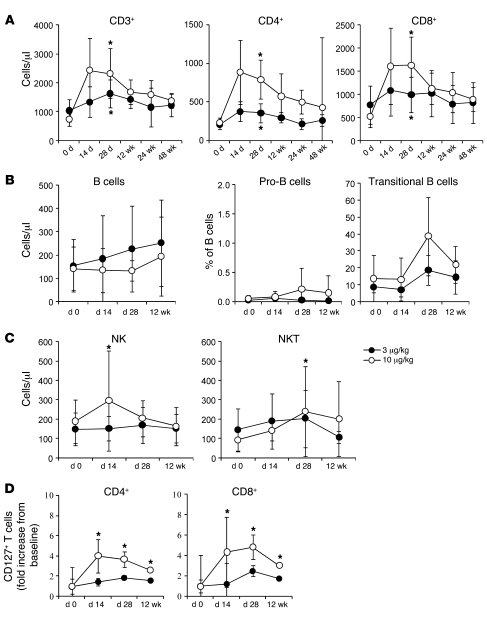
Figure 1
Figure 1. Effects of rhIL-7 therapy on peripheral blood lymphocyte subsets.
The absolute lymphocyte count from complete blood counts and flow cytometry–based frequency were used to determine evolution of (A) absolute counts of CD3+ T cells, CD3+CD4+ T cells, and CD3+CD8+ T cells; (B) absolute counts of mature B cells and percentages of pro-B and transitional B cells; (C) absolute counts of NK and NKT cells; and (D) fold increase from baseline of CD4+ and CD8+ T cells expressing CD127. Mean ± SEM for each cohort is shown. *P < 0.05 versus 0 d; Wilcoxon test.
Figure 2
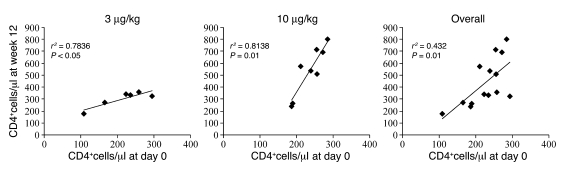
Figure 2. CD4+ T cell count prior to rhIL-7 treatment predicts the magnitude of CD4+ T cell increase after rhIL-7 treatment.
The linear correlation between CD4+ T cell count before treatment at 0 d and 12 wk relative to rhIL-7 treatment initiation at each dose is shown. Overall regression using a Spearman test showed a significant correlation between CD4+ T cell counts at entry CD4+ T cell responses in both groups and in the global population of IL-7–treated patients.
Figure 3
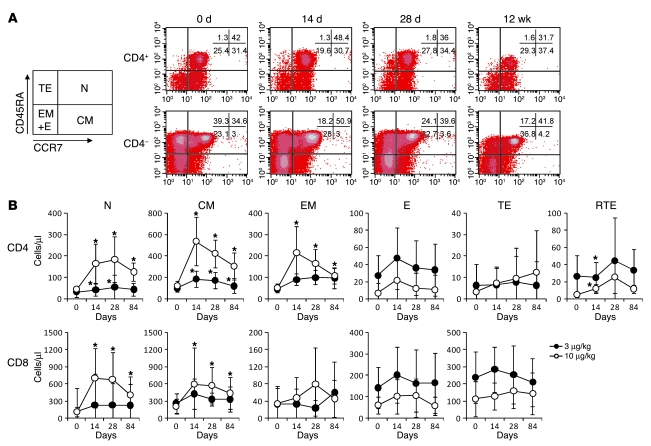
Figure 3. rhIL-7 therapy induces a preferential increase of naive and central memory CD4+ and CD8+ T cells.
(A) Representative flow cytometry analysis of CD4+ and CD8+ T cell populations from a single representative subject treated at the 3-μg/kg dose. Numbers within the plots indicate the percent of each T cell population: naive (N; CD45RA+CD27+), central memory (CM; CD45RACD27+), effector memory and effector (EM+E; CD45RACD27), terminally differentiated effector (TE; CD45RA+CD27), and RTE (CD45RA+CD31hi). (B) Time evolution of CD4+ and CD8+ T cell subsets. Mean ± SEM for each cohort is shown. *P < 0.05 versus 0 d; Wilcoxon test.
Figure 4
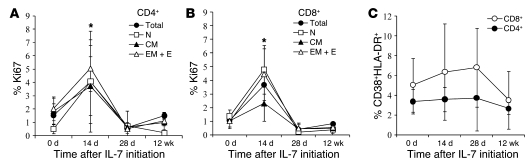
Figure 4. rhIL-7 therapy is not associated with T cell activation, but increases T cell cycling.
Analyses were performed in patients treated with the 10-μg/kg dose of rhIL-7. (A and B) Percent cells in CD4+ (A) and CD8+ (B) T cell subpopulations expressing Ki67 via flow cytometry. Mean ± SEM for each T cell subset is shown. Ki67 expression significantly increased at 14 d. (C) Percent CD4+ and CD8+ activated T cells (HLA-DR+CD38+). Error bars denote SD. *P versus 0 d; Wilcoxon test.
Figure 5
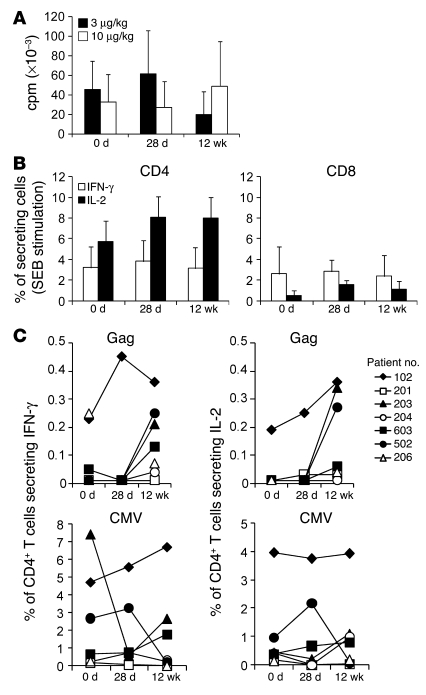
Figure 5. rhIL-7 expanded T cells respond to polyclonal and antigenic stimulation.
PBMCs were collected at the indicated time points, cryopreserved, and then thawed before analysis. (A) Proliferation in response to TCR stimulation (anti-CD3 plus anti-CD28) was measured by [3H] incorporation. Similar proliferation levels were observed at each time point. Error bars denote SD. (B) Both CD4+ and CD8+ T cells produced IFN-γ and IL-2 in response to SEB at levels comparable to baseline 28 d and 12 wk after rhIL-7 therapy. Analyses were performed in patients treated with 10 μg/kg rhIL-7. Error bars denote SD. (C) rhIL-7 therapy increased the capacity of CD4+ T cells to respond to HIV Gag and CMV antigens by secreting IFN-γ and/or IL-2. All 7 patients treated with 10 μg/kg rhIL-7 were analyzed.

References

    1. Hammer S.M., et al. A controlled trial of two nucleoside analogues plus indinavir in persons with human immunodeficiency virus infection and CD4 cell counts of 200 per cubic millimeter or less. AIDS Clinical Trials Group 320 Study Team. N. Engl. J. Med. 1997;337:725–733. doi: 10.1056/NEJM199709113371101. - DOI - PubMed
    1. Mocroft A., et al. Changing patterns of mortality across Europe in patients infected with HIV-1. EuroSIDA Study Group. Lancet. 1998;352:1725–1730. doi: 10.1016/S0140-6736(98)03201-2. - DOI - PubMed
    1. Palella F.J., Jr., et al. Declining morbidity and mortality among patients with advanced human immunodeficiency virus infection. HIV Outpatient Study Investigators. N. Engl. J. Med. 1998;338:853–860. - PubMed
    1. Grabar S., et al. Clinical outcome of patients with HIV-1 infection according to immunologic and virologic response after 6 months of highly active antiretroviral therapy. Ann. Intern. Med. 2000;133:401–410. doi: 10.1001/archinte.133.3.401. - DOI - PubMed
    1. Moore D.M., et al. Regimen-dependent variations in adherence to therapy and virological suppression in patients initiating protease inhibitor-based highly active antiretroviral therapy. HIV Med. 2006;7:311–316. doi: 10.1111/j.1468-1293.2006.00381.x. - DOI - PubMed

Publication types

MeSH terms