


Unstable trochanteric fractures: the role of lateral wall reconstruction
- PMID: 19288102
- PMCID: PMC2899273
- DOI: 10.1007/s00264-009-0744-y
Unstable trochanteric fractures: the role of lateral wall reconstruction
Abstract
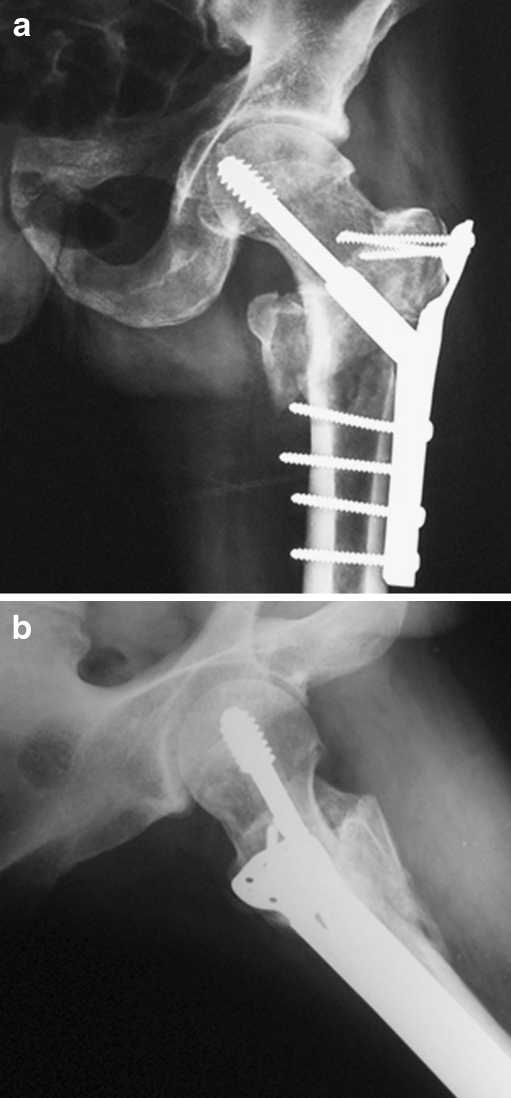
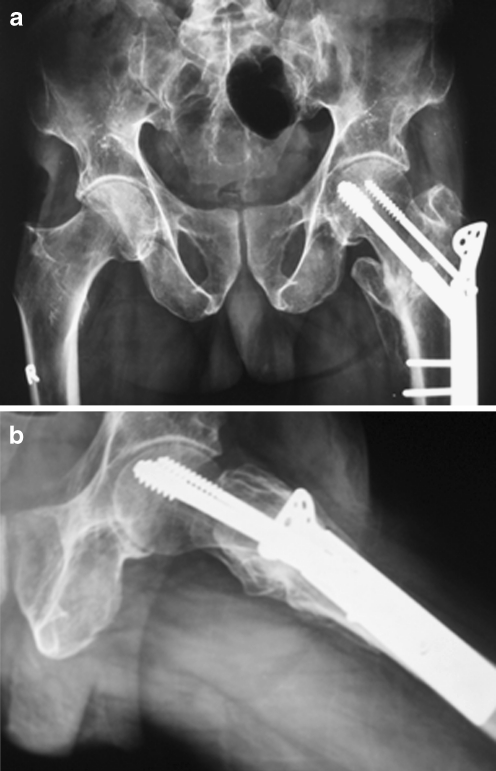
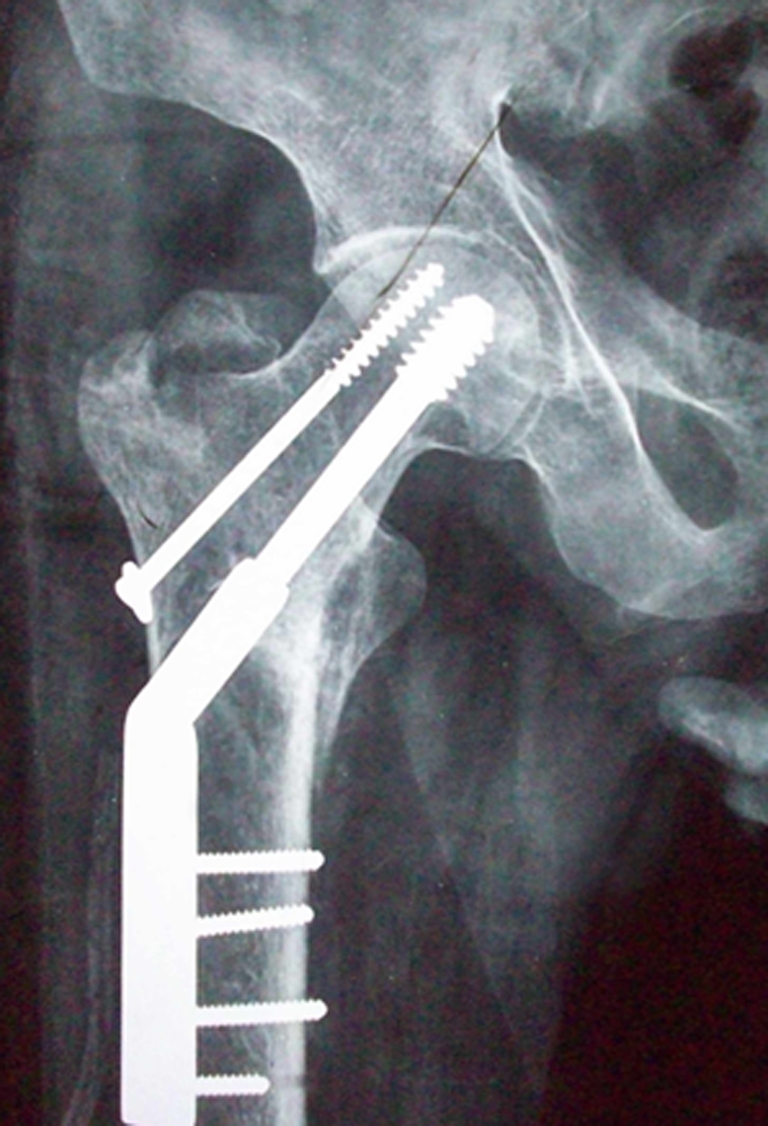
The sliding compression device, a widely used implant in unstable proximal femoral fractures, suffers from two major limitations: excessive collapse and screw cut-out. Commonly attributed reasons for these are lateral wall comminution and single-point fixation, respectively. We report our experience of stabilising 74 unstable trochanteric fractures, of which 46 cases underwent lateral wall reconstruction using a trochanteric stabilising plate (TSP) in combination with a dynamic hip screw (DHS), and 34 cases with an intact lateral wall had a DHS with an additional anti-rotation screw providing two-point fixation. Fracture consolidation was observed in all cases at an average of 13.56 weeks. Overall functional hip score as per the Salvati and Wilson scoring system was >30 points in 55 patients. Lateral wall reconstruction is an important component in stabilisation of unstable trochanteric fractures and a combination of TSP with a DHS appears to be a useful device to achieve this. Addition of an antirotation screw is likely to enhance the stability further by providing two-point fixation.
Le matériel à compression est largement utilisé dans les fractures de l’extrémité supérieure du fémur avec deux limites, d’une part une impaction des fragments et, d’autre part, l’absence de fixité de la vis. Les raisons en sont l’importante communication du mur latéral avec un seul point de fixation. Nous rapportons notre expérience de la stabilisation de 74 fractures trochantériennes instables parmi lesquelles 46 ont bénéficié d’une reconstruction du mur latéral intact et en utilisant une plaque trochantérienne de stabilisation TSP combinée à la DHS et 34 cas présentant un mur latéral ayant bénéficié d’une DHS avec un système de vis anti rotation avec deux points de fixation. La consolidation de la fracture a toujours été observée avec une moyenne de 13,56 semaines. Cependant, le score fonctionnel de la hanche selon Salvati et Wilson était supérieur de 30 points chez 55 patients. La reconstruction du mur latéral est un élément important de la stabilisation des fractures trochantériennes instables. La combinaison d’une plaque TSP avec la vis DHS est un artifice utile pour améliorer cette stabilité. L’ajout d’une vis anti rotation est également profitable de façon à améliorer la stabilité du fait de deux points de fixation.
Figures
References
-
- Babst R, Renner N, Biedermann M, Rosso R, Hebere M, Harder F, Regazzoni P. Clinical results using the trochanter stabilizing plate (TSP): the modular extension of the dynamic hip screw (DHS) for internal fixation of selected unstable intertrochanteric fractures. J Orthop Trauma. 1998;12:392–399. doi: 10.1097/00005131-199808000-00005. - DOI - PubMed
-
- Davis TRC, Sher JL, Horsman A, Simpson M, Porter BB, Checketts RG. Intertrochanteric femoral fractures: mechanical failure after internal fixation. J Bone Joint Surg. 1990;72B:26–31. - PubMed
-
- Ecker ML, Joyce JJ, Kohl JE. The treatment of trochanteric hip fractures using a compression screw. J Bone Joint Surg. 1975;87-A(1):23–27. - PubMed
-
- Frohlich P, Benko T. DHS (dynamic hip screw) osteosynthesis in the management of femoral fractures in the hip region and the place of this method in the treatment of such injuries. Magy Traumatol Ortop Kezseb Plasztikai Sch. 1993;36(1):59–64. - PubMed
MeSH terms
LinkOut - more resources
Full Text Sources
Medical
Miscellaneous
