


Metabolic tumor volume predicts for recurrence and death in head-and-neck cancer
- PMID: 19289263
- PMCID: PMC2752334
- DOI: 10.1016/j.ijrobp.2008.10.060
Metabolic tumor volume predicts for recurrence and death in head-and-neck cancer
Abstract
Purpose: To evaluate the prognostic value of metabolic tumor volume measured on 18F-fluorodeoxyglucose positron emission tomography (FDG-PET) imaging and other clinical factors in patients treated for locally advanced head-and-neck cancer (HNC) at a single institution.
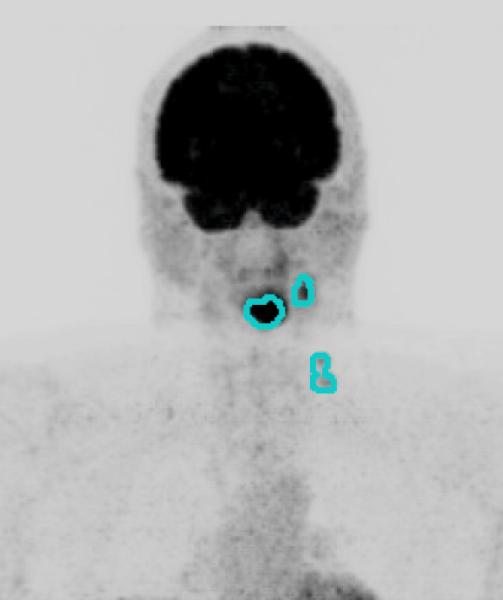
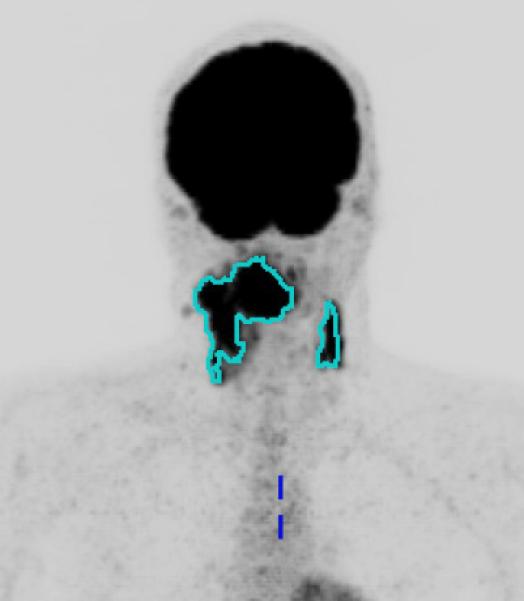
Materials and methods: Between March 2003 and August 2007, 85 patients received positron emission tomography (PET)/computed tomography-guided chemoradiotherapy for HNC. Metabolically active tumor regions were delineated on pretreatment PET scans semiautomatically using custom software. We evaluated the relationship of (18)F-fluorodeoxyglucose-PET maximum standardized uptake value (SUV) and total metabolic tumor volume (MTV) with disease-free survival (DFS) and overall survival (OS).
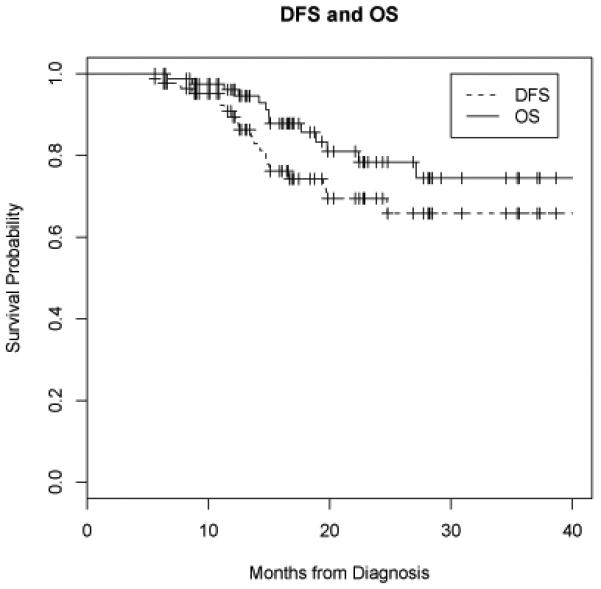
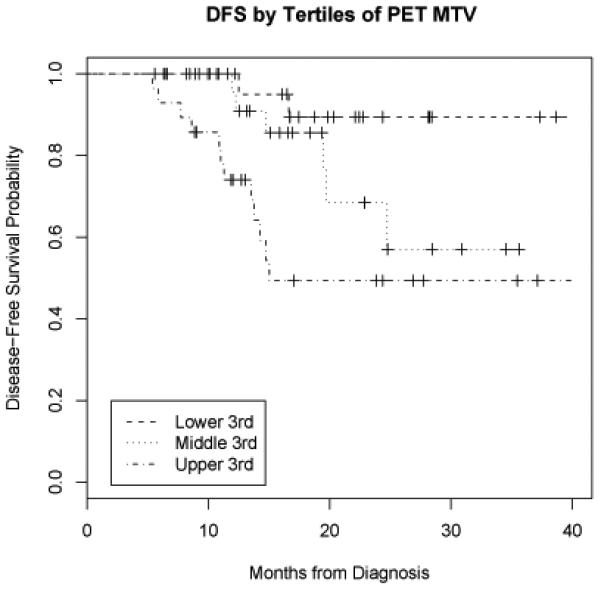
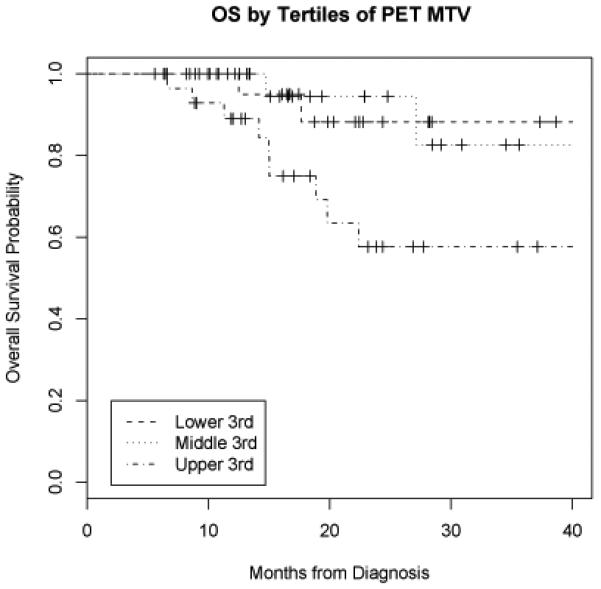
Results: Mean follow-up for surviving patients was 20.4 months. The estimated 2-year locoregional control, DFS, and OS for the group were 88.0%, 69.5%, and 78.4%, respectively. The median time to first failure was 9.8 months among the 16 patients with relapse. An increase in MTV of 17.4 mL (difference between the 75th and 25th percentiles) was significantly associated with an increased hazard of first event (recurrence or death) (1.9-fold, p < 0.001), even after controlling for Karnofsky performance status (KPS) (1.8-fold, p = 0.001), and of death (2.1-fold, p < 0.001). We did not find a significant relationship of maximum SUV, stage, or other clinical factors with DFS or OS.
Conclusions: Metabolic tumor volume is an adverse prognostic factor for disease recurrence and death in HNC. MTV retained significance after controlling for KPS, the only other significant adverse prognostic factor found in this cohort. MTV is a direct measure of tumor burden and is a potentially valuable tool for risk stratification and guiding treatment in future studies.
Figures
References
-
- Wong RJ, Lin DT, Schoder H, et al. Diagnostic and prognostic value of [(18)F] fluorodeoxyglucose positron emission tomography for recurrent head and neck squamous cell carcinoma. J Clin Oncol. 2002;20:4199–4208. - PubMed
-
- Tucker R, Coel M, Ko J, et al. Impact of fluorine-18 fluorodeoxyglucose on patient management: First year’s experience in a clinical center. J Clin Oncol. 2001;19:2504–2508. - PubMed
-
- Laubenbacher C, Saumweber D, Wagner-Manslau C, et al. Comparison of fluorine-18-fluorodeoxyglucose PET, MRI and endoscopy for staging head and neck squamous cell carcinomas. J Nucl Med. 1995;36:1747–1757. - PubMed
-
- Schwartz DL, Ford E, Rajendran J, et al. FDG-PET/CT imaging for preradiotherapy staging of head-and-neck squamous cell carcinoma. Int J Radiat Oncol Biol Phys. 2003;57:129–136. - PubMed
-
- Minn H, Maria Lapela M, Klemi PJ. Prediction of Survival with Fluorine-18-Fluoro- deoxyglucose and PET in Head and Neck Cancer. J Nucl Med. 2007;38:1907–1911. - PubMed
Publication types
MeSH terms
Substances
Grants and funding
LinkOut - more resources
Full Text Sources
Medical
