


Waist-height ratio as a predictor of coronary heart disease among women
- PMID: 19289960
- PMCID: PMC4012298
- DOI: 10.1097/EDE.0b013e31819f38f1
Waist-height ratio as a predictor of coronary heart disease among women
Abstract
Background: It is not yet established what specific measures of obesity might be most strongly associated with risk of coronary artery disease. We compared the waist-height ratio to waist-hip ratio, waist circumference, and body mass index as predictors of subsequent coronary heart disease (CHD) in a group of predominantly postmenopausal women.
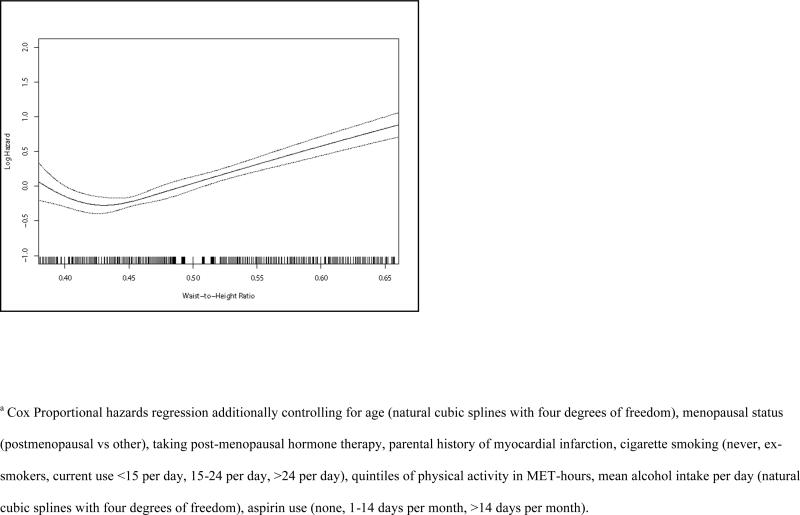
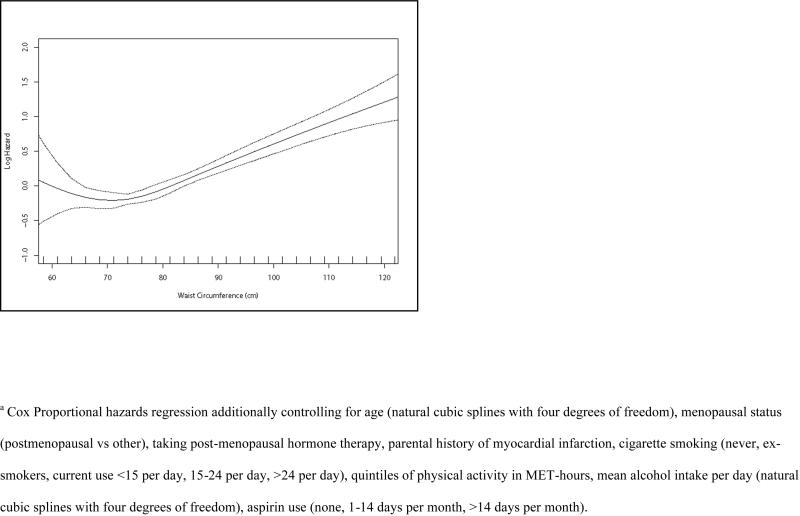
Methods: The data come from the prospective Nurses' Health Study cohort. We included 45,563 women in 1986 who were aged 40-65 years and were free of heart disease, stroke, and cancer. Waist circumference, hip circumference, height, weight, age, and other covariates were collected by questionnaire. Our primary end point was incident coronary heart disease reported up to June 2002. Areas under the receiver operating characteristic curves (AUCs) were estimated nonparametrically for each of the anthropometric measures. We estimated differences between the AUCs for weight-height ratio and the other measures, with corresponding 95% confidence intervals. We used Cox proportional hazard models to estimate the relationships with risk of CHD.
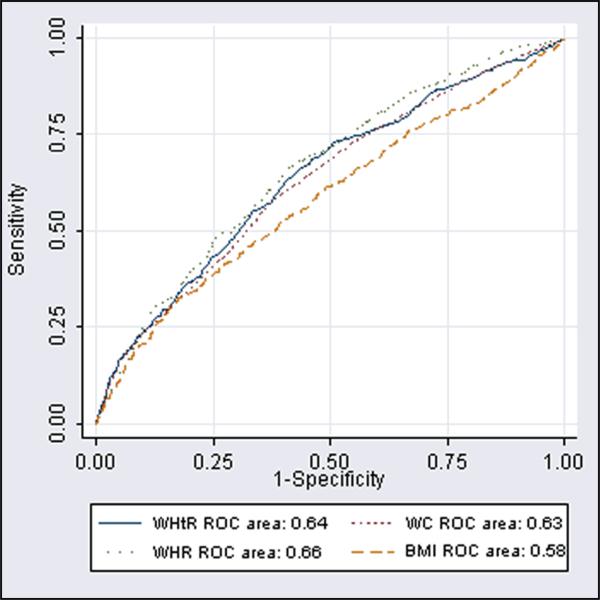
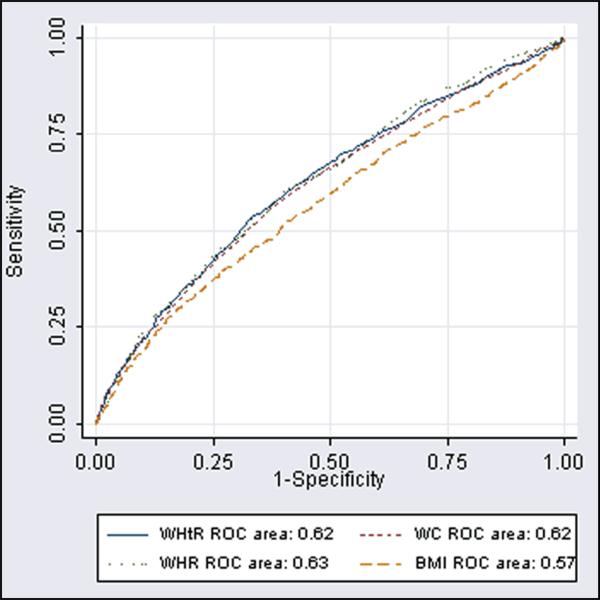
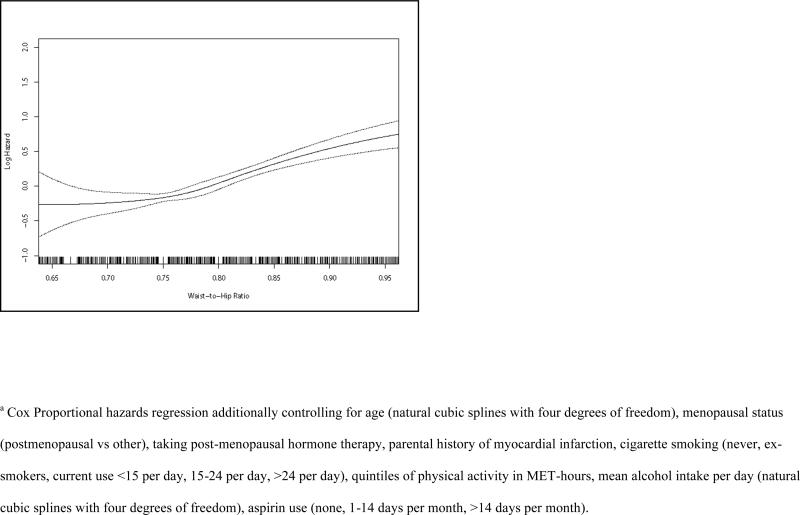
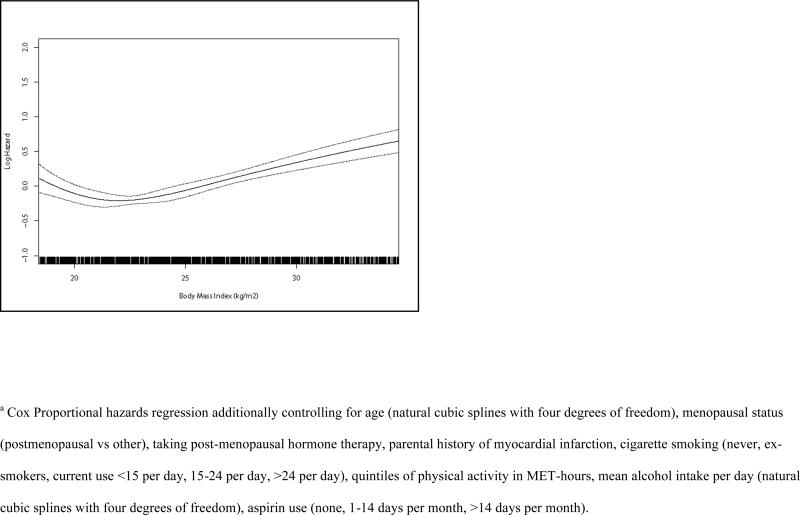
Results: Waist-height ratio, waist-hip ratio, and waist circumference were similar in predicting subsequent risk of CHD. All 3 waist-derived measures were superior to body-mass index (BMI) in predicting CHD. The unadjusted AUCs were 0.62 (95% confidence interval = 0.60-0.64) for waist-height ratio, 0.63 (0.61-0.65) for waist-hip ratio, 0.62 (0.60-0.64) for waist-circumference, and 0.57 (0.55-0.59) for BMI.
Conclusion: Waist-height ratio is comparable with waist circumference and waist-hip ratio for prediction of coronary heart disease incidence among middle-aged and older women, but superior to BMI.
Figures
References
-
- Rimm EB, Willett WC, Hu FB, Sampson L, Colditz GA, Manson JE, Hennekens C, Stampfer MJ. Folate and vitamin B6 from diet and supplements in relation to risk of coronary heart disease among women. Jama. 1998;279(5):359–64. - PubMed
-
- Einstein FH, Atzmon G, Yang XM, Ma XH, Rincon M, Rudin E, Muzumdar R, Barzilai N. Differential responses of visceral and subcutaneous fat depots to nutrients. Diabetes. 2005;54(3):672–8. - PubMed
-
- Barzilai N, She L, Liu BQ, Vuguin P, Cohen P, Wang J, Rossetti L. Surgical removal of visceral fat reverses hepatic insulin resistance. Diabetes. 1999;48(1):94–8. - PubMed
-
- Bjorntorp P. Abdominal fat distribution and the metabolic syndrome. J Cardiovasc Pharmacol. 1992;20(Suppl 8):S26–8. - PubMed
Publication types
MeSH terms
Grants and funding
LinkOut - more resources
Full Text Sources
