Hostility and smoking cessation treatment outcome in heavy social drinkers
- PMID: 19290691
- PMCID: PMC2657935
- DOI: 10.1037/a0012655
Hostility and smoking cessation treatment outcome in heavy social drinkers
Abstract
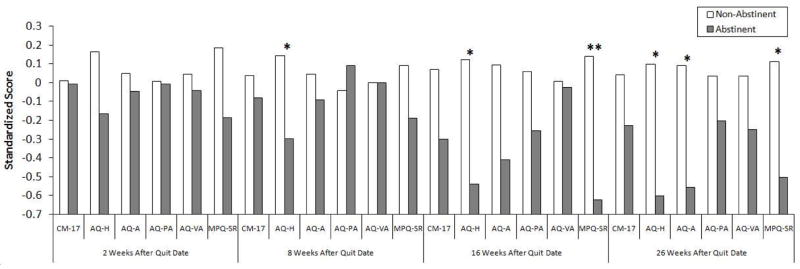
Hostility is a multifaceted construct encompassing affective, behavioral, and cognitive aspects. There is preliminary evidence linking hostility to poorer outcomes in smoking cessation treatment; however, it is unclear which components of hostility are most important in cessation. In this study, the authors examined multiple aspects of trait hostility in 92 heavy social drinkers who were seeking smoking cessation treatment. Consistent with their hypothesis, the authors found that the cognitive component of hostility was most relevant to smoking cessation outcome. Specifically, those who expressed bitterness about their lives and tended to believe that they had poor luck and had gotten a raw deal out of life had poor smoking cessation outcomes. Cognitive measures of hostility also predicted greater nicotine withdrawal symptoms 1 week after quitting smoking. Other components of hostility including anger and both physical and verbal aggression did not significantly predict smoking outcome or nicotine withdrawal. Further examination of how a hostile worldview contributes to smoking cessation failure is warranted, as this facet of hostility may prove a valuable target for smoking cessation interventions. (PsycINFO Database Record (c) 2009 APA, all rights reserved).
Figures
References
-
- Barefoot JC, Dodge KA, Peterson BL, Dahlstrom WG, Williams RB., Jr The Cook-Medley hostility scale: item content and ability to predict survival. Psychosomatic Medicine. 1989;51:46–57. - PubMed
-
- Barefoot JC, Peterson BL, Dahlstrom WG, Siegler IC, Anderson NB, Williams RB., Jr Hostility patterns and health implications: correlates of Cook-Medley Hostility Scale scores in a national survey. Health Psychology. 1991;10:18–24. - PubMed
-
- Boardman T, Catley D, Grobe JE. Using motivational interviewing with smokers: Do therapist behaviors relate to engagement and therapeutic alliance? Journal of Substance Abuse Treatment. 2006;31:329–339. - PubMed
-
- Brandon TH, Tiffany ST, Obremski KM, Baker TB. Postcessation cigarette use: The process of relapse. Addictive Behaviors. 1990;15:105–114. - PubMed
-
- Brondolo E, Rieppi R, Erickson SA, Bagiella E, Shapiro PA, McKinley P, et al. Hostility, interpersonal interactions, and ambulatory blood pressure. Psychosomatic Medicine. 2003;65:1003–1011. - PubMed